


More news on this day
Air France has once more pulled the plug on flights to Dubai, Riyadh, Tel Aviv and Beirut, extending a rolling series of suspensions as the Middle East security crisis disrupts airspace and throws travel plans for thousands of tourists into disarray.
Get the latest news straight to your inbox!
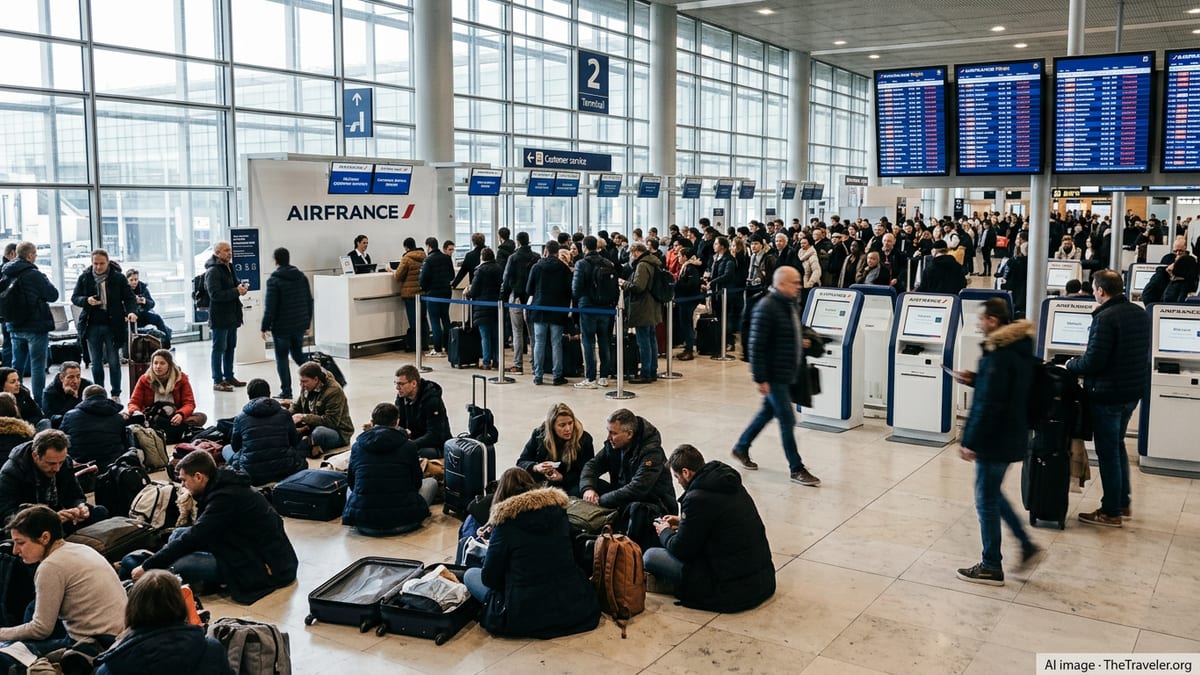
Latest Suspension Extends Into May as Tensions Persist
According to recent operational updates, Air France has prolonged the suspension of its services to Tel Aviv, Beirut, Dubai and Riyadh into early May 2026, after a string of earlier cutoffs in March and April. Publicly available information indicates that flights on the Paris Charles de Gaulle routes to all four cities remain cancelled, with tickets being rebooked or refunded rather than transferred to alternative Air France services.
The decision follows a succession of temporary pauses first introduced in late February and early March, when conflict involving Iran, Israel, the United States and regional actors triggered missile and drone activity, plus precautionary airspace closures over key Middle Eastern corridors. Aviation industry trackers report that these measures forced a broad reshaping of long-haul routings between Europe, Asia and Africa, with some airlines diverting around affected zones and others, like Air France, choosing outright suspension on specific city pairs.
Air France’s most recent schedule updates frame the extended halt as a direct response to the “security situation at destination” and continuing restrictions on commercial overflights. While some regional airports have gradually reopened or shifted to limited operations, the carrier is continuing to pursue a conservative risk posture on these four routes, even as demand from both leisure and corporate travelers for Gulf and Levant destinations remains strong.
Knock-On Disruption for European and Long-Haul Travelers
The renewed suspensions are rippling far beyond France and the four headline destinations. Airline intelligence platforms estimate that hundreds of weekly seats linking Europe with Dubai, Riyadh, Tel Aviv and Beirut via Paris have effectively been removed from the market this spring. One recent analysis suggested that as Air France froze its Middle East operations in March and April, more than 150 European feeder flights per week lost their onward connections to these hubs.
The impact is particularly acute for travelers who rely on Paris as a transfer point to reach onward destinations in Asia and Africa. Before the crisis, many itineraries from secondary European cities connected through Charles de Gaulle to Dubai or Riyadh, then continued on Gulf carriers deeper into the region or to South and Southeast Asia. With the Air France segments suspended, these passengers are being pushed onto alternative routings via other European hubs or directly onto Gulf carriers from origin countries, often at short notice.
Capacity constraints are driving up fares and limiting flexibility. Industry commentary notes that the withdrawal of Air France services has increased pressure on competitors such as Emirates, Qatar Airways and Saudia, with reports of higher prices on remaining Dubai and Riyadh departures from Europe. Travelers who had built complex itineraries around Air France’s network now face longer journeys, extended layovers and reduced options for rebooking when disruptions cascade.
Middle East Airspace Still Volatile Despite Partial Reopenings
The airline’s latest move comes even as some Middle Eastern airports tentatively scale back emergency measures following a ceasefire announcement in early April. Public travel-advisory documents describe a patchwork environment in which certain Gulf hubs, including Dubai International Airport, have returned to limited or near-normal operations after earlier shutdowns linked to drone incidents and intercepts in nearby airspace.
Security assessments highlight that wide swathes of regional airspace remain subject to restrictions or routing advisories, particularly along corridors used by flights between Europe and the Indian subcontinent. Analysts point to the combination of direct attacks on aviation infrastructure, heightened military activity and fast-shifting no-fly zones as key reasons many carriers continue to exercise caution.
European risk bulletins issued in late March and April emphasize that airlines must either avoid or carefully manage overflight of certain conflict-adjacent areas. In this context, Air France’s choice to suspend rather than simply reroute its Dubai, Riyadh, Tel Aviv and Beirut services underlines the operational complexity of designing safe, economically viable detours in an already congested sky.
Tourists Face Cancellations, Rebookings and Insurance Hurdles
For leisure travelers, the latest extension of suspensions has translated into another wave of cancellations and last-minute itinerary changes. Consumer-facing travel assistance sites report that passengers with tickets to Dubai, Riyadh, Tel Aviv and Beirut on Air France are being offered rebooking on later dates, rerouting on partner airlines where available, or full refunds for unused segments.
Travel-risk advisers caution that insurance coverage is uneven. Many standard policies distinguish between ordinary delays and disruptions linked to declared conflicts or government advisories. Several briefings note that reimbursement for out-of-pocket costs such as extra hotel nights, missed tours or alternative tickets may depend on the exact wording of policies and on whether official travel advisories were raised before or after bookings were made.
Tourists are being urged, in public guidance documents, to monitor both airline notifications and government travel advice for the United Arab Emirates, Saudi Arabia, Israel and Lebanon. Given the fluid situation, practical recommendations include holding flexible or refundable reservations where possible, checking routing details for hidden overflight through sensitive areas, and allowing additional time for connections in Europe if itineraries involve multiple carriers.
Air France Shifts Focus While Watching the Region
While its Middle East routes remain on hold, Air France is quietly redirecting capacity to more stable markets. The carrier’s published summer 2026 schedule shows increased frequencies and larger aircraft on high-demand routes to Bangkok, Singapore, Delhi, Mumbai, Bangalore, Tokyo and Osaka, intended to absorb demand from passengers who might previously have transited the Gulf or Levant.
Industry observers interpret this redeployment as an attempt to preserve overall network profitability while leaving room for a rapid return to Dubai, Riyadh, Tel Aviv and Beirut once risks fall to acceptable levels. Reports indicate that Air France continues to update its plans in line with evolving security assessments and airspace bulletins, but there is no firm restart date publicly committed on these specific city pairs.
For now, global travelers with plans involving the UAE, Saudi Arabia, Israel or Lebanon must assume that disruption could persist with little warning. As the regional security picture remains volatile, Air France’s latest suspension underscores how quickly a renewed escalation can send shock waves through international aviation, stranding tourists far from home and reshaping the map of global air travel in a matter of days.