


More news on this day
A Dutch-flagged expedition cruise ship at the center of a rare and deadly hantavirus outbreak remains offshore under quarantine-style restrictions in early May 2026, as health agencies across several continents race to trace passengers and determine how a rodent-borne virus appears to have spread between people at sea.
Get the latest news straight to your inbox!
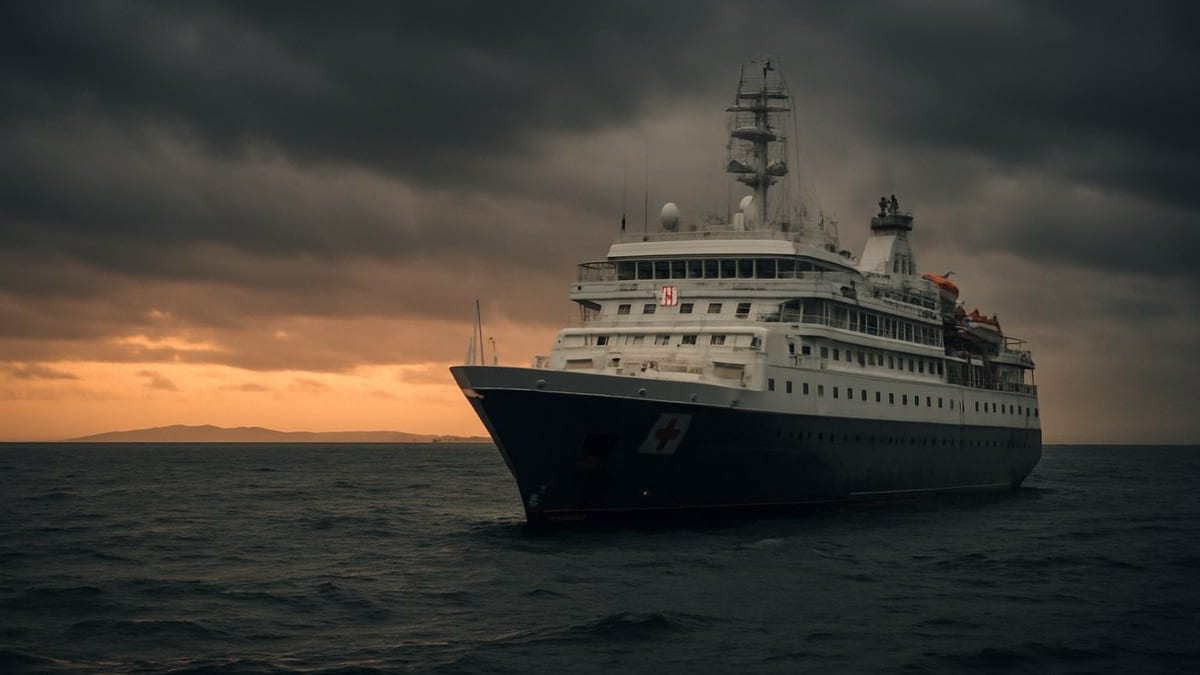
From Antarctic Adventure to Medical Emergency
The voyage began as a bucket-list expedition from southern South America toward Atlantic and African destinations, with roughly 150 passengers and crew on board the MV Hondius. Publicly available timelines indicate that the ship departed Argentina in April, calling at remote South Atlantic islands before illness clusters emerged on board in late April and early May.
According to published coverage by international health agencies and major news outlets, three passengers associated with the ship have died following severe respiratory illness, and at least five additional people have been identified as confirmed or suspected hantavirus cases. Initial tests for more common respiratory pathogens reportedly came back negative, prompting further investigation and specialized laboratory screening.
By 2 May 2026, the World Health Organization had been notified of a cluster of severe respiratory infections linked to the vessel, and subsequent testing identified infection with a hantavirus, later characterized as the Andes virus strain. With the cause finally narrowed, the cruise abruptly shifted from expedition tourism to an evolving public health emergency that continues to play out off shore.
The suspected exposure period coincided with the cruise’s early legs, when passengers took land excursions in rodent-inhabited environments and spent extended time in shared interior spaces on the ship. Reports indicate that some passengers disembarked earlier at ports in Africa and Europe, complicating later efforts to trace contacts and assess the wider impact.
Andes Hantavirus Identified as the Culprit
Laboratory analysis described in World Health Organization situation reports and specialist media has identified the Andes virus as the strain responsible for the shipboard outbreak. Andes virus is a type of hantavirus known primarily from parts of South America and is unusual because documented human-to-human transmission has been reported in past outbreaks, generally among close contacts.
Most hantavirus infections worldwide arise after people inhale aerosolized particles from rodent urine, droppings, or saliva. In the Americas, infections can lead to hantavirus cardiopulmonary syndrome, a severe disease marked by an initial flu-like illness that can quickly progress to respiratory failure. Case fatality rates reported in the scientific literature are significantly higher than for more familiar viral respiratory infections.
Health briefings and explanatory coverage in outlets such as the Los Angeles Times, Live Science, and The Atlantic emphasize that even the Andes strain does not spread as efficiently between people as viruses like influenza or SARS-CoV-2. Transmission appears to require prolonged, close contact, and large-scale community outbreaks have not been documented. Nevertheless, the combination of a highly lethal pathogen, a confined shipboard setting, and international travel has put global health agencies on alert.
Expert commentary cited across multiple publications stresses that this event does not resemble the early stages of a new pandemic. Instead, analysts describe it as a highly unusual but geographically and epidemiologically contained cluster that underscores how changing travel patterns and environmental conditions can expose travelers to historically localized pathogens.
Lengthy Offshore Quarantine and Port Dilemmas
As the nature of the outbreak became clearer, the Hondius found itself in an increasingly precarious position at sea. Reports from international news organizations describe days of holding offshore near West African and Atlantic islands while local authorities weighed whether and how to accept the vessel. Some ports reportedly permitted only limited medical evacuations by air or boat, while denying general disembarkation for passengers and crew.
In effect, the ship has been functioning as a floating quarantine facility. Passengers who remain on board are understood to be largely confined to cabins or designated areas, monitored for fever, respiratory symptoms, and other signs of infection. Medical teams have been caring for the seriously ill in the ship’s infirmary while coordinating transfers to onshore intensive care units when possible.
Publicly available information suggests that negotiations over a safe harbor continue, focused on locations with adequate critical-care capacity and specialized infection-control units. Coverage in European and African media points to concerns about introducing a high-fatality pathogen into small island health systems with limited surge capacity.
The drawn-out quarantine has also created logistical challenges unrelated to direct health risks. Crew provisioning, waste management, and the psychological burden of confinement are all emerging themes in on-the-ground reporting, as the Hondius lingers at anchor rather than proceeding to its scheduled final port in Cape Verde or onward to Europe.
Global Contact Tracing and Travel Advisories
Because some passengers left the ship before the outbreak was fully recognized, national health agencies on several continents are now engaged in a complex contact-tracing effort. Publicly posted advisories from Africa CDC, European health bodies, and state-level agencies in the United States describe attempts to identify travelers who disembarked in South Africa, island territories, and European gateways, then continued on to other destinations.
Media reports indicate that health departments in multiple U.S. states have identified residents who were on board the Hondius and are monitoring them for symptoms. Similar measures are being reported in parts of Europe after at least one passenger was diagnosed with hantavirus infection back home following disembarkation and air travel.
Travel advisories issued by regional and international agencies emphasize that the risk to the general public is considered low, but urge recent passengers and close contacts to be alert for early symptoms such as fever, muscle aches, and shortness of breath. Because the incubation period for hantavirus can extend for several weeks, the monitoring window for exposed individuals will likely continue through late May and beyond.
At the same time, commentators in outlets including Reuters, Associated Press, and the Guardian highlight how this episode illustrates both the strengths and vulnerabilities of modern global health surveillance, where an outbreak on a single cruise can rapidly trigger cross-border alerts while also stretching tracing systems already burdened by other threats.
What the Outbreak Reveals About Cruise Risk
The Hondius hantavirus cluster is being framed by analysts as a stark reminder that cruise ships remain sensitive platforms for infectious disease events, even as industry protocols have evolved in the aftermath of COVID-19. Scientific and public health summaries note that ships combine several risk factors: high passenger density, shared air and water systems in some areas, and frequent land excursions that can bring travelers into contact with novel pathogens.
In previous decades, outbreaks on cruise vessels more commonly involved norovirus, influenza, or Legionella. The emergence of a rodent-borne virus with human-to-human transmission potential in this context is prompting renewed scrutiny of pre-cruise screening, onboard infection control, and environmental management in port communities that host expedition itineraries.
Health-focused coverage suggests that the Hondius outbreak may lead to updated guidance on managing unexplained severe respiratory illness at sea, including faster access to advanced diagnostics and clearer protocols for isolation, evacuation, and communication with multiple national authorities. Industry observers also anticipate a fresh round of questions from travelers about how lines mitigate risk on remote itineraries, particularly to regions where zoonotic diseases are endemic.
For now, the ship’s extended standoff offshore has become a potent image of the dilemmas facing modern travel. A vessel that set out to showcase wild landscapes and far-flung islands is instead serving as a real-time case study in how a rare virus, long associated with isolated rodent habitats, can intersect with global tourism and test the world’s ability to respond without overreacting.