


More news on this day
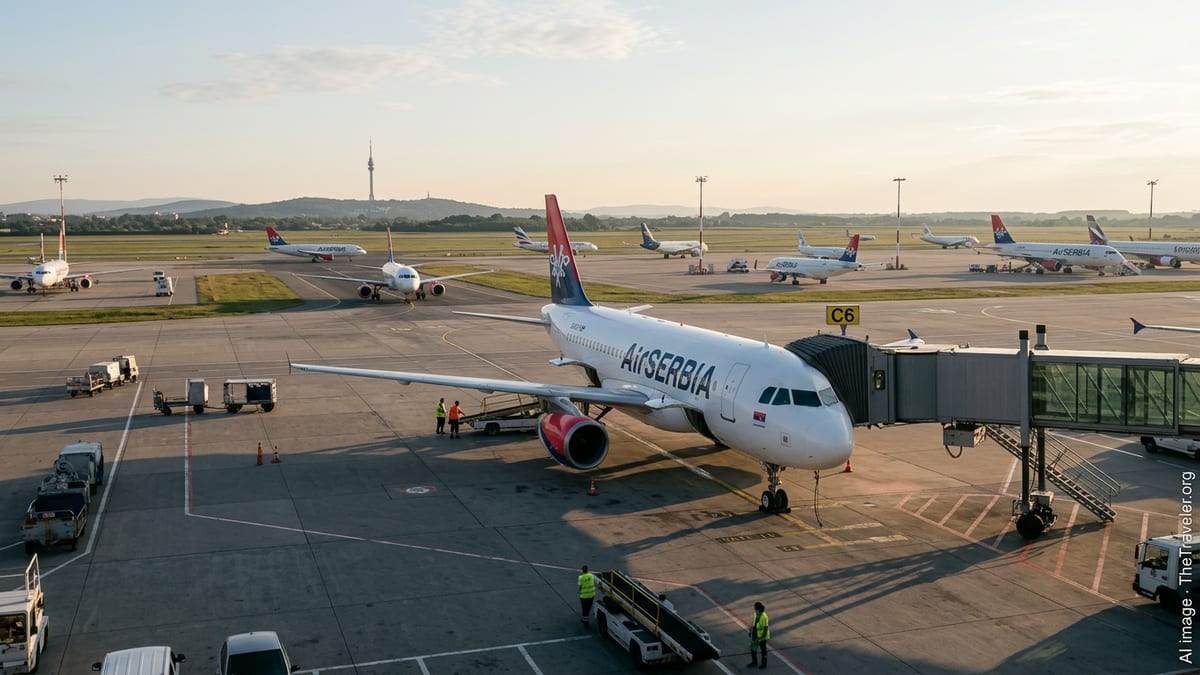
Air Serbia is expanding its presence in southern Serbia with new twice-weekly flights from Niš Constantine the Great Airport to Vienna and Malta from 25 October 2026, a move that reinforces the city’s role as a growing regional gateway and adds fresh connectivity to two key European destinations.
Get the latest news straight to your inbox!
Details of the New Niš Routes and Schedule
Publicly available information from the airline indicates that the new routes from Niš to Vienna and Malta are scheduled to begin on 25 October 2026, coinciding with the start of the Northern Winter 2026/27 season. The additions are framed as part of a broader effort to strengthen air links between southern Serbia and major European cities.
According to Air Serbia’s route announcements and booking data, flights on both the Niš–Vienna and Niš–Malta sectors are planned twice per week, operating on Wednesdays and Sundays. The pattern mirrors the carrier’s broader strategy of deploying limited but regular frequencies on secondary routes, aimed at balancing demand across both leisure and visiting‑friends‑and‑relatives traffic segments.
Published schedules tracked by industry outlets show the services filed for the entire winter timetable, giving travellers in Niš and the surrounding regions a full season of access to Austria and the central Mediterranean. The timing of the launch places the new links just ahead of the busy end‑of‑year travel period, when demand typically climbs across Europe.
Strengthening Niš as a Regional Air Gateway
Niš Constantine the Great Airport has evolved from a small regional field into an increasingly important secondary hub for Serbia, particularly for passengers from the south and southeast of the country. Airport destination listings show a mix of low‑cost and full‑service operators, with routes already connecting Niš to several European cities, including seasonal and year‑round services.([ini.aerodromisrbije.rs](https://ini.aerodromisrbije.rs/en/flights/destinations/?utm_source=openai))
The decision to add Vienna and Malta further diversifies the network on offer from Niš. Industry analyses of the new flights note that Malta represents a fresh Mediterranean option from the city, while Vienna marks the restoration of a strategically important Central European link.([airserbia.com](https://www.airserbia.com/en/media-news/New-Air-Serbia-s-European-destinations-from-Nis-direct-flights-to-Vienna-and-Malta~1959188?utm_source=openai))
At the same time, infrastructure and investment documents for Niš highlight a wider modernization program in progress at the airport, including terminal expansion and upgrades to airside facilities backed by international financing frameworks. These projects are aimed at increasing capacity and operational resilience, which in turn supports the introduction of additional routes and carriers.([transport-community.org](https://www.transport-community.org/wp-content/uploads/2025/05/TEN-T-Report-Western-Balkans-digital.pdf?utm_source=openai))
Why Vienna and Malta Matter for Southern Serbia
Vienna is one of Central Europe’s principal political, business and cultural centers, and serves as a major aviation hub for the region. Air Serbia already links Belgrade with Vienna, and published network overviews show the Austrian capital among the airline’s established European destinations.([airserbia.com](https://www.airserbia.com/en/flights-to-new-destinations?utm_source=openai))
By adding nonstop flights from Niš, the carrier opens a more direct route for travelers from southern Serbia and neighboring areas who previously might have needed to route via Belgrade or other airports. For businesses, students and migrant workers with ties to Austria, this cuts journey times and simplifies travel planning, while also offering potential one‑stop connectivity via Vienna to other parts of Europe.
Malta, meanwhile, brings a different profile to the schedule. The island nation is a popular year‑round leisure destination and an established home for a growing expatriate community from Serbia and the wider Balkans. Air Serbia’s destination information presents Malta as a mix of heritage, coastal landscapes and mild climate, underscoring its appeal outside the traditional summer peak.([airserbia.com](https://www.airserbia.com/en/flights-to-new-destinations?utm_source=openai))
The combination of a Central European hub and a Mediterranean tourism market gives Niš residents a broader choice of direct travel options, while also making the city more attractive as a starting point for inbound visitors looking to explore southern Serbia.
Fit Within Air Serbia’s Broader Network Strategy
Air Serbia’s published network plans for 2026 and the Northern Winter 2026/27 timetable show continued expansion from its Belgrade hub, alongside a gradual build‑up at secondary airports including Niš and Morava.([airlinestat.it](https://www.airlinestat.it/p/air-serbia-nw26-nis-network-additions?utm_source=openai))
Industry schedule filings reviewed by aviation data services describe the Niš–Malta link as a new route and the Niš–Vienna service as a resumption. This suggests that the carrier views Niš as a platform for selectively restoring and testing routes that can complement its main operations in Belgrade, rather than competing with them.
Analysts commenting on the Niš additions point out that twice‑weekly frequencies help manage aircraft utilization and risk while still offering enough capacity to establish a route’s profile in the regional market. If performance proves strong, schedules could be adjusted in future seasons, either through frequency increases or extended operational periods beyond the winter timetable.
For travelers, the growing choice of direct flights from Niš means fewer surface transfers to larger airports and more alternatives when planning European trips. For the airline, it signals an ongoing commitment to serving multiple regions of Serbia with scheduled international services, in line with previously stated ambitions for network diversification.
Implications for Connectivity Across the Western Balkans
The launch of Niš–Vienna and Niš–Malta also fits into a wider picture of improving cross‑border connectivity in the Western Balkans. European Union‑backed investment plans and regional transport strategies highlight Niš as an important node in both air and rail networks, particularly along corridors linking central Europe with Greece and the Mediterranean.([transport-community.org](https://www.transport-community.org/wp-content/uploads/2025/05/TEN-T-Report-Western-Balkans-digital.pdf?utm_source=openai))
As rail upgrades between Belgrade and Niš progress and highway connections continue to improve, additional international air links from Niš can complement surface transport by offering faster point‑to‑point options to key markets. Vienna, already a common gateway for the region, and Malta, a growing destination for tourism and employment, both align with that role.
For the broader region of southern Serbia, northern North Macedonia, western Bulgaria and parts of Kosovo, the enhanced air schedule from Niš adds another layer of choice. Passengers based within a few hours’ drive may find that the combination of lower airport congestion and targeted European routes turns Niš into a practical alternative to larger hubs, especially during peak travel seasons.
While the long‑term performance of the new Vienna and Malta routes will depend on demand and competitive dynamics, their introduction from 25 October 2026 underlines the pace at which Niš is moving from a niche regional operation toward a more prominent place on the European air travel map.
Air Serbia media release on new Niš routes
Air Serbia new destinations overview
Niš Constantine the Great Airport destinations