


More news on this day
An American Airlines flight from Dallas Fort Worth to Newark diverted to Baltimore-Washington International Thurgood Marshall Airport after a passenger was restrained in his seat with duct tape and zip ties and later arrested, in an incident that is again drawing attention to unruly behavior in the air and how crews and fellow travelers respond.
Get the latest news straight to your inbox!
Midflight Disturbance Leads to Diversion
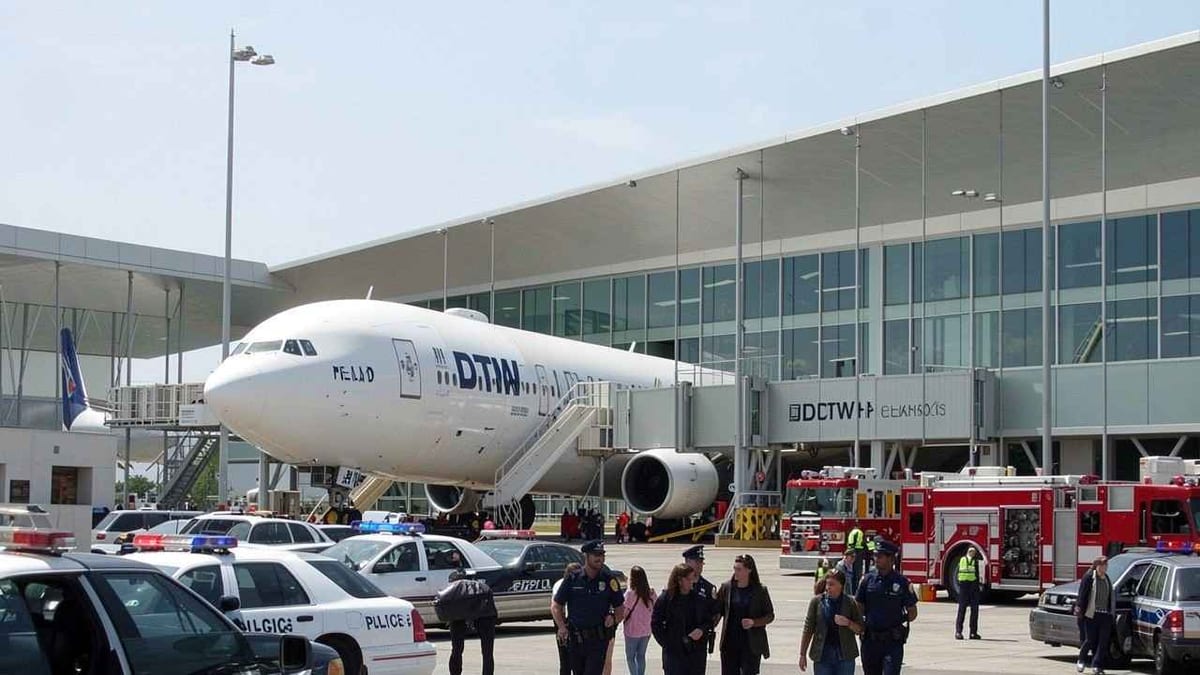
According to published coverage, the disruption occurred on American Airlines Flight 618 on the evening of Thursday, September 3, 2026, as the aircraft was en route from Dallas Fort Worth International Airport to Newark Liberty International Airport. The flight diverted to Baltimore-Washington International Thurgood Marshall Airport, where law enforcement met the aircraft at the gate and took the passenger into custody.
Reports indicate that the man, identified in multiple outlets as 67-year-old Arthur Lundeen of Arizona, became increasingly agitated during the latter part of the flight. Passengers and publicly available accounts describe a loud confrontation that escalated despite attempts by those nearby to calm the situation.
Video obtained by national broadcasters and entertainment outlets shows the man restrained in his seat with gray duct tape around his torso, while his hands appear secured with zip ties. Passengers can be seen standing in the aisle as others hold him in place until the aircraft lands in Baltimore.
American Airlines stated in public comments reported by national media that the flight was diverted due to the behavior of an unruly passenger, and that the aircraft landed safely before continuing its journey with a different departure.
Allegations of Slurs and Physical Confrontation
Details emerging from passenger interviews and compiled news summaries indicate that the incident began with verbal harassment directed at crew members and other travelers. Entertainment and social media outlets report that the man allegedly used a racial slur toward a Black flight attendant and made additional offensive remarks, including anti-gay language.
Accounts shared with television affiliates and online platforms also describe a physical component to the confrontation. According to these reports, the passenger allegedly struck another traveler and shoved a woman who attempted to intervene. Those accounts align with comments from travelers who posted about the event in aviation-focused online communities shortly after landing.
Publicly available information from Maryland Transportation Authority Police, summarized in local news coverage, states that the man was restrained with duct tape at his seat and that his hands were secured with zip ties prior to the diversion. The same summaries note that he was arrested after the aircraft reached the gate at Baltimore-Washington International Thurgood Marshall Airport.
Video clips circulating online show several people clustered around the passenger’s row as tape is wrapped around him and seatback surfaces. Background audio captures raised voices, though specific words are difficult to discern in the recordings.
Passengers Step In as Restraint Methods Scrutinized
Coverage from regional and national outlets indicates that at least three male passengers assisted cabin crew in restraining the man after the situation escalated. According to these reports, flight attendants provided duct tape and zip ties, while volunteers in the cabin physically held the man in his seat and applied the restraints.
The footage has reignited debate over the use of duct tape as a last-resort tool in managing in-flight disturbances. Aviation workers and frequent fliers posting on professional forums and social media note that many aircraft carry restraint kits with flex cuffs and, in some cases, purpose-designed restraint tape. They raise concerns that taping a person directly to a seat structure can complicate emergency evacuation if a rapid exit becomes necessary.
Some flight attendants writing in public discussion threads say their companies permit the use of restraint tape to secure a passenger to a seat under limited circumstances, while others emphasize that standard practice is to rely on handcuffs or zip ties applied to wrists and ankles. In those conversations, contributors highlight that any restraint technique must balance security, the person’s physical safety and the broader safety of the cabin.
The images from this flight, showing a traveler bound tightly with tape, have also prompted discussion about potential liability and the role of bystanders. Commenters in online aviation communities suggest that while passenger assistance is often vital when an out-of-control traveler poses a risk, airlines prefer that crew members direct any restraint effort to help ensure procedures are followed.
Ongoing Concern Over Unruly Passenger Incidents
The Baltimore diversion adds to a series of high-profile incidents involving disruptive passengers on flights to and from United States airports in recent years. Federal data and previous court filings highlight cases in which travelers have been accused of assaulting crew members, making threats or attempting to interfere with aircraft doors, at times prompting emergency landings and criminal charges.
In one widely reported case from 2023 involving an American Airlines flight to Las Vegas, a passenger was restrained with duct tape after making threats and allegedly assaulting flight attendants, leading to federal charges documented by the U.S. Department of Justice. Earlier legal actions have outlined similar scenarios in which disruptive behavior escalated until crew and passengers collectively restrained the individual until landing.
The Federal Aviation Administration has maintained a so-called zero tolerance approach to serious in-flight misconduct since 2021, an enforcement posture that remains in effect even as overall complaint numbers have declined from a pandemic-era peak. Under this policy, passengers accused of assaulting crew members or attempting to interfere with flight operations can face significant civil penalties in addition to any criminal charges pursued by prosecutors.
Industry observers note that the latest case underscores the continuing challenge airlines face in preventing and managing extreme behavior at altitude. Advocates for crew members point to the emotional and physical toll such confrontations impose, while consumer commentators argue that consistent enforcement, lifetime travel bans in severe cases and clear communication about consequences are key to deterring similar incidents.
What Travelers Should Know About In-Flight Misconduct
Travel experts interviewed in previous reporting on unruly passenger cases emphasize that conduct which might lead to a simple removal from a venue on the ground can carry far more serious consequences when it occurs in the confined environment of an aircraft. Even if a disruptive traveler does not physically harm others, behavior that forces a diversion can generate substantial costs and delay hundreds of people.
Public guidance from regulators and airline policies typically stress that threatening, abusive or discriminatory behavior toward crew or fellow passengers can result in removal from the flight, referral to law enforcement, airline bans and, in some circumstances, federal charges. Interference with a flight crew’s duties is treated as a serious matter under U.S. law, particularly when it affects safety-related responsibilities.
For bystanders, aviation safety specialists generally advise following cabin crew instructions rather than acting independently. When crew members request assistance, they may direct specific passengers to help hold or restrain an individual, move away from a volatile area or document what is happening. Travelers are also encouraged to report worrisome conduct early so that crew can intervene before a situation becomes unmanageable.
As airlines continue to refine training and onboard equipment for handling disruptive individuals, the midair diversion to Baltimore illustrates how quickly a routine evening flight can become a law enforcement matter. For passengers, it serves as a reminder that in-flight behavior is governed by a mix of airline rules, federal regulations and, when necessary, criminal statutes that do not stop at the cabin door.
ABC News coverage of the BWI diversion
Local reporting from The Baltimore Banner