


More news on this day
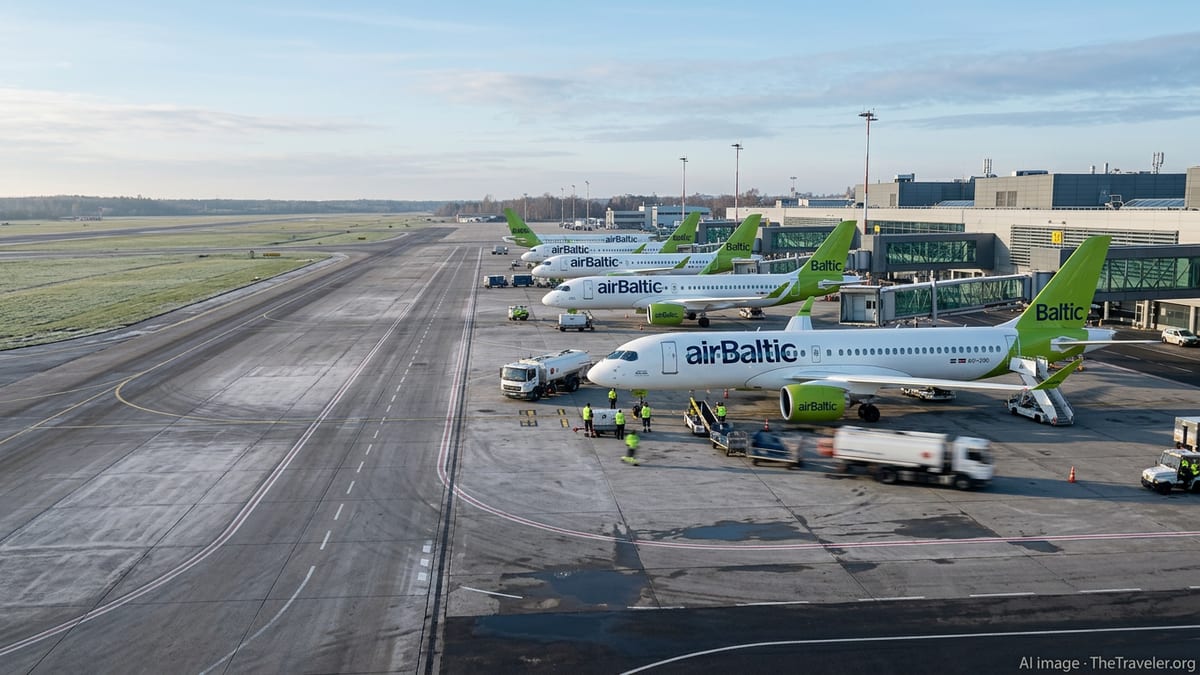
Latvian carrier airBaltic is on course for a record year in 2026, with the airline reporting its highest ever passenger volumes for the first five months and a sharp increase in capacity across its expanding Airbus A220 fleet.
Get the latest news straight to your inbox!
Record Passenger Volumes in Early 2026
Publicly available traffic updates indicate that airBaltic has carried nearly 2 million passengers in the first five months of 2026, representing high single digit growth compared with the same period in 2025. Reports on monthly performance show that the airline transported around 1.48 million passengers between January and April, rising to approximately 1.95 million by the end of May, described as the highest volume ever recorded by the carrier for this time of year.
The trend reflects a strong continuation of growth seen in individual months. Industry coverage of April performance highlighted a record 437,400 passengers during that month alone, up about 7 percent year on year and marking the strongest April in the company’s history. May figures point to a further step up in demand, with combined January to May numbers surpassing any previous start of year for the Latvian airline.
While the overall increase on a year earlier remains moderate compared with some pre‑pandemic surges, the results are notable given that 2025 already represented one of airBaltic’s busiest years. The airline carried around 8.7 million passengers across all operations in 2025, so the 2026 trajectory suggests that a new full year record is within reach if current trends in bookings and load factors are sustained through the peak summer season.
Capacity Expansion Driven by A220 Fleet Growth
airBaltic’s traffic growth in 2026 is closely tied to its continued capacity expansion. Investor presentations and public reports on the airline’s 2025 annual results show that the group is increasing its fleet from 51 to 56 Airbus A220 aircraft during 2026, with management targeting improved economies of scale and better utilisation across its bases in Riga, Tallinn, Vilnius and Tampere.
Available data on 2026 schedules and performance indicates that the airline has deployed higher seat capacity on many of its core European routes compared with 2025. Load factors in the spring months have remained broadly stable, edging just below 80 percent on average despite the capacity increase, suggesting that additional seats are being absorbed by rising demand rather than diluting unit revenues.
airBaltic’s strategy continues to focus on point‑to‑point and transfer traffic across the Baltic region, leveraging the fuel efficiency of the A220 as it rebuilds and extends its network. The larger fleet allows the airline to operate more frequencies on popular routes while also supporting seasonal and charter flying, which together contribute to the higher capacity and record passenger totals seen in 2026 to date.
From 2025 Turnaround to 2026 Growth Phase
The latest traffic data builds on a year of recovery and stabilisation in 2025. According to publicly available summaries of the company’s 2025 financial performance, airBaltic reported its highest revenue and passenger numbers to that point, while also reducing losses and improving key profitability metrics. The airline operated a record number of flights during 2025, and forward‑looking statements at the time pointed to further growth and yield recovery in 2026.
Sector commentary has noted that 2025 was a year of two halves for the Latvian carrier. The first part of the year was affected by operational constraints, including engine availability issues and wet‑lease commitments, while the second half saw stronger yields and gradually improving utilisation of the core fleet. Against this backdrop, the acceleration in passenger traffic and capacity in early 2026 indicates that the airline is entering a more growth‑oriented phase.
At the same time, financial reports from the first quarter of 2026 show that the external environment for European airlines remains challenging, with higher fuel prices and geopolitical tensions weighing on costs and profitability. For airBaltic, this has meant balancing expansion with a continued emphasis on cost control, revenue quality and full use of the enlarged A220 fleet, in order to translate growing passenger numbers into sustainable financial results.
Regional Demand and Competitive Landscape
The record traffic figures for airBaltic in 2026 are unfolding against a backdrop of strong demand for air travel across the Baltic region and Europe more broadly. Industry organisations have highlighted steady global passenger growth in early 2026, with capacity and load factors trending higher as carriers capitalise on resilient leisure and business demand. This environment has supported airBaltic’s efforts to fill additional seats even as it grows capacity.
However, competition in the airline’s home markets has intensified. Low‑cost carriers and other network airlines have been expanding their presence at Baltic airports, while some neighbouring hubs have reported record passenger volumes of their own. Commentators tracking regional airport statistics note that Lithuanian airports and rival Baltic gateways have posted strong growth, challenging Riga’s traditional role as the primary transfer hub in the region and putting pressure on airBaltic to maintain its market share.
In response, the airline has continued to refine its route network, adjusting frequencies and capacity where needed while also exploring new seasonal and niche destinations. This network management, combined with the flexibility of the single‑type A220 fleet, has enabled airBaltic to keep overall traffic trending upward in 2026 despite a more crowded competitive landscape.
Outlook for the Rest of 2026
With the peak summer travel period under way, airBaltic’s record start to 2026 creates a strong platform for the rest of the year. If current growth rates in passenger numbers and capacity are sustained, full year traffic could surpass the 2025 total and set a new benchmark for the airline, confirming its role as a leading carrier in Northern and Eastern Europe.
Analysts following the sector point out that the key variables for the coming months will be load factors, yields and operational reliability, particularly as the carrier ramps up utilisation of its expanded A220 fleet. Any further volatility in fuel prices or regional airspace disruptions could still affect margins, but steady demand and continued efficiency gains would support the airline’s stated focus on revenue quality and cost discipline.
For travellers across the Baltic states, the growth in airBaltic’s passenger traffic and capacity in 2026 translates into more frequencies and a wider choice of nonstop connections to major European cities and beyond. As the airline moves through the second half of the year, its ability to sustain record volumes while navigating cost headwinds will be central to shaping both its financial position and its competitive standing in the wider European market.