


More news on this day
Austria’s tourism industry is entering a new phase of rapid expansion, with record visitor numbers across its Alpine regions, renewed investment in mountain infrastructure and a growing focus on lesser-known valleys and cultural hubs beyond Vienna and Salzburg.
Get the latest news straight to your inbox!
Record Arrivals Signal a New High for Alpine Tourism
Recent data from Statistics Austria and national tourism agencies indicate that the country’s visitor economy is setting fresh benchmarks, particularly in the mountains. The summer season of 2024 delivered an all-time high for overnight stays, with national figures surpassing the previous record set in 2023 and underscoring the enduring strength of both domestic and international demand for the Alps.
Tirol, one of Austria’s flagship Alpine regions, illustrates the scale of this surge. Tourism authorities there reported more than 22 million overnight stays and over 6 million arrivals in the 2024 summer season alone, driven by hiking, cycling and lake tourism in high valleys traditionally considered secondary to major ski hubs. Observers note that this performance consolidates Tirol’s position as a year-round destination rather than a purely winter playground.
Growth has been broad-based across key international markets. According to figures compiled from Statistik Austria and national tourism marketing bodies, long-haul markets such as Australia have set new records for arrivals and overnight stays, with 2025 marking the third consecutive year of double-digit growth from that segment. Industry analysts describe this as evidence that Austria’s image as a scenic but compact Alpine country is resonating with travelers prepared to stay longer and explore more remote areas.
Winter tourism has also rebounded strongly. Statistics Austria’s assessment of the 2023/24 winter season showed higher guest numbers and nights than the previous year, particularly in ski regions with reliable snow conditions at higher elevations. This has helped offset weaker demand in some lower-lying resorts facing increasingly variable snowfall.
Hidden Valleys and Secondary Regions Step Into the Spotlight
Behind the headline numbers, a quieter shift is underway as visitors fan out into lesser-known valleys, side valleys and rural regions that once saw only modest tourism flows. Recent promotion campaigns by regional tourism boards have spotlighted landscapes such as the side valleys of Tirol, the Styrian and Lower Austrian foothills, and small Alpine communities that emphasize traditional farm stays, hiking networks and soft adventure.
One example is the expansion of the Wexl Trails network on the Wechsel massif at the border of Styria and Lower Austria. The project, which has created dozens of kilometers of new and linked mountain bike routes since 2023, is promoted as a flagship initiative for Eastern Austria and an alternative to the more saturated Western Alpine hotspots. Local reports describe a noticeable uptick in summer visitors combining trail cycling with stays in nearby villages that previously relied mainly on day-trippers.
Agrotourism and farm-based accommodation have also grown in visibility. Research presented at an Alpine tourism conference in 2024 highlighted the importance of farm stays for sustaining small holdings in mountainous regions, particularly in Austria where diversified rural tourism supports a significant share of agricultural businesses. These operations are increasingly incorporating nature-education programs, local food tastings and low-impact outdoor activities to appeal to visitors seeking slower, more immersive trips.
Tourism specialists note that these developments are not only dispersing visitor flows but also helping to stabilize local economies that have struggled with depopulation. Investments in hiking infrastructure, hut networks and public transport in these areas are widely seen as crucial to ensuring that growth in tourism aligns with environmental and social priorities.
Cultural Powerhouses Anchor Urban and Rural Tourism
While the Alps remain the core of Austria’s tourism story, cultural cities and historic landscapes continue to play a central role in attracting international visitors. Vienna’s museums, music institutions and historic districts retain strong global appeal, complemented by Salzburg’s combination of baroque architecture, festival culture and Alpine backdrop. Linz and Graz, both former European Capitals of Culture, have reinforced their positioning with contemporary art venues, riverside redevelopment and expanded event calendars.
Beyond the cities, iconic cultural landscapes along the Danube, including the Wachau Valley with its terraced vineyards and monastery complexes, are drawing sustained interest from cultural and culinary travelers. Public information on visitor flows in these regions points to steady growth in overnight stays linked to wine tourism, cycling itineraries and river cruises that combine heritage visits with rural stays.
Smaller destinations are leveraging their own cultural assets to diversify beyond day-trip tourism. Mountain towns with strong folk traditions, historic mining villages in regions such as the Salzkammergut and former industrial centers in Upper Austria are investing in museums, performance spaces and festivals that lengthen average stays. Analysts describe these initiatives as part of a broader strategy to ensure that Austria’s “travel empire” rests not only on its landscapes but also on a dense network of cultural experiences.
Tourism boards have increasingly framed Austria as a country where culture and nature are closely intertwined, pointing to alpine music festivals, high-mountain art installations and cross-border cultural routes as examples. This framing appears to resonate with travelers seeking multi-dimensional trips that combine outdoor recreation with concerts, exhibitions and culinary experiences in a single itinerary.
Infrastructure Investments Open Up the Alps
The surge in demand has been underpinned by significant public and private investment in transport and tourism infrastructure. Austria’s national rail operator reports that step-by-step upgrades to key Alpine routes, including the long-planned Semmering base tunnel, are moving toward completion, promising shorter journey times between Vienna and the Styrian and Carinthian Alps later in the decade. Official transport documents highlight billions of euros earmarked for rail modernisation and maintenance through 2029, with an explicit emphasis on reliability for leisure as well as commuter traffic.
Austria’s KlimaTicket, a nationwide flat-rate public transport pass launched earlier in the decade, has also influenced travel behavior. Academic analyses of ticket usage suggest a measurable increase in passenger numbers across rail and regional services, indicating that more residents and visitors are choosing trains and buses to reach Alpine destinations. Regional tourism officials have promoted the pass as a climate-friendly alternative to car-based holiday travel, particularly for city dwellers planning weekend or short-stay trips to the mountains.
On the road network, major infrastructure operators have reported sustained levels of investment in motorways and alpine tunnels, while also noting a slight decline in heavy truck traffic linked to broader economic conditions. Some environmental groups argue that these trends, combined with expanded public transport options, present a window of opportunity to shift more tourism-related travel to lower-carbon modes.
At the local level, new mountain bike trails, upgraded hiking paths and refurbished Alpine huts reflect targeted funding streams that support tourism infrastructure with explicit sustainability criteria. Government-backed investment schemes encourage hotels, guesthouses and cable car operators to improve energy efficiency and reduce emissions, with grants and low-interest loans available for climate-related upgrades and digitalization projects.
Balancing Overtourism Pressures and Climate Risks
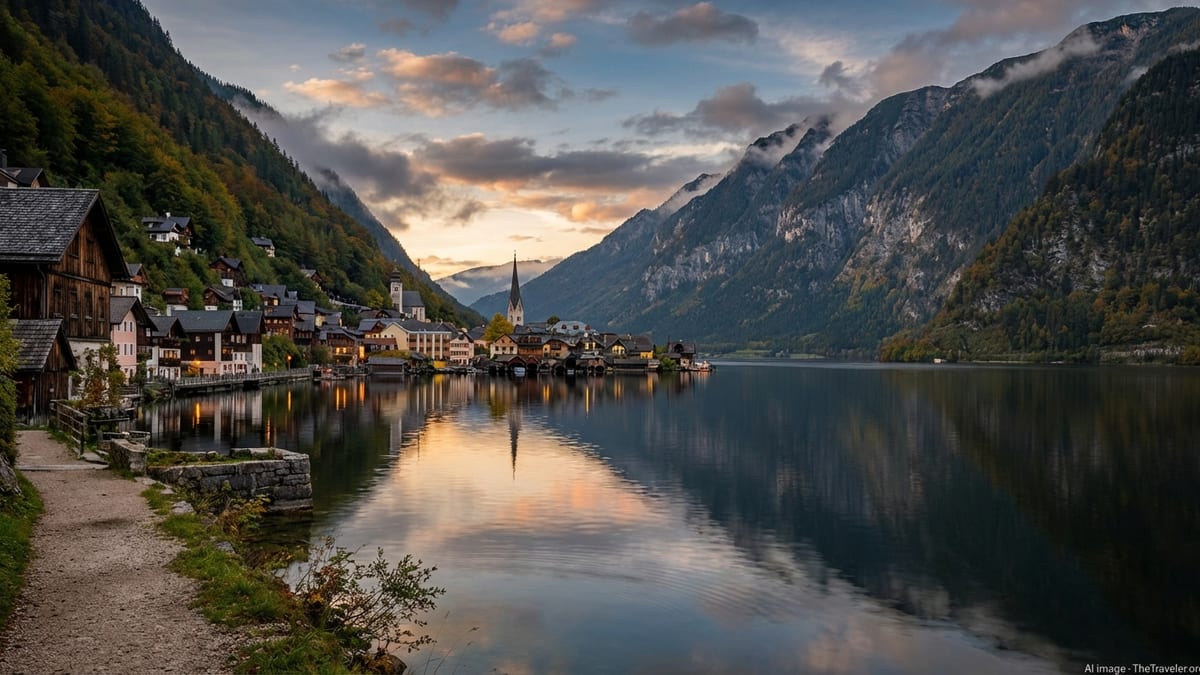
The rapid expansion of Austria’s tourism sector has not been without tensions. Well-known destinations such as Hallstatt in the Salzkammergut, often cited internationally as a symbol of overtourism, have grappled with dense crowds, high volumes of short-stay visitors and pressure on local housing. Municipal measures in recent years have included tighter bus regulations and visitor management strategies designed to limit the number of day-trippers and encourage longer, higher-value stays.
National media coverage has also highlighted concerns in parts of Tirol and Salzburg about traffic congestion, housing affordability and the quality-of-life impacts of high visitor densities at peak times. Surveys and public debates suggest that while the majority of residents still view tourism positively, there is growing demand for stricter regulation of holiday rentals, better control of traffic in narrow valleys and clearer limits on the expansion of ski infrastructure.
Climate change adds another layer of complexity. Winters with unreliable snowfall at lower elevations are pushing some regions to reposition themselves around year-round, low-impact tourism instead of intensive snowmaking and large-scale ski expansion. Environmental organizations and researchers have questioned the long-term viability of heavily mechanized winter tourism in marginal areas, advocating for a shift toward hiking, cycling, spa tourism and cultural events that are less dependent on frozen conditions.
Policy responses so far combine targeted restrictions in the most pressured locales with broader strategies to disperse tourism and promote climate-friendly mobility. Industry observers expect that the next phase of Austria’s tourism development will hinge on how effectively the country can channel demand from its booming “travel empire” into sustainable patterns of travel, spending and land use across its majestic Alps, hidden valleys and cultural centers.