


More news on this day
Dozens of flights in and out of Sydney Airport are facing significant delays this weekend, with domestic and international services disrupted as air traffic management constraints and peak-hour congestion ripple through Australia’s busiest aviation hub.
Get the latest news straight to your inbox!
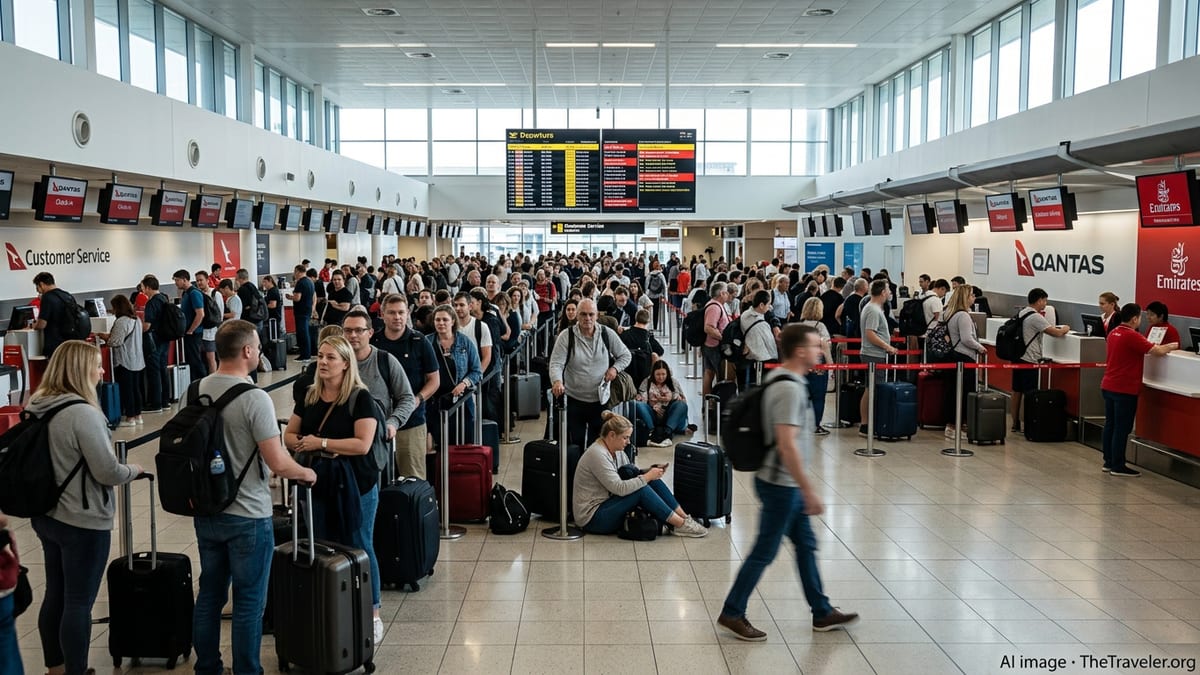
Delays mount across domestic and international routes
Reports from flight tracking platforms and local coverage indicate that a wave of delays has affected departures and arrivals at Sydney Airport, particularly during the morning and late afternoon peaks. Dozens of services are operating behind schedule, with some pushed back by more than an hour and knock-on effects flowing through the broader network.
Domestic links to Melbourne, Brisbane and other east coast cities appear particularly affected, reflecting Sydney’s role as a central connector in Australia’s aviation system. Passengers have reported spending extended periods waiting at gates and on aircraft already boarded while revised departure slots are allocated.
International operations are also feeling the strain, with long-haul flights forced to adjust schedules as departure times slip and aircraft miss their intended take-off windows under Sydney’s tightly managed movement cap. For travellers with onward connections, the disruption is increasing the risk of missed flights and last-minute rebooking.
The latest disruption follows a pattern of intermittent operational challenges at the airport during 2026, where relatively small schedule disturbances have quickly translated into widespread delays because of limited spare capacity.
Air traffic control resources under pressure
Publicly available information points to ongoing staffing constraints in air traffic control as a key factor compounding delays. Industry submissions and recent coverage have highlighted short-notice absences and roster gaps affecting air traffic management services, including those overseeing Sydney’s busy airspace.
When controller numbers are tight, stricter flow restrictions are often applied to maintain safety margins, effectively reducing the number of aircraft permitted to depart or arrive in a given period. That can quickly create queues on the ground, with aircraft held at gates or on taxiways while they wait for clearance to join the departure sequence.
Observers note that Sydney’s challenges are not unique, with air traffic control workforces under pressure in several countries. However, Sydney’s central role in the Australian network, combined with strict regulatory limits on hourly movements and overnight operations, means any constraint in controller availability can have an outsized impact on punctuality.
Earlier analyses of regional air services have also pointed out that when Sydney encounters delays or capacity issues, the disruption tends to cascade onto smaller routes with limited daily frequencies, making it harder for affected passengers to find alternative options.
Structural limits at a tightly constrained hub
The current wave of delays is unfolding against a backdrop of long-standing structural constraints at Sydney Airport. The hub operates under a legislated cap on aircraft movements per hour, and an overnight curfew that sharply limits take-offs and landings between late evening and early morning. These rules are designed to balance aviation activity with community impacts but leave little flexibility to recover from disruption.
Operational data published in recent quarters shows that Sydney continues to rank among Australia’s most heavily trafficked airports, with dense schedules on key domestic trunk routes and steadily rebuilding international traffic. During peak periods, schedules are often planned close to the available movement limit, meaning that any weather disruption, technical issue or staffing shortage can force rapid rescheduling.
When that happens, airlines typically face difficult choices about which flights to delay and how to reallocate scarce slots. Short-haul domestic services are sometimes used to absorb timetable changes because they can, in theory, make up time later in the day. In practice, rolling delays can accumulate, particularly on aircraft operating multiple sectors through Sydney.
For travellers, the result is a familiar pattern: crowded departure halls, revised boarding times and extended waits on the tarmac while aircraft join a growing queue for take-off. With Sydney serving as a primary connecting point for many regional and international itineraries, the implications are felt far beyond the city itself.
Impact on passengers and travel plans
Passengers caught up in the latest disruption describe a mix of moderate and severe impacts, depending on the length of delay and the flexibility of their plans. Those on leisure trips or short domestic hops may experience frustration and additional time at the terminal but ultimately reach their destination on the same day.
For travellers with tight international connections or important events scheduled at their arrival point, the stakes are higher. Even relatively modest delays can lead to missed onward flights, rebooked itineraries and added accommodation or transport costs. Some travellers also encounter challenges reuniting with checked baggage when itineraries change at short notice.
Consumer advocates consistently encourage passengers facing disruption to check their airline’s conditions of carriage and local consumer protection guidelines. In many cases, compensation is not guaranteed, particularly when delays stem from factors classified as outside an airline’s control, but carriers may still provide meal vouchers, accommodation or alternative routing on a case-by-case basis.
Travellers with upcoming departures from Sydney are being urged through public messaging and online forums to monitor flight status closely on airline apps or airport information screens, allow extra time for check-in and security, and keep essential items and medications in their carry-on baggage in case of extended waits.
Calls grow for long-term resilience solutions
The latest disruption is likely to renew debate about how to build greater resilience into Sydney’s aviation system. Industry submissions to government reviews have called for reforms to the way take-off and landing slots are allocated, arguing that more flexible and transparent processes could improve punctuality and make better use of existing capacity.
There is also ongoing discussion about longer-term infrastructure responses, including the phased introduction of services at the new Western Sydney airport, which is being positioned as a curfew-free complement to the existing hub. While that project is still in the lead-up to full commercial operations, its eventual integration into the network is expected to redistribute some traffic and provide alternative options for airlines and passengers.
In the nearer term, observers point to improved workforce planning for air traffic control and ground operations, along with investments in technology to manage aircraft flows more efficiently, as key levers to reduce the severity of future disruption episodes. Data-driven tools already being trialled internationally aim to predict congestion and optimise turnaround times before delays compound.
For now, however, travellers in and out of Sydney remain exposed to the effects of tight capacity and operational strain. As this weekend’s delays show, even modest shocks to a finely balanced system can translate quickly into significant disruption for dozens of flights and thousands of passengers.