


Flight disruption has become a frustratingly common part of modern air travel, and many passengers now turn to specialist companies to handle compensation claims when airlines drag their feet. AirClaim is one of several services that promise to manage the legal and administrative hassle for you, usually on a “no win, no fee” basis. This review looks at how AirClaim performs in the real world and how it compares with major rivals such as AirHelp, Skycop and other well known flight compensation firms in 2026.
Get the latest updates straight to your inbox!
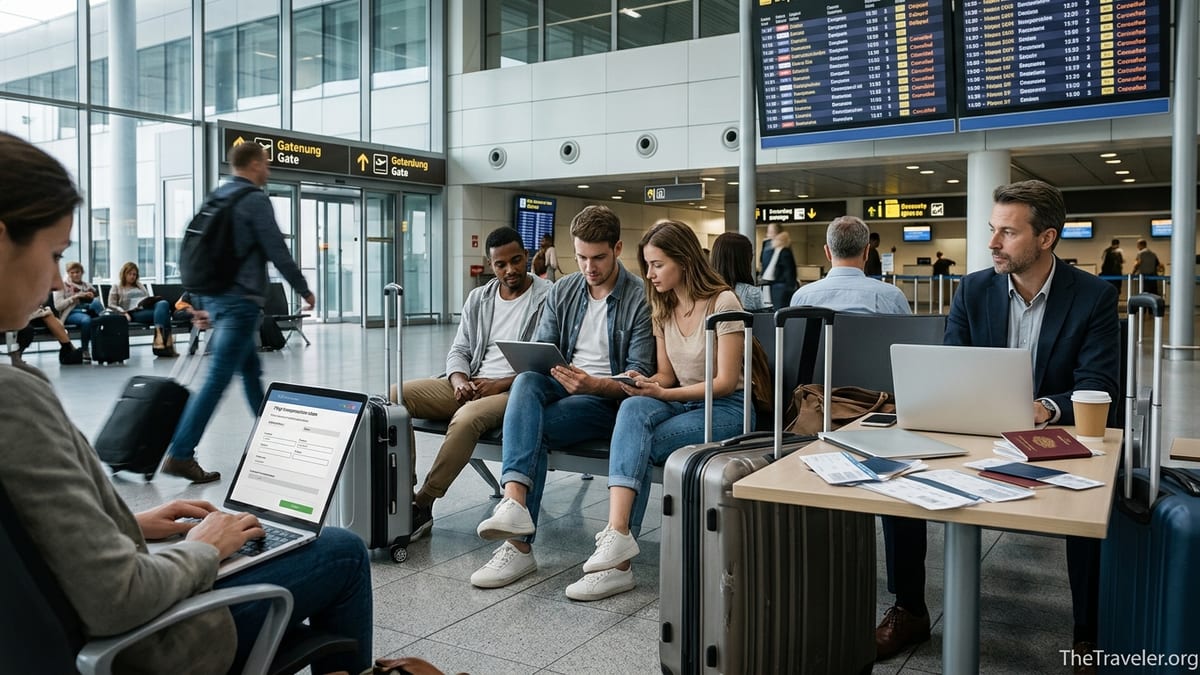
How AirClaim Works in Practice
AirClaim focuses on helping passengers obtain compensation primarily under the European Union’s EC261 regulation, as well as similar passenger rights rules in other jurisdictions. The typical process starts online: you enter your flight number, date, and what went wrong, then upload boarding passes or e tickets. From there AirClaim assesses eligibility and, if the case looks viable, you sign an assignment or power of attorney form so the company can communicate with the airline and, if needed, pursue the claim in court on your behalf.
In practice, customers report that the online intake is straightforward and can be completed in a few minutes on a laptop or phone. For example, a traveler with an eight hour delay on a European low cost carrier described simply entering the booking reference and delay length before AirClaim took over communication with the airline. Once the form is submitted, communication moves mostly to email, with the occasional request for additional documents such as proof of expenses or a copy of an identity document if legal action is necessary.
As with any claims firm, timelines are highly variable. In some uncomplicated EC261 cases against responsive airlines, travelers say AirClaim has recovered money within a few weeks. However, complex or contested files can stretch much longer. One customer who used AirClaim for multiple delays with a Spanish low cost airline reported waiting roughly two months from airline approval to final payment. That kind of range is typical across the whole sector and not unique to AirClaim, but it is important to understand if you need funds quickly.
When compensation is finally obtained, AirClaim deducts its commission and transfers the remainder, usually by bank transfer. That means you must be comfortable sharing payment details at the end of the process and, in many cases, accepting that the payout may arrive months after the original disruption. For travelers who value time and reduced stress over squeezing out the last euro, this trade off is often acceptable, but it is different from handling the claim directly with the airline.
Fees, Payouts and the Real Cost of Convenience
The central question for any flight compensation service is how much of your eventual payout you actually keep. AirClaim operates on a “no win, no fee” structure, which is now standard in the industry. While precise pricing can vary by jurisdiction and case type, public information and customer reports indicate that successful claims are typically subject to a commission in the region of one third of the recovered amount, often plus applicable taxes and, in some markets, a handling fee. The key point for travelers is that you do not pay anything up front, but you also do not receive 100 percent of the compensation.
To make that more concrete, consider a common EC261 scenario. A passenger on a three hour or longer delay on an intra EU flight of more than 1 500 kilometers is often entitled to 400 euros, while a delay on a longer haul flight can reach the regulation’s maximum of 600 euros. If AirClaim succeeds in obtaining 600 euros and charges roughly one third as commission, the traveler might receive around 400 euros after fees. If the claim required court action or local counsel, the effective deduction could be somewhat higher, although AirClaim, like many competitors, typically absorbs legal costs if the case is ultimately lost.
Compared with big, heavily marketed players, AirClaim’s overall cost to the traveler appears broadly in line with the market, though not always the absolute cheapest. For instance, AirHelp, which operates globally and has detailed its own pricing publicly, lists a standard 35 percent fee for successful claims and a higher total fee, up to half the compensation, when legal action is required. Skycop, another major brand, advertises a 44 percent standard fee on standard cases. Those headline numbers illustrate that, in a straightforward 600 euro claim, using a service instead of going directly to the airline can easily cost you 200 euros or more in foregone compensation.
Whether this price for convenience is reasonable depends on your circumstances. A traveler who earns a high hourly wage and does not want to spend time reading regulations or chasing airline customer service may be perfectly content to let a specialist firm take a third of the payout. Another passenger who is comfortable writing formal complaints and, if necessary, escalating to a regulator or small claims court might reasonably prefer to keep the entire 600 euros and accept the paperwork burden. Understanding AirClaim’s approximate fee level in the context of rivals helps you decide which side of that trade off you are on.
Reputation, Reviews and Reliability
Because flight compensation cases are often slow and opaque, reputation is crucial. AirClaim maintains a solid presence on major review platforms, where its overall rating sits in the “good” to “excellent” range as of mid 2026, with several hundred reviews in multiple languages. Many passengers praise the company’s professionalism, regular updates and the fact that they recovered money after the traveler had given up dealing with the airline. Typical positive reviews mention simple online forms, clear explanations of eligibility and surprise at receiving compensation the traveler had not fully expected to win.
However, the picture is not uniformly rosy. Alongside praise, there are recurring complaints familiar across the entire claims industry. Some AirClaim customers describe long periods with little or no communication, difficulty getting a response to follow up emails or frustration that compensation approved by the airline took many weeks to reach their bank account. A few reviewers also express dissatisfaction with the final amount received, either because they had not fully understood the fee structure upfront or because they believed the company kept a larger portion than they had anticipated.
Those mixed experiences are not unique to AirClaim. Rivals like AirHelp and Skycop attract similarly polarized feedback. For example, AirHelp emphasizes that it has helped millions of passengers and showcases a very high average rating on review sites, yet you can still find travelers on consumer forums complaining that their cases dragged on for months with limited updates. Skycop, meanwhile, has drawn criticism in some online communities over disputes about eligibility and withheld funds, even as other customers report smooth, fast payouts. Seen in that light, AirClaim’s reputation looks broadly comparable to other established names: mostly positive, with enough negative experiences to reinforce the importance of reading the fine print.
One additional factor to consider is that AirClaim has been active in more complex legal arenas as well, including taking action in court against airlines in financial distress. In one widely reported case, the company petitioned for the insolvency of a struggling low cost carrier in Eastern Europe as part of its attempts to secure customer compensation. Moves like this underline that AirClaim is not merely forwarding emails, but is prepared to take assertive legal steps when it believes passengers’ rights are being ignored, although there is no guarantee that such actions will result in money for individual claimants if an airline ultimately collapses.
AirClaim Versus AirHelp, Skycop and Other Competitors
Comparing AirClaim with larger rivals helps clarify where it fits in the broader ecosystem. AirHelp is arguably the global market leader, with millions of passengers served, a multilingual mobile app and extensive marketing partnerships. It covers not only EC261 claims but also passenger rights in regions such as Brazil and North America, offers a subscription product that bundles automatic flight monitoring and airport fast track benefits, and maintains a large legal network for cases that go to court. For a traveler who flies frequently on multiple continents, that scale can be reassuring.
Skycop occupies a slightly different niche, positioning itself as especially aggressive on European claims. However, its pricing can be among the highest in the market, with a standard fee reportedly approaching half the compensation in some circumstances. Some travelers accept that price in exchange for not having to deal with the airline themselves. Others, especially those who learn that a straightforward 400 or 600 euro claim might be mostly recoverable with a few emails, view such high commissions as poor value. Feedback on Skycop from online travel communities mirrors that split, with strong praise from some users but serious criticism from others over withheld funds or eligibility misunderstandings.
Smaller or more regional firms, such as those focused on specific markets like Canada’s passenger rights regime, sometimes advertise lower fees or more personalized service. For instance, a boutique claims outfit working mainly with flights in and out of London or Toronto might charge closer to 20 to 25 percent but take only a limited number of cases each month. In other corners of the market, some firms have disappeared or been acquired, such as ClaimCompass being absorbed into a larger provider. The landscape is fluid and travelers should view any comparison as a snapshot rather than a permanent ranking.
Within this environment, AirClaim sits in the middle: large enough to have a recognizable brand, multilingual documentation and experience with complex litigation, but not as ubiquitous or diversified as giants like AirHelp. It does not appear to offer the kind of subscription based extras that AirHelp has built around its core claims engine, nor does it advertise the highest fees seen elsewhere. For an occasional traveler who simply wants a reputable firm to handle a difficult EC261 case, AirClaim is a credible candidate, but not the only option worth considering.
Real World Scenarios: When AirClaim Makes Sense
To understand where AirClaim adds the most value, it helps to look at concrete trip scenarios. Imagine a family from Boston connecting through a European hub to reach a beach holiday in Greece. Their first leg into Europe arrives five hours late due to a mechanical issue, they miss their onward connection, and the airline rebooks them on a flight the next morning without providing a hotel voucher. Under EC261, they may be entitled to compensation of up to 600 euros per person, plus reimbursement for the overnight hotel and meals. Many families in this position feel exhausted and upset, and the thought of navigating airline forms from home can be overwhelming. In such a case, handing the paperwork to AirClaim can be a rational choice.
Another example involves a business traveler based in Berlin whose short haul intra EU flight is canceled at short notice, forcing them to buy a last minute replacement ticket on another airline to make an important meeting. The original airline eventually refunds the unused ticket, but is slow to acknowledge liability for additional costs or statutory compensation. A specialized firm like AirClaim can help quantify the correct entitlement and pursue it, especially if the traveler’s employer prefers not to involve internal legal teams for a modest but symbolically important claim.
Then there are difficult edge cases, such as flights affected by airline insolvency or complex multi carrier itineraries. Suppose a traveler from New York booked a code share journey to Eastern Europe that fell apart after an intermediate carrier abruptly suspended operations. The primary airline blames the regional partner, while the regional carrier’s customer service team is unreachable. In these messy situations, knowing which entity is actually responsible under EC261 or local law can be non intuitive. AirClaim’s experience in litigating against struggling airlines and handling cross border disputes may offer a strategic advantage, even if the odds of full recovery remain uncertain.
Where AirClaim is less compelling is in very simple, clearly eligible cases with airlines known for paying promptly when pushed. For example, many travelers flying within the European Union on large flag carriers find that a well drafted email citing EC261, followed by a complaint to the relevant national enforcement body if needed, yields full compensation in a matter of weeks. In those situations, paying a third of the payout to any claims company, including AirClaim, can feel unnecessary once you understand the process.
Key Considerations Before You Sign with AirClaim
Before engaging AirClaim or any similar company, it is important to read the terms of engagement carefully. In many contracts, by assigning your claim you authorize the firm to negotiate, accept or reject settlement offers within certain parameters on your behalf. That can speed up resolution, but it also means you may have limited ability to intervene once a case is underway. Some agreements specify that if you independently accept a voucher or partial payment from the airline without notifying the claims firm, you may still owe the company its commission on the full theoretical entitlement.
Travelers should also pay attention to where the company is based and which law governs the contract. AirClaim has strong roots in Central and Eastern Europe and often pursues cases in local courts there. That is generally a benefit, because it means the firm is comfortable operating inside complex national legal systems. However, for a traveler in the United States or Canada, it can feel distant if a dispute arises with the claims company itself. Clear documentation about complaint processes, data handling and dispute resolution mechanisms is a useful indicator of professionalism.
Another factor is communication style. Some passengers value frequent, detailed updates, even if the underlying news is that the airline has not yet responded. Others are satisfied with a more hands off approach as long as the money eventually arrives. Reviews of AirClaim suggest that experiences vary: some travelers praise prompt, proactive email communication, while others say they had to chase for updates. If regular communication is important to you, consider testing the responsiveness of customer support with a pre contract inquiry before signing any assignment forms.
Finally, think about your own risk tolerance and the importance of the specific claim. If you are chasing 250 euros for a short delay, a six or twelve month wait might not matter much. If your case involves several family members and potential compensation in the thousands of euros, you may want to scrutinize terms even more closely, perhaps comparing AirClaim’s contract with those of at least one or two competitors before deciding.
The Takeaway
AirClaim operates in a crowded, sometimes controversial corner of the travel services market, yet it has carved out a solid position by combining legal expertise with a user friendly online process. For many passengers who feel outmatched by airline bureaucracy or confused by overlapping regulations like EC261, AirClaim offers a credible way to pursue money they might otherwise leave on the table, without any upfront cost and with a reasonable chance of eventual success.
At the same time, using AirClaim is far from cost free. The commission structure means that, in a typical 600 euro claim, you may give up a significant portion of your entitlement in exchange for convenience. Real world reviews highlight both efficient recoveries and frustrating delays in communication, which mirrors the broader patterns seen at competitors such as AirHelp and Skycop. The service is best suited to travelers who value reduced stress and expert guidance more than squeezing out every last euro of compensation.
If you are comfortable reading regulations, writing formal complaints and following up persistently, you may still be better off handling straightforward claims yourself, especially on well regulated routes within Europe. But if you are facing a complicated multi leg itinerary, an uncooperative airline or a carrier based in a jurisdiction you do not understand well, AirClaim deserves a place on your shortlist. As with any legal or quasi legal service, the smartest move is to compare fees, read the fine print carefully and decide whether the time and stress you save are worth the share of your compensation you ultimately give up.
FAQ
Q1. Is AirClaim a legitimate company for flight compensation?
AirClaim is a long established player in the flight compensation market, with hundreds of public reviews and a track record of handling claims under EC261 and similar regulations. While experiences vary, there is ample evidence that it successfully recovers money for many travelers, which distinguishes it from short lived or dubious operators.
Q2. How much does AirClaim usually charge if my claim is successful?
AirClaim uses a no win, no fee model and typically deducts a commission that is roughly around one third of the recovered compensation, sometimes plus taxes or handling charges depending on jurisdiction. Exact percentages can vary, so it is important to review the fee section of the contract before signing.
Q3. How long does it take to get my money through AirClaim?
Timelines are highly variable. Simple, uncontested EC261 cases with cooperative airlines may resolve in a few weeks, while more complex or disputed claims can take many months and occasionally more than a year, especially if court proceedings are needed. Reviews of AirClaim reflect this range.
Q4. Can I handle a flight compensation claim myself instead of using AirClaim?
Yes. Many travelers successfully claim compensation directly from airlines by citing EC261 or local regulations, using airline web forms and escalating to national enforcement bodies or small claims courts if needed. Doing it yourself can save the commission fee, but usually requires more time, persistence and comfort with legal style correspondence.
Q5. What types of problems can AirClaim help with?
AirClaim generally focuses on significant delays, cancellations, denied boarding due to overbooking and missed connections that fall under EC261 or similar passenger rights rules. It may also assist with related reimbursement for certain expenses, such as hotels and meals, when those are clearly linked to a qualifying disruption.
Q6. Will using AirClaim reduce my chances of getting compensation?
In most situations, using a specialist firm does not reduce your legal entitlement and can improve your chances when an airline is unresponsive or disputes liability. However, you will receive less net money because of the commission, and you may have less direct control over negotiations once you assign the claim.
Q7. What happens if the airline offers vouchers instead of cash?
Policies differ by company, but firms like AirClaim typically aim for cash compensation where the law provides for it. If an airline offers vouchers, AirClaim may advise you on whether this is acceptable or push for money instead. It is important to clarify with AirClaim in advance how voucher offers are handled and whether accepting one triggers the commission.
Q8. Is AirClaim better than AirHelp or Skycop?
“Better” depends on what you value. AirHelp has greater global reach, more technology features and a very large customer base, while Skycop markets itself as aggressive on European claims but often at a higher fee. AirClaim sits between these extremes in size and price, with a solid but less prominent presence. Comparing fees, reviews and contract terms is the most reliable way to decide which fits your needs.
Q9. Does AirClaim cover flights outside Europe?
AirClaim’s core strength lies in cases that involve EC261, which covers flights departing the European Union and flights into the EU on EU carriers. It may handle some non European routes where local laws allow, but its coverage is not as broad as some global competitors. Travelers on purely domestic North American or Asian routes may find more specialized local options.
Q10. What should I check before signing an agreement with AirClaim?
Before signing, carefully read the fee percentage, any extra charges for legal action, how long the assignment lasts, rules about accepting offers directly from the airline and the company’s policy on vouchers. It is also wise to verify how you can contact customer support, how your data is stored and what happens if you wish to withdraw your claim later.