


More news on this day
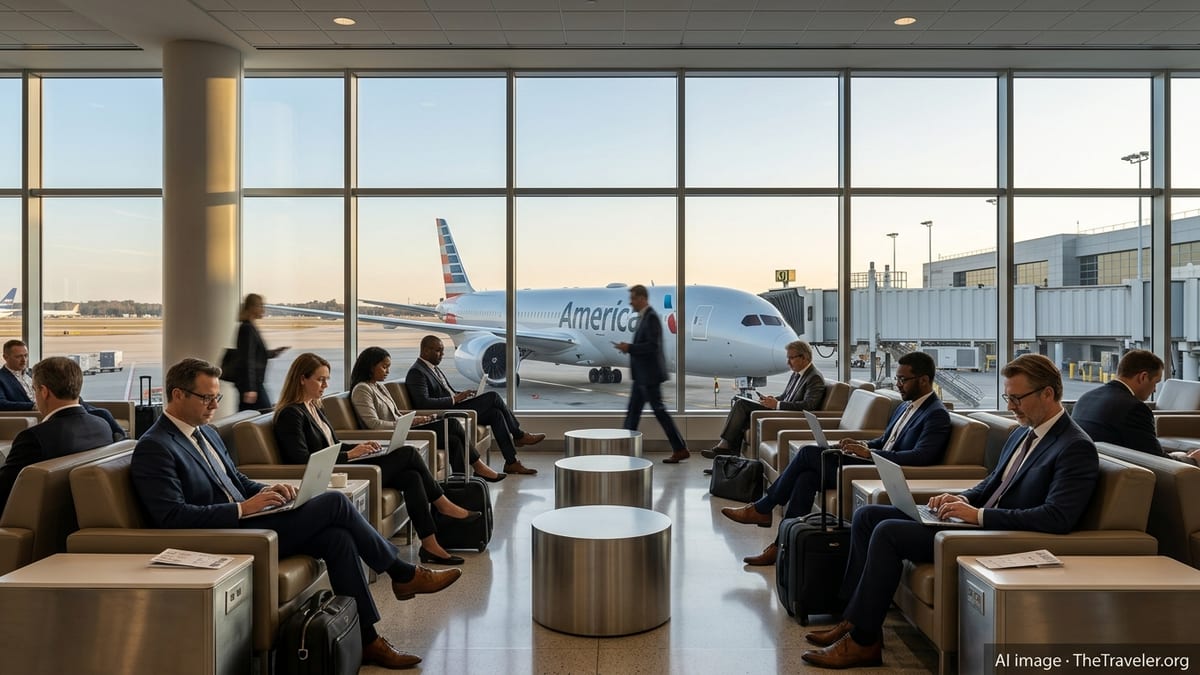
American Airlines is embarking on one of its most ambitious cabin overhauls in years, expanding premium seating and rolling out redesigned interiors as it fights to retain high-spending travelers in an increasingly competitive long-haul market.
Get the latest news straight to your inbox!
Widebody retrofits put premium seats at the center
Publicly available information shows that American Airlines is in the midst of a sweeping retrofit program that will significantly increase the share of premium seats on its long-haul fleet. The carrier is updating existing Boeing 777-300ER and 777-200ER jets while also taking delivery of new Boeing 787-9 aircraft configured with a higher proportion of premium cabins than earlier versions.
According to published coverage of the program, the new 787-9s introduce American’s Flagship Suite business-class product along with a reimagined premium economy section and refreshed main cabin. The configuration emphasizes lie-flat seating and direct aisle access in business class, aligning American more closely with the premium-heavy layouts that rivals have deployed on key transatlantic and transpacific routes.
Data from the airline’s own fleet disclosures indicates that by combining retrofitted 777s with the new 787-9s, American expects to grow the number of lie-flat seats on its international aircraft by more than half by the end of the decade. That represents a notable shift in strategy toward high-yield business, corporate and affluent leisure travelers rather than pure seat count.
Industry analysts quoted in trade publications have framed the move as a response to changing demand patterns since the pandemic. While some traditional corporate travel has lagged, premium leisure and so-called “bleisure” trips mixing work and vacation have grown, supporting airlines that can offer more privacy, comfort and amenities at the front of the cabin.
Flagship Suite raises the stakes in business class
The centerpiece of American’s cabin upgrade is Flagship Suite, a new generation of business-class seat that transforms the airline’s premium offering on both new and refurbished widebodies. The suite design replaces older angled or open-plan layouts with fully enclosed or semi-enclosed pods that prioritize privacy and personal space.
Seat renderings and early aircraft photos shared in airline and aviation media show doors at each suite, larger work surfaces and the option to recline into a chaise lounge position, creating what the airline markets as a more residential feel. High-resolution 4K seatback screens, personal device charging via AC and USB ports, and Bluetooth connectivity for wireless headphones are also being introduced as part of the wider upgrade package.
The suites debut on newly delivered 787-9 aircraft and will be rolled out to existing 777-300ER jets through a phased retrofit schedule. The densest version of the new cabin on the 787-9 includes more than 50 Flagship Suite seats, a sizable increase in premium capacity compared with the previous generation of the aircraft.
By pairing the hard-product changes with updated bedding, amenity kits and an expanded food and beverage program in business class, American is positioning Flagship Suite as a direct challenger to premium cabins from Delta, United and several European and Gulf carriers that have long invested heavily in high-end business-class experiences.
Premium Economy grows as a bridge to the front cabin
Alongside the business-class overhaul, American is giving new prominence to premium economy, which has evolved into a crucial revenue stream on long-haul routes. The latest 787-9 configuration features an enlarged premium economy cabin with redesigned seats, including upgraded headrests and additional storage areas, according to the airline’s product materials.
The premium economy product is being extended beyond international services to select domestic routes that attract high-spend travelers, such as the New York to Los Angeles corridor. Airline announcements indicate that the cabin will be available on more transcontinental flights, offering a mid-tier option for travelers who want more space and enhanced service but are not prepared to pay for business class.
On board, premium economy passengers gain wider seats, extra legroom, enhanced dining relative to the main cabin and improved bedding, as well as priority airport services in many cases. For frequent flyers, the cabin also creates a clearer upgrade ladder from standard economy into a differentiated product that can command a premium without requiring the higher fares of business class.
Travel industry reporting suggests that premium economy has become one of the fastest-growing cabin types across international airlines, and American’s decision to boost its footprint in this segment mirrors similar moves by competitors on transatlantic and transpacific sectors.
Narrowbody jets see larger domestic premium cabins
The focus on premium seating extends beyond widebody aircraft. American is also reconfiguring its Airbus A319 and A320 narrowbodies that serve domestic and short-haul international routes, expanding the number of seats in the forward cabin and updating in-flight technology.
Company documentation and recent announcements indicate that the A319 fleet will see its premium cabin grow to 12 seats, while the A320 fleet will expand to 16 premium seats. These changes aim to capture more high-value demand on busy business and sun-focused leisure routes where travelers are increasingly willing to pay extra for additional comfort, priority services and more personalized attention.
The narrowbody revamp pairs the larger premium sections with upgrades such as complimentary high-speed Wi-Fi for loyalty program members, new or refreshed seatback entertainment on many aircraft and expanded in-seat power options. This combination is designed to align the domestic experience more closely with what passengers encounter on American’s newest long-haul jets.
By adding more premium capacity on smaller aircraft, American can also better match supply to demand, deploying jets with higher numbers of front-cabin seats on routes that support strong yields while retaining more economy-heavy layouts where price-sensitive traffic dominates.
Competitive pressure intensifies on top-tier travelers
American’s latest cabin strategy comes amid fierce competition for premium customers from both U.S. and international airlines. Domestic rivals have introduced their own updated suites, enhanced soft products and expanded premium economy cabins, raising the standard across key long-haul markets.
Travel industry analysis notes that American’s move to eliminate traditional international first class in favor of a larger, more sophisticated business-class product aligns with a broader global trend. Many carriers have concluded that a single, high-quality premium cabin generates better returns than maintaining a small number of ultra-luxury first-class seats.
For travelers, the changes mean a greater likelihood of finding lie-flat beds, privacy features and upgraded amenities even at the business-class level, though in many cases at higher fares than before. At the same time, an expanded premium economy footprint gives cost-conscious passengers more ways to trade up from standard economy without committing to business-class pricing.
As retrofits progress and additional aircraft are delivered, the effectiveness of American’s premium pivot will be tested on competitive routes across the Atlantic and Pacific. The scale of the investment underscores the airline’s belief that winning over high-yield passengers with better cabins and experiences is central to its long-term profitability.