


When a long-awaited trip turns into a missed connection, an overnight airport stay or a cancelled holiday, flight compensation services promise to fight the airline for you. Two of the biggest names in this space are AirHelp and Compensair. Both say they can turn delays and cancellations into cash under rules like EU261, but they work slightly differently and suit different types of travelers. This guide breaks down how each service operates today, what they cost, where they are strongest and real-world examples so you can decide which one fits you better.
Get the latest updates straight to your inbox!
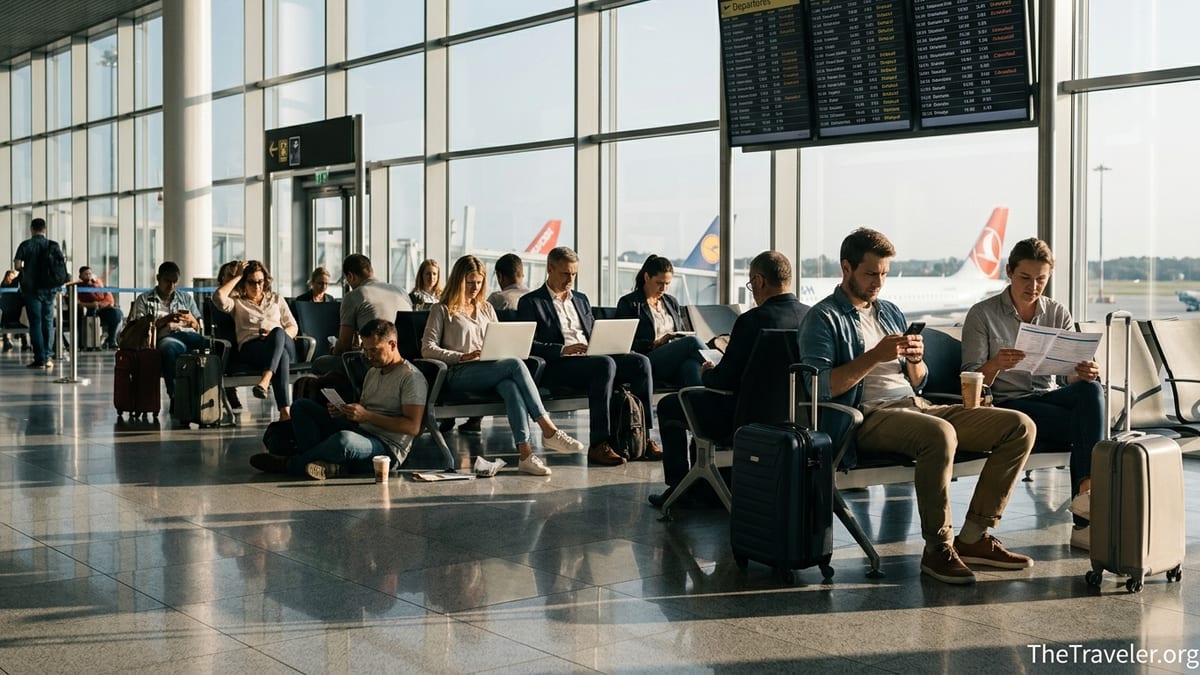
How Flight Compensation Services Actually Work
Flight compensation companies sit between you and the airline. Instead of you writing emails, quoting legal articles and waiting months for a reply, you hand the case to a specialist that does this every day. In return, they keep a slice of any money they recover. For travelers, this can be attractive when the rules are confusing or when the airline simply stops responding.
Most of these services focus heavily on European and UK rules such as EU261 and UK261, which can award up to about 600 euros per passenger for long delays or cancellations on qualifying flights. In practice, that means a family of four flying Lisbon to New York could be looking at roughly 2,400 euros in compensation if their flight arrives more than three hours late and the delay is the airline’s fault. Services like AirHelp and Compensair handle the paperwork, argue with the airline and, if necessary, escalate to legal partners.
The trade-off is cost and control. If you claim yourself and succeed, you usually keep 100 percent of the compensation, but you also take on the risk of being ignored or getting lost in bureaucracy. If you use a claim service, you share the payout but hand off the hassle. The right choice depends on how complex your case is, how patient you are and how comfortable you feel quoting regulations to an airline.
Because rules and airline behavior evolve, it is important to look at how each service operates today. Recent fee schedules, customer reviews and real case stories show clear differences between AirHelp and Compensair in pricing, scope of coverage and the way they handle difficult claims.
AirHelp in 2026: Global Reach and Membership Option
AirHelp has grown into one of the best-known brands in the flight compensation market and operates globally. The company focuses on “no win, no fee” compensation claims and offers an optional membership called AirHelp Plus. Under its current public fee model in Europe, standard customers typically give up about 35 percent of any compensation AirHelp recovers as a service fee, sometimes with an additional legal action fee if the case has to go to court. Some travelers report that if a claim proceeds to legal action, the effective share can approach roughly half of the payout, though the exact numbers depend on the country and terms in place at the time you sign.
One distinctive feature is AirHelp Plus, a paid annual membership that starts at roughly 40 euros per year in Europe. Members who bought the plan before a disruption generally receive 100 percent of any compensation recovered on covered claims, because AirHelp waives its usual service fee for them. For a frequent traveler shuttling between London, Berlin and Barcelona several times a year, a single successful compensation case of 400 to 600 euros can easily justify that membership cost.
AirHelp’s scale is another key factor. The company advertises a large in-house team backed by partner law firms in many jurisdictions, and it runs its own eligibility checker that analyzes flight data to see whether a case is likely to qualify. Recent traveler reports describe AirHelp handling complex scenarios, including missed connections outside the EU where the first leg was covered by EU261, or cases where an airline repeatedly denied responsibility until legal pressure was applied.
However, scale brings downsides. Some travelers complain that the process can be slow when a case enters the legal system, with a few reporting waits approaching two to three years in very contested situations. Others mention generic email updates and difficulty getting detailed answers on how long the claim will take. For straightforward, uncontested cases, though, feedback suggests that payouts commonly arrive within a few weeks to a few months after filing.
Compensair: Focused, Simple Pricing and Strong EU261 Emphasis
Compensair is a smaller but well-established player that concentrates heavily on EU261-style cases. The company positions itself as a straightforward option: you enter your flight details, the system checks eligibility and Compensair pursues the airline on a contingent fee basis. Travelers do not pay anything upfront and the service only charges a commission if the claim succeeds.
The current public messaging from Compensair highlights the classic benefits: the ability to claim up to 600 euros per passenger, coverage for delays, cancellations, denied boarding and missed connections, plus cooperation with more than 150 airlines from around 60 countries. Recent marketing material suggests an average compensation amount around 450 euros per client, although individual cases can be much lower or higher depending on flight distance and circumstances.
In recent customer stories, travelers praise Compensair for recovering money even when airlines had already rejected direct claims. For example, one passenger reported a delay of about five hours on a European carrier, with the airline initially insisting that no compensation was due. After Compensair took over, the traveler eventually received cash that had been denied the first time around. Others highlight clear email communication and relatively fast wire transfers once the airline pays out.
Critical reviews do exist. Some passengers feel that Compensair’s explanations of fees and timelines are not always sufficiently detailed, especially if an airline drags its feet. A few negative cases mention long gaps with limited updates while Compensair waits for the airline or a court decision. Overall review scores from major consumer platforms, however, indicate a largely positive experience for most customers, with ratings typically landing in the “very good” range.
Fees and What You Actually Take Home
The most important practical question for many travelers is simple: “How much money will I actually see in my bank account?” On paper, both AirHelp and Compensair operate on a no win, no fee basis, but the way fees work in practice can differ and can change over time, so it is always wise to check the latest conditions on the company’s site before signing a contract.
For non-members, AirHelp’s core model currently relies on a success-based fee around 35 percent of the recovered amount for standard claims. Where the company needs to involve external lawyers and go to court, a separate legal action fee can apply, increasing the overall share of your compensation that AirHelp keeps. Real-world examples shared by travelers describe situations where a 600 euro EU261 award turned into an approximate 300 euro payout to the passenger after all fees, because the case required legal escalation. On the other hand, people whose airlines quickly agreed to pay generally kept closer to two-thirds of the award.
With AirHelp Plus, the equation changes. Suppose you buy the membership for around 40 euros for the year and later your Paris to New York flight is canceled for reasons within the airline’s control. If you qualify for 600 euros in compensation and AirHelp recovers it for you under the membership, you keep the full 600 euros and only the membership cost itself comes out of your pocket. For someone who takes multiple long-haul trips every year, this model can dramatically improve the value proposition compared to paying a percentage fee on each win.
Compensair’s exact percentage varies, but the general pattern mirrors the industry: you pay nothing if the service fails, and a success fee if it wins. Many third-party overview sites and customer stories mention fees that are competitive with other claim agencies, typically somewhere in the range travelers have come to expect from no win, no fee outfits. A simple example: if a family of three is owed a total of 1,200 euros for a multi-hour delay on a European carrier, and Compensair charges a success fee in the typical industry band, the family may end up with the majority of that compensation in hand after fees, but not the full amount they would have kept if they had pursued the airline directly and won on their own.
Because neither service publishes a single flat percentage for all situations and regions, the smartest move is to read the fee schedule closely before electronically signing. Pay attention to whether court cases trigger extra costs, whether your country’s taxes are included or added on top and how currency conversion is handled if you live outside the eurozone. These details can make several hundred euros of difference on a large claim.
Coverage, Regions and Types of Claims
Both AirHelp and Compensair build much of their business around EU261 and related air passenger rights legislation. That means flights departing from an EU or EEA airport on any airline, and flights arriving in the EU or EEA on an EU or EEA carrier, when the disruption is within the airline’s control. It also extends to the UK’s version of the rules for flights connected with the United Kingdom. If you fly Frankfurt to Rome and arrive more than three hours late due to a technical issue, these services are squarely in their element.
AirHelp advertises a broader geographical reach and markets itself to travelers worldwide, including people based in North America or Asia who take European or UK flights. It also promotes help with other passenger rights frameworks, such as some domestic Brazilian rules and certain compensation schemes outside Europe, though the availability and legal basis vary by route and airline. This global focus can be helpful for a US-based traveler who frequently flies between New York, London and Sao Paulo and does not want to parse which set of rules applies each time a disruption happens.
Compensair’s public focus remains more tightly linked to EU261 use cases, although it also claims experience with airlines from dozens of countries. It is an attractive option if most of your trips are within or to Europe and you primarily care about classic EU261 scenarios: long delays, cancellations issued less than 14 days before departure, missed connections caused by late inbound segments and denied boarding due to overbooking.
In terms of claim types, both services process standard delays, cancellations and overbookings. Real-world examples include a traveler who missed a connection in Zurich after a mechanical delay on the first leg and later secured compensation, and passengers whose long-haul flights from North America to Europe landed many hours late for reasons that were not extraordinary circumstances. The key constraint for both services is whether local law allows cash compensation, not just refunds or vouchers, and whether your itinerary fits the rules. Here, a quick eligibility check on either site can save you time.
Speed, Communication and Real Traveler Experiences
Speed is one of the main differentiators you will notice in traveler reviews. In uncomplicated cases where the airline acknowledges responsibility quickly, people using both AirHelp and Compensair report relatively fast outcomes, sometimes seeing money within a month or two. For example, a passenger whose intra-European flight was delayed by more than three hours reported that Compensair secured compensation from a European flag carrier and transferred the funds by bank transfer without major delays once the airline paid.
On the slower side, there are accounts of AirHelp cases taking more than a year when airlines refused to cooperate or when national enforcement bodies had to be involved. One traveler described waiting close to three years while AirHelp pursued legal options after an airline dug in its heels over eligibility. While this seems to be the exception rather than the norm, it illustrates that once your claim enters the legal system, the timeline is no longer fully under the agency’s control.
Communication quality also differs case by case. Many Compensair users praise clear email updates and step-by-step explanations. Others complain about long periods of silence while the company waits on the airline. Similarly, AirHelp receives both positive feedback for its status tracking tools and criticism from some customers who feel the updates are too generic and do not provide realistic timelines.
From a traveler’s perspective, one helpful rule of thumb is to manage expectations: if your claim seems straightforward, such as a five-hour delay with a documented technical fault on an EU airline, a few months is a reasonable expectation with either service. If the airline disputes the cause of the delay, claims extraordinary circumstances or if your itinerary crosses legal jurisdictions, be prepared for a much longer process regardless of which company you choose.
Which Service Fits Which Type of Traveler
When choosing between AirHelp and Compensair, it helps to think about your travel patterns and your tolerance for paperwork. If you are a frequent flyer regularly crossing the Atlantic or hopping around Europe, AirHelp’s broader global reach and AirHelp Plus membership may be appealing. A traveler who flies London to New York and back several times a year, plus occasional trips within Europe, could benefit from buying membership once and then letting AirHelp handle any disruptions during the year without further percentage fees on successful claims.
If your trips are mostly leisure holidays inside or to Europe and you value a simple, targeted service, Compensair may be a strong fit. Imagine a family from Warsaw who takes one summer trip each year to Spain and encounters a long delay on the return leg. For them, a focused EU261 specialist with a straightforward online form and a success-based fee could be sufficient, without the need to think about memberships or multi-region coverage.
Another question is how likely you are to claim directly with the airline. Some travelers are comfortable sending formal complaint letters, citing regulations and following up with national enforcement bodies. For them, using a claim service may feel like unnecessary cost unless the airline flatly refuses to pay. Others prefer not to engage in any confrontation with an airline and are happy to trade a percentage of the payout for peace of mind. Both AirHelp and Compensair cater to this second group; the better option is the one whose fee structure and communication style match your expectations.
Finally, consider where you live and how you prefer to be paid. If you are based outside the eurozone and want compensation in your local currency, check how each service handles bank transfers, currency conversion and any related fees. These small details can meaningfully affect your net payout, especially if you are claiming as a group or family.
The Takeaway
AirHelp and Compensair both turn complicated flight rules into an almost one-click process for travelers, but they are not identical. AirHelp offers global reach, a well-known brand and a membership option that can be attractive for frequent travelers who anticipate multiple claims. The trade-off is a relatively high percentage fee for non-members and sometimes long timelines in heavily contested cases.
Compensair positions itself as a focused, EU-centered specialist with simple, success-based pricing and a strong track record on classic EU261 scenarios. For many leisure travelers flying in and around Europe once or twice a year, this can be more than enough, especially if they prefer a straightforward online journey and do not need extras like annual memberships.
Before choosing, ask yourself three questions: Do I mostly fly routes covered by EU261 or UK261, or do I need wider coverage. How comfortable am I handling claims directly with airlines if needed. And am I willing to pay for membership upfront in exchange for keeping more of any compensation later. Your answers will usually point you clearly toward either AirHelp or Compensair, or toward trying a DIY claim first and keeping these services as a backup if the airline refuses to pay.
Whatever you decide, remember that compensation is only one part of your rights. You may also be entitled to meals, hotel accommodation and rebooking during a disruption. Knowing your options and choosing the right support, whether a lawyer, a claim service or your own persistence, can turn a ruined travel day into at least some financial relief.
FAQ
Q1. Is AirHelp or Compensair cheaper to use in practice.
In many cases their success fees fall within a similar band, but the exact percentage can vary by case, country and whether legal action is needed. AirHelp’s membership option can be cheaper for frequent travelers who qualify for multiple claims in a year, while occasional travelers may find Compensair’s straightforward success fee more transparent. Always check the current fee tables before signing.
Q2. Can I submit the same claim to both AirHelp and Compensair.
No. You should only authorize one company or your own direct claim for a given disruption at a time. When you sign a contract with a claim service, you usually grant them exclusive rights to pursue that case, which means having two companies chasing the same compensation can cause conflicts or delays.
Q3. How long does it usually take to get paid.
Simple, uncontested claims can sometimes resolve within a few weeks to a couple of months with either service. If the airline disputes responsibility or if legal proceedings become necessary, the process can stretch into many months or even years, regardless of which company handles the case. Timelines largely depend on the airline and local courts, not just on the claim service.
Q4. Is it better to claim compensation myself instead of using these services.
If you are comfortable dealing with airlines, citing regulations and, if necessary, escalating to national enforcement bodies, you can try to claim yourself and keep 100 percent of the money if you win. Many travelers succeed this way, especially with straightforward EU261 cases. Claim services like AirHelp and Compensair are most valuable when you do not want to invest the time, your case is complex or the airline has already rejected your direct claim.
Q5. Do AirHelp and Compensair only work for flights in Europe.
Both companies focus heavily on flights covered by EU261 and related rules, but AirHelp in particular markets a broader global reach and support for some non-European regulations. Compensair’s strength is traditional EU261 scenarios. If your trip never touches Europe or the UK, check each company’s eligibility checker to see whether your route is supported.
Q6. What happens if the airline offers vouchers instead of cash.
Under EU261 and similar rules, passengers generally have the right to insist on cash or bank transfer rather than vouchers for compensation. Claim services will normally push for cash, since their fees are based on actual monetary payouts. If an airline pressures you to accept travel credits, you can ask the service handling your claim to clarify your options and whether refusing the voucher is likely to slow the process.
Q7. Will using a claim service harm my future relationship with the airline.
There is no clear evidence that using AirHelp or Compensair affects your status, mileage accounts or future bookings with an airline. Airlines may remember past disputes at an internal level, but frequent flyer programs and normal customer service interactions continue as usual for most travelers, even after successful compensation claims.
Q8. Can I use these services if I already accepted a refund or rebooking.
Yes, in many cases you can still claim compensation under EU261 or related rules even if you accepted a refund or alternative flight, as long as the legal conditions for compensation are met. What you usually cannot do is claim compensation twice for the same disruption or go back on a settlement where you clearly waived further rights. If in doubt, upload your documents to the eligibility checker and see what the service says.
Q9. Are there situations where neither AirHelp nor Compensair can help.
Yes. If your flight falls outside the scope of relevant passenger rights laws, or if the disruption is due to extraordinary circumstances such as severe weather, air traffic control restrictions or certain types of strikes, you may not be entitled to cash compensation. In those cases, the services might decline your claim or confirm that only refunds or rebooking are available.
Q10. How do I decide which service to use for my next trip.
Start by looking at your route and how often you fly. If you mostly take occasional holidays in Europe, Compensair’s focused EU261 approach may be enough. If you are a frequent flyer on intercontinental routes, AirHelp’s global coverage and membership model might suit you better. Compare their current fee structures, read a few recent traveler reviews and consider whether you would ever want to try a direct claim first before committing to a service.