


More news on this day
Major airlines are reshaping the global aviation map in June 2026, activating new and resumed long-haul routes that expand nonstop options across North America, Europe, the Gulf and East Asia.
Get the latest news straight to your inbox!
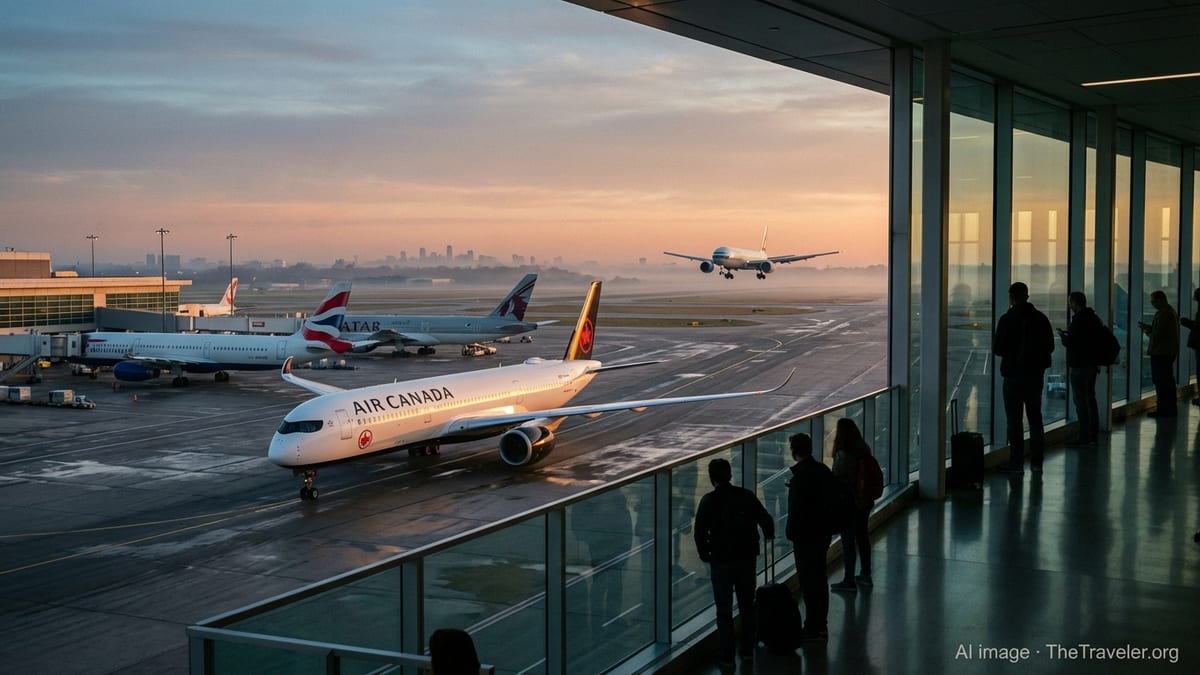
Transatlantic Expansion Anchored by Italy and New U.S. Gateways
Across the Atlantic, June 2026 is emerging as a pivotal month for capacity growth between North America and Europe. Publicly available schedules and recent press materials indicate that carriers are using the early summer travel window to introduce new nonstop links and deepen existing hubs. The focus is on routes that can support strong premium and leisure demand, particularly between major U.S. cities and Southern European holiday destinations.
Among the headline developments is the launch of ITA Airways’ new intercontinental service between Rome Fiumicino and Houston. The Italian carrier’s published documentation shows the route operating from 1 June to 24 October 2026 with five weekly frequencies using Airbus A330-900 aircraft, positioning Houston as a fresh Italian gateway for business and cruise traffic. The aircraft choice underscores a wider trend in June 2026 toward fuel-efficient widebodies that can serve secondary long-haul city pairs while keeping operating costs in check.
Industry coverage also points to U.S. majors continuing a multi-year push into secondary European markets from East Coast hubs. United Airlines, for example, has been building out a summer 2026 transatlantic portfolio that includes new seasonal services from Newark to additional cities in Croatia, Italy, Scotland and Spain, alongside earlier-announced growth to Nordic and Mediterranean destinations. Route announcements emphasize that these flights are intended to capture both diaspora travel and higher-spend leisure segments looking for nonstop access beyond traditional capitals.
Network planners appear to be using June as a proving ground, with many routes scheduled initially as summer-only operations. Analysts quoted in trade and consumer reports suggest that performance over the June to October peak will determine which of these new links become permanent fixtures in airline networks, particularly as carriers monitor fuel prices and competitive capacity from European rivals.
Gulf Carriers Reinforce Long-Haul Hubs with Added Widebody Lift
In the Gulf, June 2026 adjustments are less about first-time destinations and more about reinforcing already-dominant long-haul hubs. Qatar Airways’ latest schedule updates and specialist aviation reporting show the carrier increasing regional feeder services and reintroducing very large widebody aircraft to key intercontinental markets served via Doha. The aim is to support higher long-haul connectivity as summer demand ramps up.
From 5 June 2026, Qatar Airways is expanding frequencies between Doha and Dubai, moving from two to five daily flights through a phased increase during the month. While the link is not long-haul, additional short sectors into the Doha hub are strategically important for filling long-distance services to Europe, Asia-Pacific and the Americas. Reports indicate that the extra Dubai capacity is timed to facilitate onward evening and overnight connections, including to ultra-long-haul sectors.
At the same time, aviation industry analysis notes that Qatar Airways is preparing to reintroduce Airbus A380 operations on select high-density long-haul routes from 16 June 2026, particularly between Doha and major airports such as Bangkok Suvarnabhumi and London Heathrow. Deploying the four-engine superjumbo on these corridors is being interpreted as a signal of robust premium and transfer demand. The additional A380 capacity complements existing Boeing 777 and Airbus A350 services, giving the airline more flexibility to match aircraft size with peak summer flows.
Gulf hub strategies in June 2026 appear focused on tightening bank structures and offering more same-day connections, rather than opening many completely new continents or regions. By increasing frequencies into major spoke cities and restoring large widebodies on trunk routes, carriers in the region are positioning themselves to capture a larger share of global connecting traffic at a time when other airlines are still cautiously restoring long-haul operations.
Asia–Europe Links Strengthen via Beijing and New Ultra-Long Sectors
In East Asia, new long-haul activity in June 2026 is centered on China’s capital airports and selective ultra-long sectors. Recent announcements compiled by aviation marketing firms show Capital Airlines preparing to inaugurate a nonstop route between Beijing Daxing International Airport and Lisbon on 22 June 2026. The service is set to become Daxing’s first nonstop intercontinental link to Portugal and only the airline’s second direct route between China and the Iberian nation.
Industry observers note that the Beijing Daxing to Lisbon launch reflects a broader attempt to diversify Europe-bound traffic away from saturated Western European hubs and toward emerging tourism and trade corridors. Lisbon’s position as a gateway for Lusophone markets in South America and Africa is seen as a potential long-term advantage, particularly for cargo and connecting traffic, even as the initial focus remains on point-to-point leisure demand.
Separately, updates to rankings of the world’s longest flights highlight new and extended ultra-long-haul services coming into effect around mid-June 2026. Among these is a scheduled Doha to Auckland service listed from 16 June 2026, operated with Boeing 777-300ER aircraft and scheduled for nearly twenty hours of flight time. While such sectors cater to a niche market, they demonstrate that some carriers view nonstop options across vast distances as essential branding tools and as a way to attract high-yield travelers who prioritize time savings over intermediate stopovers.
The strengthening of Asia–Europe connectivity in June 2026 is not confined to one carrier or country. Schedules data across major hubs in Beijing, Doha, Istanbul and the Gulf show incremental increases in weekly frequencies on long-haul routes to northern and southern Europe. These adjustments collectively point to airlines anticipating a resilient summer travel season, particularly for outbound Chinese and Middle Eastern travelers returning to long-haul tourism after years of intermittent restrictions and capacity constraints.
Pacific and North Asia Markets See Key Long-Haul Restarts
Across the Pacific, June 2026 brings both entirely new services and important resumptions of long-haul routes that had been absent for several seasons. Coverage focused on North Asia reports that United Airlines is working toward the restoration of its Saipan to Tokyo Narita service in July 2026, with preparations beginning in June as aircraft and crew rotations are adjusted. The three-times-weekly service will reconnect the Northern Mariana Islands with one of Asia’s busiest international hubs, rebuilding a link that feeds transpacific and intra-Asia connections.
In the wider region, airline and travel media have also highlighted Delta Air Lines’ scheduled return to the Los Angeles to Hong Kong market in early June 2026. The route is slated to operate nonstop with Airbus A350 aircraft, re-establishing a direct West Coast gateway into one of Asia’s key financial centers. Analysts quoted in these reports suggest that the move is timed to capture recovering corporate travel and pent-up demand among visiting-friends-and-relatives passengers who prefer nonstop options to southern China and Southeast Asia via Hong Kong.
Collectively, these developments contribute to a gradual reconstruction of Pacific long-haul connectivity that had been significantly disrupted. Carriers appear to be selecting markets where they can leverage joint ventures and alliance partners to extend reach beyond the initial gateway. June 2026, in this context, becomes a marker month that signals renewed confidence in transpacific demand, even as airlines remain cautious about committing to year-round daily schedules on every restored sector.
Travel planners and corporate buyers monitoring these changes are likely to see improved schedule diversity and aircraft choice on some of the Pacific’s most strategically important routes. For passengers, the return of nonstop services is expected to cut travel times and reduce reliance on complex multi-stop itineraries routed through secondary hubs.