


More news on this day
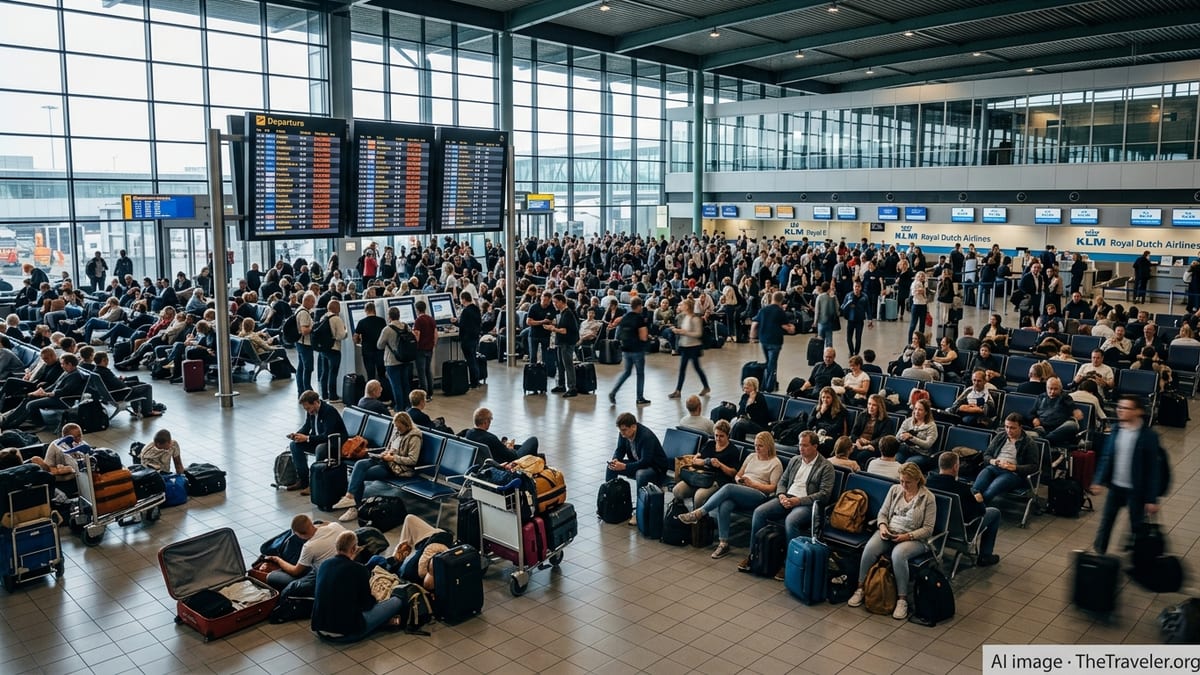
Travelers transiting Amsterdam’s Schiphol Airport on June 6 are facing widespread disruption as KLM cancels 13 flights and imposes rolling delays across major European and intercontinental routes, leaving passengers stranded and connections in disarray.
Get the latest news straight to your inbox!
Targeted Cancellations Ripple Across KLM’s Global Network
According to publicly available flight information and disruption notices, KLM has proactively cancelled 13 departures and arrivals at Amsterdam Schiphol on June 6, affecting a mix of short haul and long haul services. While the number is a fraction of the airline’s daily schedule, the impact is magnified by Schiphol’s role as KLM’s primary hub and a key transfer point for Europe, North America, Africa and Asia.
Data from flight tracking platforms and airline communications indicates that connections to Switzerland, Germany, France and Portugal are among the most affected within Europe, alongside several services to the United States and other long haul destinations. Even passengers whose individual flights are operating on time are experiencing missed connections and forced rebookings as the knock-on effects of the cancellations move through the tightly timed hub system.
The latest disruptions come on top of a turbulent first half of 2026 for KLM and Schiphol, with earlier episodes linked to severe winter weather, staffing constraints and broader capacity management efforts at the airport. Industry coverage over recent months has also highlighted wider network adjustments at KLM in response to higher fuel costs and regional airspace restrictions, which have left the operation more vulnerable when additional strain is introduced.
Although the specific drivers behind each of the 13 cancellations on June 6 vary by route, operational data suggests a combination of crew and aircraft rotation challenges, residual effects from earlier disruptions in the week and congestion management at Schiphol. The airline’s live travel alerts continue to advise passengers to monitor their flight status closely and adjust travel plans where possible.
Schiphol Hub Congestion Strands Transit Passengers
With a large proportion of KLM customers using Amsterdam as a transfer point rather than an end destination, the cancellations have left hundreds of travelers stranded in the terminal or forced into overnight stays in the Dutch capital. Reports from passenger forums describe long queues at service desks, difficulty securing last minute hotel rooms and limited availability on alternative flights during the busy early summer travel period.
Travelers connecting from smaller European cities into long haul services appear particularly affected. When a feeder flight from Switzerland, Germany or France into Amsterdam is cancelled or heavily delayed, onward services to North America, Africa or Asia can be missed, even if those long haul flights depart on time. In many cases, rebooked itineraries require circuitous routings via Paris, London, Frankfurt or other hubs, stretching journeys by many hours or even days.
Schiphol has long been one of Europe’s busiest and most transfer dependent airports, with KLM and its partners operating dense banks of flights designed to connect within tight windows. When that system functions smoothly, travelers benefit from convenient one stop itineraries across continents. When a relatively small number of flights is removed from the schedule, however, the intricate web of connections can quickly unravel, leaving customers with limited options, especially on high demand routes.
Recent experience during severe weather and earlier operational crunches has shown that disruption at Schiphol can take days to fully unwind. Travel industry observers note that while KLM has invested in self service tools and automatic rebooking technology, the concentration of traffic at a single hub remains a structural vulnerability when unexpected constraints arise.
European Routes to Switzerland, Germany, France and Portugal Hit Hard
Within Europe, publicly visible schedules for June 6 show that flights linking Amsterdam with key business and leisure markets such as Zurich and Geneva in Switzerland, several German cities, Paris and other French destinations, and Portuguese gateways including Lisbon and Porto have encountered cancellations or significant delays. These routes are core components of KLM’s regional network and serve as important feeders into intercontinental services.
In some cases, entire rotations between Amsterdam and a given European city have been removed from the schedule for the day, consolidating passengers onto remaining services. In others, delays of several hours have eroded scheduled connection times, forcing passengers to be rebooked onto later flights or alternative routings. For travelers originating in these countries, the disruption has led to missed meetings, curtailed vacations and additional expenses for accommodation and ground transport.
The timing is particularly challenging for travelers heading into early summer holidays or major events across Europe. Several tourism boards and airport operators in the affected countries have recently promoted increased connectivity via Amsterdam, making today’s disruption especially visible to passengers who chose itineraries built around Schiphol as a transfer point.
Industry analysts point out that while short haul point to point carriers can often recover from disruption more quickly by repositioning aircraft and crew, network airlines like KLM face the added complexity of protecting long haul connections and coordinating with alliance and codeshare partners. This can lead to more conservative decisions to cancel specific feeder flights in order to stabilize the wider schedule.
Long Haul Links to the United States and Beyond Affected
Several long haul routes have also felt the impact of the June 6 disruption, particularly services linking Amsterdam with major hubs in the United States. Flight status data shows delays on selected departures to US cities and, in some cases, schedule changes or aircraft swaps as KLM adjusts its intercontinental operation in response to earlier cancellations within Europe.
Passengers traveling on multi segment itineraries, such as journeys from secondary European or African cities via Amsterdam to US destinations, are reporting missed connections, extended layovers and rerouting via partner airlines. Some travelers have turned to air passenger rights information and consumer advocacy resources to understand their entitlements to rebooking, care assistance and potential compensation under European regulations when flights are cancelled or significantly delayed.
Beyond North America, ripple effects have been reported on routes to the Middle East, Africa and parts of Asia where KLM has already made schedule changes in recent months. Network reductions on certain routes mean that when a flight is cancelled or heavily delayed, the next available option may not depart until the following day or later, prolonging the disruption for affected passengers.
Travel experts note that during complex operational events, travelers on long haul itineraries may be less aware of the fragility of their connections, particularly if bookings were made months in advance. The combination of high load factors, reduced spare capacity on some routes and the need to keep aircraft and crews properly positioned can limit the airline’s flexibility once disruption sets in.
What Stranded Travelers Can Do Now
Publicly available guidance from KLM emphasizes the importance of using digital channels such as the airline’s app, online “My Trip” portal and automated notifications to track flight status and manage rebookings. Many passengers, however, continue to seek assistance at airport counters or via call centers, particularly when itineraries involve multiple carriers or complex routing.
Consumer organizations and travel advisors generally recommend that stranded travelers keep all receipts for meals, hotels and alternative transport, as these documents may be required to support later reimbursement or compensation claims. Passengers are also encouraged to document the sequence of events affecting their trip, including cancellation notices and boarding passes for any flights that did operate.
For those yet to travel, checking day of departure flight status before heading to the airport, allowing extra connection time where possible, and considering more flexible itinerary options can help reduce exposure to disruption. Given Schiphol’s central role in KLM’s global network, any operational strain at the hub is likely to have outsized effects on connecting journeys, particularly during peak travel periods.
While today’s cancellations and delays represent only a portion of KLM’s overall schedule, the situation at Amsterdam illustrates how even limited proactive flight cuts can cascade through an interconnected network. With the busy summer season now underway, travelers using Schiphol as a gateway to Switzerland, Germany, France, Portugal, the United States and other destinations may face a period of heightened uncertainty as airlines and airports work to balance demand, capacity and operational resilience.