


More news on this day
Global airlines are cautiously rebuilding Middle East flight schedules after the Iran war, restoring links to key hubs while maintaining detours and selective suspensions across the region.
Get the latest news straight to your inbox!
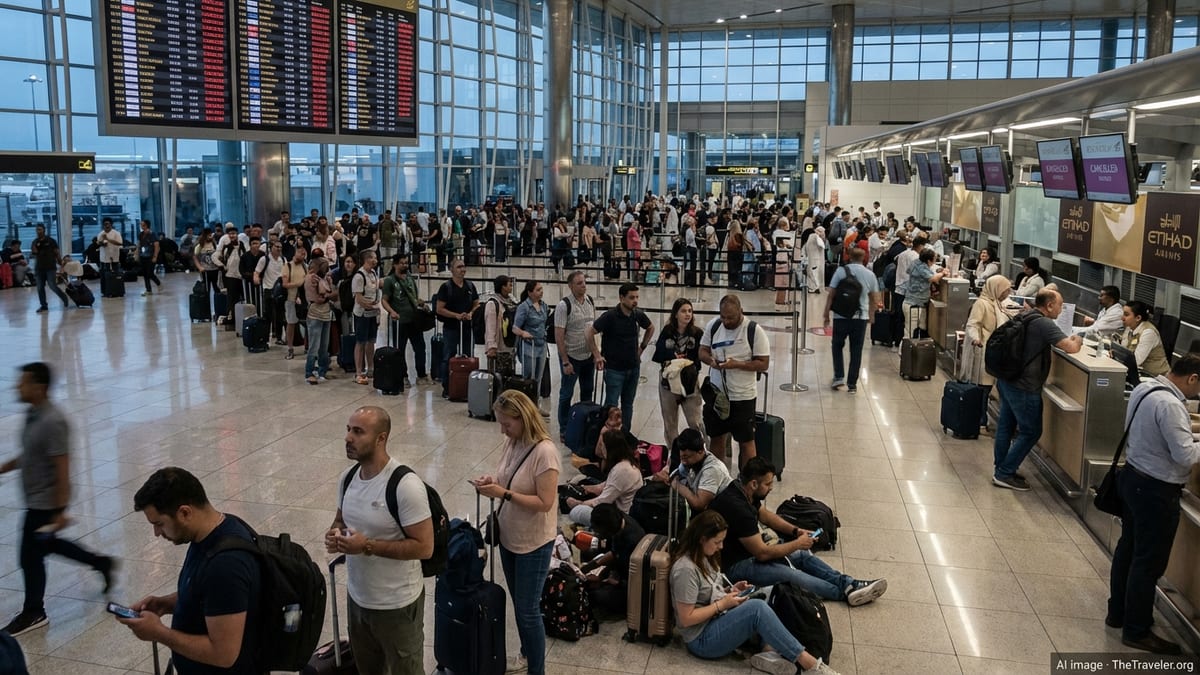
Regional hubs lead the restart as traffic slowly returns
Air services across the Middle East are entering a new phase of gradual restoration, several months after U.S. and Israeli strikes on Iran triggered widespread airspace closures and route suspensions. Recent industry factboxes and travel advisories indicate that more carriers are returning to the region, but often with trimmed schedules and continued reliance on alternative routings to avoid high‑risk airspace.
Publicly available data shows that major Gulf gateways, including Dubai and Doha, are again acting as primary anchors for the recovery. Local carriers have added back capacity and reopened some routes that were halted during the peak of the conflict, helping to reconnect Europe, Asia and Africa via the region’s long‑haul hubs. However, traffic flows remain below pre‑war levels, particularly on itineraries that previously relied on overflights of Iran and neighboring states.
Analyst briefings and industry reports describe this pattern as a “hub‑first” recovery. Airlines most dependent on Middle East transfer traffic are restoring flights in stages, prioritizing high‑yield trunk routes while continuing to avoid or limit operations to areas closest to recent fighting. This has created a patchwork of service levels across the region, with major hubs rebounding faster than secondary destinations.
European and Asian carriers return with reduced schedules
European and Asian airlines are now reintroducing selected services to Middle Eastern cities but with modified schedules and tighter risk controls. According to recent Reuters factboxes, several large European groups have resumed flights to destinations such as Dubai, Doha, Riyadh and Tel Aviv, yet often at a lower daily frequency than before the conflict and with some routes still suspended into the autumn travel season.
Many of these carriers continue to reroute long‑haul services to avoid the airspace of Iran, Iraq, Syria and Israel, even when destination airports are open. Public flight‑tracking data and published airline notices show wide detours on some Europe–Asia journeys, adding flight time and fuel burn but maintaining separation from conflict‑adjacent skies. In some cases, flights to regional capitals have restarted while links to nearby secondary cities remain on hold pending further security assessments.
Asian operators exhibit a similar caution. Travel industry coverage notes that some have pushed back the restart of planned services to Tel Aviv and Beirut, choosing instead to funnel passengers through codeshare partners in the Gulf. Others have cancelled seasonal routes to Doha until at least early October, while preserving access to the broader Middle East via alliance hubs. These adjustments underline how network planners are prioritizing flexibility and risk management over rapid capacity restoration.
Persistent airspace restrictions reshape global routing
Even as more flights land in Middle Eastern airports, the wider global network continues to feel the effects of constrained airspace. Economic analyses from aviation consultants and international industry bodies describe a sharp reduction in pre‑war east–west capacity that relied on overflights of Iran and surrounding territories. Many airlines that cannot easily reroute or absorb longer stage lengths face higher operating costs and scheduling challenges.
The continued avoidance of key flight information regions has forced carriers to push services north or south of the traditional corridors linking Europe with South and Southeast Asia. These longer routings translate into higher fuel consumption at a time when jet prices remain elevated, adding further strain to an industry still recovering from the pandemic downturn. For some operators, the extra flying time also reduces daily aircraft utilization, limiting the number of rotations that a single widebody can achieve.
Insurance and risk premiums have emerged as another structural factor slowing the return to normal operations. Consultancy research points to several‑fold increases in war‑risk coverage costs for aircraft operating anywhere near the affected region. Airlines rebuilding Middle East schedules therefore must weigh not only demand and competitive position, but also the financial implications of dispatching aircraft through or around contested airspace.
Gulf carriers rebuild networks while secondary markets lag
Gulf airlines, which rely heavily on transfer traffic, have been among the most proactive in reconstructing their networks. Business press reports from the region describe a phased strategy: first restoring links on major long‑haul routes from alternative operating bases where necessary, then gradually routing more services back through their primary hubs as local airspace restrictions eased. This approach has helped preserve connectivity between Europe, Asia and Africa, albeit with altered flight times and occasional last‑minute rerouting.
Despite these efforts, secondary markets across the Middle East continue to see uneven recovery. Airports in countries directly affected by hostilities, as well as some smaller regional gateways, still face partial closures or limited international schedules. Public flight information indicates that several destinations once served multiple times daily by foreign carriers are now receiving fewer frequencies, or have flights concentrated on certain days of the week to consolidate demand.
Industry observers note that this disparity is likely to persist until there is a durable easing of regional tensions and a clear, stable framework for overflight permissions. Airlines typically restore marginal or leisure‑focused routes only once they are confident that operational and security conditions will remain stable throughout a season. As a result, business and VFR (visiting friends and relatives) traffic is returning more quickly than purely discretionary tourism to some conflict‑adjacent locations.
Travelers face longer journeys, shifting choices and evolving advice
For travelers, the gradual restoration of Middle East services brings more options than were available during the height of the Iran war, but journeys can still be longer, more complex and sometimes more expensive. Trip planners report that itineraries which previously connected seamlessly via Gulf hubs may now involve extended layovers, alternate connection points farther north or south, or schedule changes introduced at relatively short notice as airlines adjust to evolving conditions.
Consumer guidance from travel providers emphasizes the importance of monitoring bookings closely and remaining flexible on routings. Published advisories recommend allowing extra connection time when transiting the region, particularly on itineraries combining different airlines or alliances. Some carriers are also offering more flexible change policies for tickets touching Middle Eastern destinations, reflecting the potential for further airspace or schedule adjustments.
At the same time, the gradual reopening highlights the region’s enduring importance to global aviation. International organizations have previously estimated that Middle Eastern corridors account for a significant share of worldwide transfer traffic, and the recent conflict has underlined how disruptions there can reverberate through networks on multiple continents. As airlines cautiously rebuild schedules and refine their risk models, the pace of restoration over the coming months will remain a key indicator for both regional tourism and long‑haul connectivity between Europe, Asia and Africa.