


More news on this day
A new wave of operational and weather-related disruption has hit Asian aviation, with aggregated tracking data indicating that 3,786 flights were delayed and 259 cancelled in a single day across major hubs from China and Japan to Southeast Asia and India, compounding a year already marked by repeated shocks to the region’s air travel network.
Get the latest news straight to your inbox!
Fresh Turbulence in an Already Strained Year
The latest disruption, identified in regional tracking and airport-status datasets, mirrors a pattern that has become increasingly familiar in 2026. Previous episodes have seen several thousand flights affected in concentrated bursts, including a July sequence in which severe storms disrupted 6,961 flights across Asia’s busiest airports and a separate July event where 432 flights were cancelled and 8,754 delayed in a single day across Asia and parts of the Middle East.
Publicly available coverage and analytics describe a system operating with minimal slack. When one or two major hubs fall behind schedule, late-arriving aircraft and crews ripple through the network, quickly converting localized issues into a region-wide backlog. This latest tally of 3,786 delays and 259 cancellations slots into that broader picture of recurring strain.
The figures also arrive against the backdrop of wider geopolitical and economic headwinds. Airspace closures linked to conflict in the Middle East, volatile jet fuel prices and supply chain challenges for aircraft maintenance and deliveries have all been identified in industry reporting as background factors that reduce airlines’ operational flexibility and resilience.
Major Hubs Bear the Brunt of the Disruptions
Asia’s biggest connecting hubs are once again at the center of the disruption narrative. Flight-tracking dashboards and airport disruption maps for recent crisis days show congestion clustering around Beijing Capital, Shanghai Pudong, Guangzhou Baiyun, Tokyo Haneda, Seoul Incheon and Delhi, alongside busy Southeast Asian gateways such as Kuala Lumpur and Manila.
On comparable disruption days this summer, Guangzhou recorded some of the highest single-airport delay counts in Asia, while Shanghai Pudong repeatedly topped rankings for total delayed movements. Tokyo Haneda has also featured prominently, with one recent typhoon event linked to more than 400 delays and dozens of cancellations at the Japanese capital’s primary domestic and international hub.
These airports function as critical connection points between East Asia, Southeast Asia, South Asia and long-haul routes to Europe, the Middle East and North America. When they slow down, knock-on effects reach secondary cities across the region, and in some cases extend to hubs as far away as Dubai, Istanbul and major European gateways as crews and aircraft miss their planned rotations.
Weather, War and Infrastructure Constraints Converge
The 2026 disruption pattern in Asia is not driven by a single cause. Instead, publicly accessible aviation and policy analysis points to a convergence of weather extremes, geopolitical shocks and long-running infrastructure constraints that collectively increase the likelihood of large-scale delay days like the current one.
Severe weather has been one of the most visible triggers. A recent example was Typhoon Dolphin, which tracking-based summaries link to more than 8,200 delays and over 700 cancellations across multiple Asian countries as storms swept across China, Japan, India and Indonesia. Earlier in August, a separate bout of unstable weather was associated with roughly 300 cancellations and more than 2,500 delays on one day across Japan, China, Saudi Arabia and Indonesia.
At the same time, the conflict in and around Iran has reshaped long-haul routings between Asia, Africa and Europe, adding flying time and complexity. Economic assessments of the war highlight aviation as one of the sectors most affected by airspace closures, with airlines forced to detour or pull back capacity on certain routes. Regional business coverage also notes that rising fuel costs and airspace restrictions have prompted schedule adjustments and, in some cases, structural cuts to frequencies on long-haul services touching Southeast Asia.
Infrastructure and fleet limitations add another layer. Industry research on global delay patterns shows that major Asian hubs routinely appear near the top of worldwide rankings for late and disrupted flights. Limited spare aircraft, crew-roster tightness and congestion on the ground all mean that when weather or geopolitical factors strike, there is little margin for recovery before delays cascade across the day’s schedule.
Impact on Travellers and Airline Operations
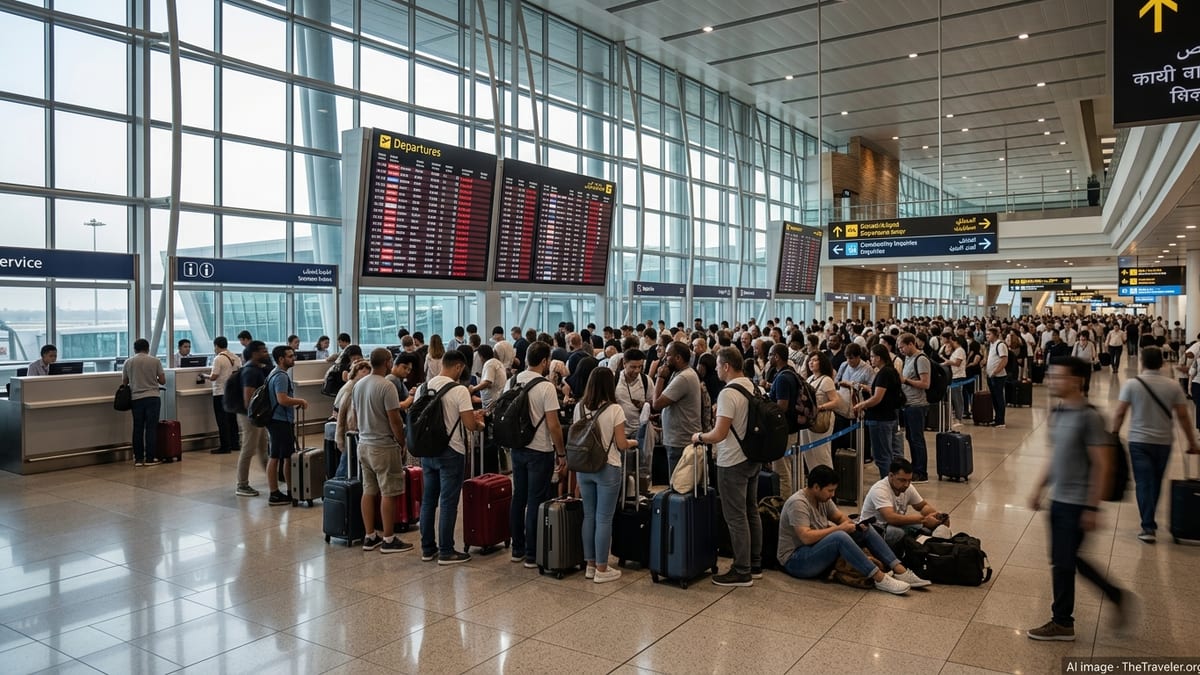
For passengers, the practical effects of a disruption day involving 3,786 delayed flights and 259 cancellations are immediate and often severe. Airport-level snapshots from recent crises in the region depict crowded terminals, lengthening queues at rebooking and check-in counters, and long waits for aircraft held on the ground while slots and routings are renegotiated.
Published passenger-rights guides and legal overviews emphasize that entitlements vary significantly across Asia. In parts of the region, especially the European Union and certain markets where Asian carriers operate to or from Europe, compensation and care obligations are well defined once delays cross specific thresholds. Elsewhere, assistance may be limited to rebooking or basic refreshments, leaving travelers more exposed to the financial and logistical fallout of missed connections and overnight stays.
For airlines, each wave of disruption feeds back into already tight schedules and balance sheets. Operational databases and financial commentary from 2026 point to higher fuel costs, increased crew and maintenance expenses and, in some cases, reduced revenue when flights are cancelled or aircraft must operate with restricted payloads on longer rerouted sectors. Some carriers in Southeast Asia have already trimmed frequencies on selected routes this year, citing the combined impact of geopolitical tensions and fuel prices.
What Travelers Can Expect in the Months Ahead
While on-time performance metrics for parts of Southeast Asia showed tentative improvement in early summer, analysts note that the region remains vulnerable to further spikes in disruption. Thunderstorm activity and typhoon risk will persist into the late summer and autumn period, and there is no clear timeline for a full normalization of airspace access on all pre-conflict corridors between Asia, the Middle East and Europe.
Research into flight-punctuality patterns suggests that some practical strategies can reduce, though not remove, exposure to large-scale disruption days. Early-morning departures typically operate with a higher on-time rate, as schedules have not yet absorbed delays from previous rotations. Longer connection windows at busy hubs, particularly during peak travel seasons, may also provide a buffer when preceding flights run late.
Travelers are being encouraged by rights-focused organizations and consumer advocates to pay closer attention to hub choices, minimum connection times and ticket conditions, as well as to verify the latest operational status of their departure and arrival airports on the day of travel. With Asia’s aviation system still absorbing overlapping shocks, the figures from this latest disruption wave underscore that significant volatility remains baked into regional air travel in 2026.
AirHelp: Severe weather disrupts 6,961 flights across Asia’s major hubs
NomadLawyer: Typhoon Dolphin flight delays and cancellations across Asia
TheTraveler.org: Asia air travel hit as 432 flights canceled, 8,754 delayed