


More news on this day
Bank holiday rail travel on the southern section of the East Coast Main Line is facing severe disruption as major digital signalling works linked to the £1.4 billion East Coast Digital Programme move into a critical testing phase over the August 2026 long weekend.
Get the latest news straight to your inbox!
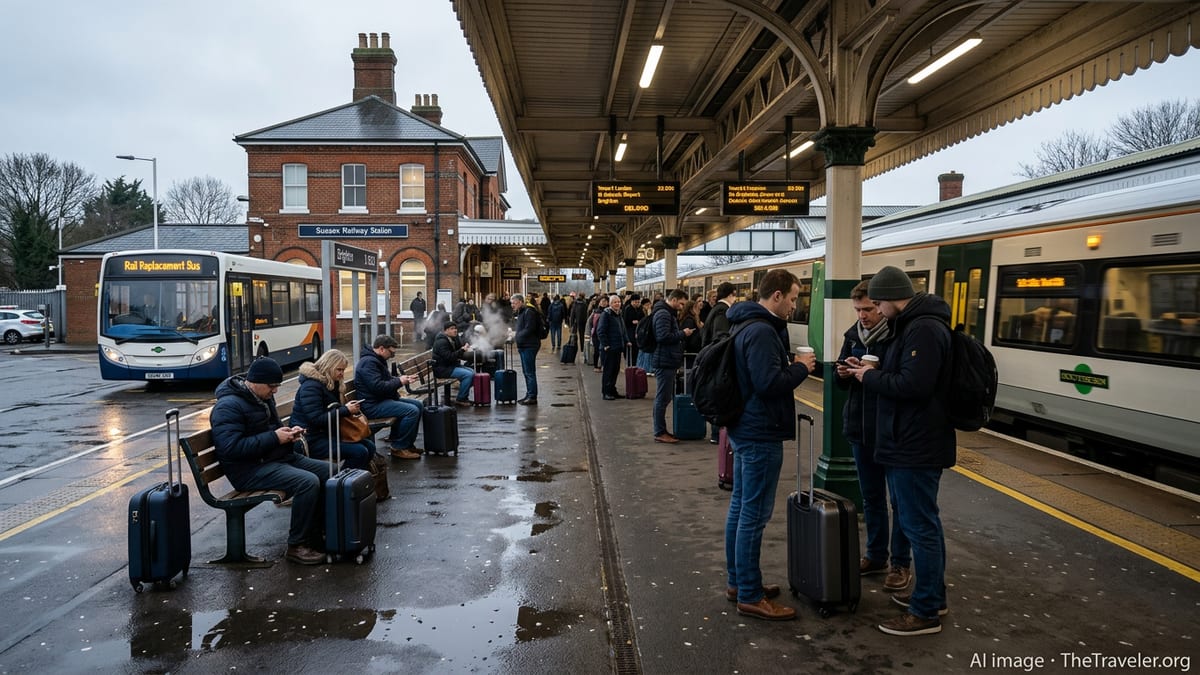
Major Bank Holiday Disruption for London-Bound Trains
Publicly available information from Network Rail and National Rail Enquiries shows that journeys to and from London King’s Cross will be significantly affected between 20:00 on Saturday 29 August and 08:00 on Bank Holiday Monday 31 August 2026. Services on the East Coast Main Line south of Peterborough and Royston are being curtailed or diverted while engineers carry out intensive signalling work and final testing connected to the East Coast Digital Programme.
Travel updates indicate that there will be no trains between Peterborough and London King’s Cross at key times on Sunday 30 August, with rail replacement buses operating on parts of the route. National disruption summaries describe a “severely reduced service” into and out of King’s Cross across the main holiday period, and journey planners are flagging longer travel times and more complex itineraries for many passengers.
Operators using the corridor are adopting different strategies to maintain some connectivity. According to National Rail information, Grand Central will suspend services for the affected window, while Hull Trains plans to divert some trains to and from London St Pancras International instead of King’s Cross. Other operators are publishing amended timetables and advising passengers to check journey details on the day of travel.
Network Rail’s bank holiday works overview notes that, although most of Britain’s railway will run normally, the East Coast Main Line south of Peterborough remains one of the most heavily impacted areas this August, with the digital upgrade identified as a key reason for the reduced timetable.
Inside the East Coast Digital Programme
The disruption is tied directly to the East Coast Digital Programme, a flagship scheme to introduce in-cab digital signalling on the southern half of the East Coast Main Line, from London King’s Cross towards Grantham. Programme summaries from Network Rail and oversight reports describe it as a multi-year investment designed to replace traditional roadside colour light signals with real-time movement authority information fed directly into train cabs.
Documents on the scheme explain that the technology is based on European Train Control System (ETCS) standards, already in use in parts of mainland Europe and increasingly across Great Britain. Instead of relying on fixed block signals along the track, trains under digital control receive continuous updates on permitted speed and braking curves, allowing closer but still safe spacing of services and more flexible management of traffic.
Industry reports highlight several goals for the programme: more reliable journeys, a reduction in signal-related failures, the capacity to run more trains on the same infrastructure, and environmental benefits from smoother driving profiles. The upgrade also forms part of a wider digital signalling portfolio that is expected to support future timetable changes and long-term growth in passenger numbers on one of the UK’s busiest intercity routes.
Network Rail’s enhancements plans and independent reviews emphasise that the East Coast Digital Programme is seen as a pathfinder for wider deployment of ETCS across the national network, with lessons from this corridor expected to inform signalling renewals elsewhere in the coming decade.
From Northern City Line to Main Line Rollout
The August 2026 works mark a new stage in a transition that began on the Northern City Line into Moorgate, which was used as an early proving ground for the technology. According to published coverage and technical summaries, ETCS went live there in stages, culminating in all passenger services using digital signalling a few years before the current main line rollout.
Subsequent phases have focused on sections of the East Coast Main Line itself, particularly between Welwyn Garden City and Hitchin in Hertfordshire. Network Rail media updates describe the current bank holiday works as part of the final testing steps before routine passenger services through this section begin using digital in-cab signalling.
Planning documents suggest that the southern East Coast route will see a progressive extension of digital operation over the rest of the decade, coordinated with rolling stock upgrades to equip fleets with onboard ETCS equipment. The bank holiday blockade provides a long, continuous window to reprogramme and test balises and other trackside equipment, tasks that are difficult to complete during short overnight possessions.
Regulatory material from the Office of Rail and Road and parliamentary written answers indicate that the deployment is being closely monitored, as it is one of the first large-scale uses of ETCS on a mixed-traffic main line in Great Britain. Successful completion is expected to pave the way for similar schemes on other key intercity and commuter routes.
Impact on Thameslink, Great Northern and Regional Travellers
The changes are not limited to long-distance LNER-style intercity services. Operator briefings from Great Northern and Thameslink show that major engineering work linked to the digital programme will also interrupt commuter and regional services into London across the same weekend. For Sunday 30 August, there are expected to be no Great Northern or Thameslink trains between Potters Bar and Peterborough or Royston, and no services between Hertford North and Stevenage.
Passengers from Cambridgeshire, Hertfordshire and Bedfordshire are being directed towards rail replacement buses, alternative routes via other London terminals, or to travel on different days. Journey planners published online already warn of extended travel times, additional changes, and in some cases standing room only on remaining services that continue to operate around the engineering works.
National Rail’s incident pages list the East Coast Digital Programme upgrade as an ongoing disruption event throughout the bank holiday period, flagging that services to and from King’s Cross will remain severely reduced until the work is handed back on the Monday morning. Some operators are also advising that trains immediately before and after the blockade may be busier than usual as travellers attempt to avoid the peak of the disruption.
Travel advice aimed at leisure passengers planning days out in London or visiting family and friends over the long weekend stresses the importance of checking for operator-specific changes. While the core East Coast corridor is most affected, knock-on effects on connecting routes and regional services are expected as stock and crews are redeployed to work around the closed sections.
What the Upgrade Means for Future East Coast Journeys
Despite the immediate inconvenience, industry material frames the August bank holiday closure as a significant step towards a more modern, higher-capacity railway on the East Coast. Network Rail’s programme descriptions and enhancements plans state that digital signalling is expected to improve punctuality and reduce the impact of signal failures, one of the most common causes of delay on the existing system.
Analyses of the East Coast Main Line upgrade outline potential for higher line speeds and more consistent running, particularly once digital operation is extended beyond the Welwyn to Hitchin section. With ETCS able to support shorter headways between trains, the long-term ambition is to carry more passengers and freight without the need for extensive new track construction on the already congested southern approach to London.
Environmental benefits are also highlighted. By enabling smoother driving with fewer harsh braking and acceleration cycles, in-cab digital instructions are expected to cut energy use and associated emissions. This aligns with wider rail industry commitments to decarbonisation and to making intercity rail a more attractive alternative to domestic air and long-distance car journeys.
For now, however, passengers face a bank holiday shaped by rail replacement buses, longer diversions and earlier starts. Public information sites advise anyone travelling over the weekend from 29 to 31 August 2026 to plan ahead, allow extra time and check for the latest updates before setting off, as operators continue to refine timetables around one of the most complex digital signalling changeovers yet attempted on the UK network.
Network Rail media centre: Bank holiday journeys affected by digital signalling project
National Rail: East Coast Digital Programme upgrade work
Great Northern: East Coast Digital Programme service updates
Network Rail: August bank holiday engineering works overview