


More news on this day
Passengers traveling between Argentina and major South American hubs are facing a fresh wave of schedule uncertainty as TAM, British Airways, LATAM and Flybondi scale back or pause planned new flights touching Buenos Aires Ezeiza, Jorge Newbery Aeroparque and several interior cities.
Get the latest news straight to your inbox!
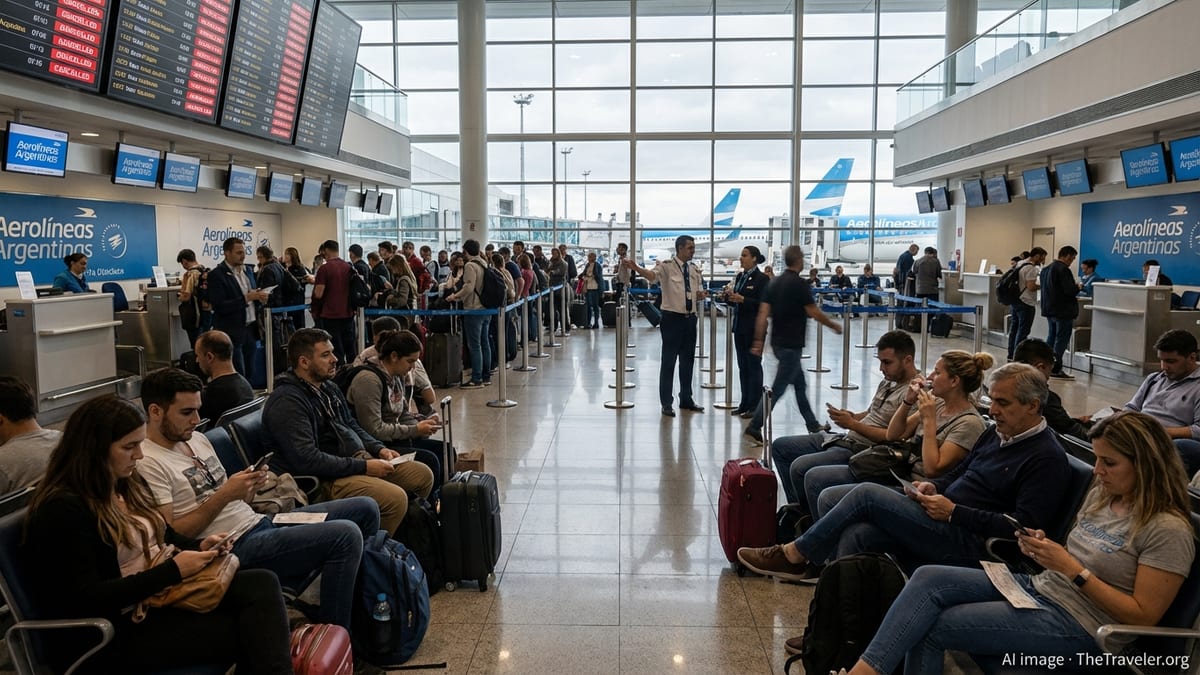
Network Retrenchment Hits Argentina’s Key Gateways
Publicly available schedules and regional aviation reports indicate that multiple carriers have recently adjusted or shelved growth plans in Argentina, translating into fewer options on some of the busiest corridors in South America. Buenos Aires’ Ezeiza International Airport and Jorge Newbery Aeroparque, along with secondary cities, are at the center of the reshuffle.
Route filings show that British Airways has been revisiting its long haul network for the 2026 season, including timetable adjustments on services into Buenos Aires. Industry commentary points to a strategy of concentrating capacity on the strongest transatlantic flows at the expense of thinner Latin American links that rely heavily on connecting traffic.
Within South America, Brazilian and Chilean groups, including LATAM and the TAM-branded operations in the region, have been trimming weaker services and delaying some planned additions designed to feed São Paulo and Rio de Janeiro hubs. While flagship routes remain in place, the retreat of newly announced frequencies narrows choices for travelers seeking same day connections across the continent.
Combined, these moves represent a setback for Argentina’s efforts to deepen its integration with regional air networks. Government policy papers continue to highlight connectivity as a priority, but carriers are signaling that softer demand, higher operating costs and regulatory uncertainty make immediate expansion risky.
Brazil Corridors: São Paulo and Rio See Mixed Signals
The São Paulo–Buenos Aires and Rio de Janeiro–Buenos Aires corridors remain among the busiest in South America, yet the current schedule reshaping reveals a more cautious stance from airlines. LATAM has simultaneously promoted new and reinstated services linking Rio’s Galeão and Buenos Aires Aeroparque while rolling back or slowing other capacity additions tied to Brazil–Argentina flows.
Recent timetable updates show that some projected extra frequencies from São Paulo to Argentine provincial cities have been postponed or quietly removed, limiting direct access beyond Buenos Aires. Industry analysis suggests that corporate demand has not recovered evenly across markets, pushing airlines to prioritize the densest trunk routes over newer, riskier links.
For Rio de Janeiro, the picture is similarly mixed. New flights from Galeão to Aeroparque are intended to complement existing operations to Ezeiza, but the grounding of additional planned rotations means fewer departure time choices than originally marketed. Travelers who had expected afternoon or late night options are increasingly being funneled into a smaller number of daily flights, tightening connection windows onward to domestic Brazil or long haul services.
Travel agents in the region report that passengers with multi segment itineraries are the most exposed. When a single grounded leg in or out of Buenos Aires forces a rebooking, alternative same day options through São Paulo or Rio are no longer guaranteed, sometimes triggering extended layovers or an overnight stay.
Peru and the Lima Hub Lose Argentine Feed
Another major change is unfolding on links between Argentina and Lima, one of the key connecting hubs on the Pacific side of the continent. LATAM’s Peruvian arm has confirmed the cancellation of several international routes from late March 2026, including service to Tucumán in northern Argentina.
The end of the Tucumán–Lima route removes a non stop bridge that had allowed travelers from northwest Argentina to connect directly to North America, Central America and the Caribbean via Peru’s capital. With that feed withdrawn, passengers must either route through Buenos Aires to reach Lima or connect via Brazil, adding travel time and complexity.
Regional travel bulletins describe this move as part of a broader optimization by LATAM, as the group reallocates aircraft to stronger long haul markets and higher yielding regional pairs. However, the impact on Argentina’s interior is tangible. Business travelers and migrant workers who had relied on the direct Lima link now face fewer options and, in many cases, higher total fares.
Aviation analysts note that Lima’s role as a one stop gateway for secondary South American cities has been under pressure from rising costs and competitive shifts. The grounding of Tucumán–Lima and similar thin routes underscores the difficulty of sustaining long haul connectivity from smaller markets without robust year round demand.
Flybondi Under Scrutiny as Domestic Strains Spill Over
Argentina’s ultra low cost carrier Flybondi is also in the spotlight amid the current disruption. The airline, which has expanded rapidly from its bases at Aeroparque and Ezeiza, has faced waves of criticism from travelers for frequent cancellations and significant delays, according to consumer forums and local media coverage.
Recent reports from passenger rights groups and online communities detail last minute cancellations on domestic sectors such as El Calafate–Buenos Aires, as well as the reversal of a newly launched international route considered strategic for the Misiones region. Affected travelers describe difficulties securing prompt refunds or alternative arrangements, highlighting the fragility of some of the carrier’s newer services.
Regulatory documents from Argentina’s civil aviation authority over the past two years show that Flybondi has been ordered to align its requested flight volumes more closely with its actual operational capacity. Industry observers interpret this as an attempt to curb over ambitious scheduling that can result in higher cancellation rates when aircraft or crews are not available.
As Flybondi juggles growth ambitions with compliance requirements, several of its planned additional frequencies to and from Buenos Aires appear to have been put on hold. For passengers, this means that low fare options on certain dates simply disappear from booking systems, effectively grounding trips that had been marketed months in advance.
Labor Actions and Rising Costs Add to Uncertainty
Beyond individual corporate strategies, Argentina’s aviation landscape is also being reshaped by labor tensions and cost pressures. In late May 2026, union assemblies by cabin crew at Aeroparque Jorge Newbery triggered a wave of delays and cancellations affecting multiple carriers, including LATAM and Flybondi, according to Argentine press reports.
These localized disruptions occurred against a backdrop of ongoing disputes over staffing levels, job security and working conditions. Worker organizations argue that downsizing and changes in employment terms at several airlines have eroded service reliability, while management teams contend that structural adjustments are necessary in a challenging market.
At the same time, international industry bodies have flagged concern over upcoming increases in Argentine air navigation and airport related charges. New fee schedules, set out in recent regulatory resolutions, are expected to raise operating costs for airlines serving the country, potentially undermining the economic case for marginal new routes and additional frequencies.
For travelers, the combination of grounded new flights, shifting schedules, labor related disruptions and higher fares translates into a more volatile planning environment. Experts recommend that passengers connecting through Buenos Aires to São Paulo, Rio de Janeiro, Lima and other regional hubs allow extra buffer time, monitor bookings closely and be prepared for itinerary changes as airlines continue to recalibrate their South American networks.