


More news on this day
Passengers traveling through London Gatwick on Wednesday, May 27 are facing a patchy day of disruption, with scattered flight delays and a limited number of cancellations affecting both departures and arrivals, according to live airport data and airline updates.
Get the latest news straight to your inbox!
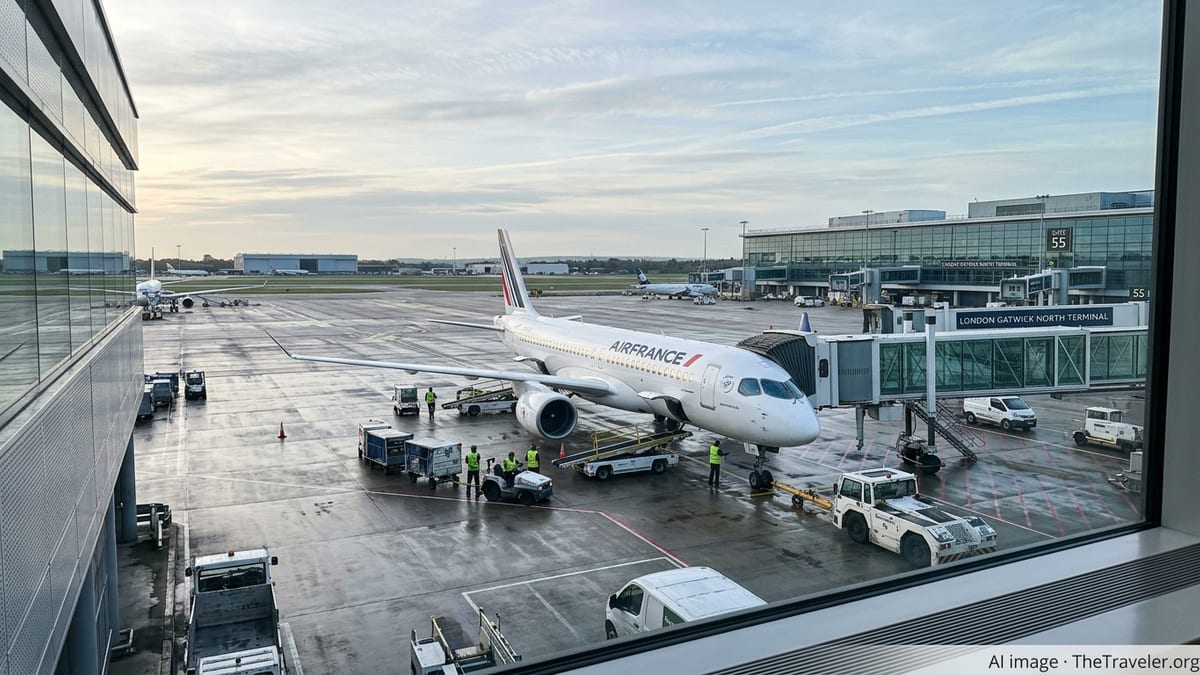
Morning peak sees manageable but noticeable disruption
Live departure boards for London Gatwick on Wednesday, May 27 show that the early morning peak operated largely to schedule, but with a visible cluster of services departing behind time. Short-haul European flights bore the brunt of the initial disruption, with several departures held at the gate or pushed back later than advertised.
Most delays in the early wave were reported in the range of 20 to 45 minutes, a level that typically keeps aircraft and crews broadly in position but begins to erode connection times for passengers on multi-leg itineraries. Publicly available information indicates that the majority of affected flights still operated rather than being removed from the schedule.
Arrivals during the same period also showed intermittent late operations, though only a small number crossed the one-hour delay mark. For many inbound services, extended taxi or holding times translated into late arrivals at stands, which in turn can slow down baggage delivery and the readiness of aircraft for their next sectors.
Airlines using Gatwick as a base appeared to prioritize keeping their first departures of the day operating, even when slightly delayed, to avoid a build-up of disruption later in the schedule. That strategy limited the number of outright cancellations in the morning window, but it has left some rotations carrying residual delay into the afternoon.
Afternoon departures hit by knock-on effects and air traffic flow
By midday and into the afternoon, Gatwick’s departure boards showed a more mixed picture, with a larger scatter of delayed services and a modest increase in cancellations. Publicly available tracking data points to a combination of local congestion and wider air traffic management constraints across European airspace as key factors.
Several leisure routes to Mediterranean destinations and popular city-break airports were operating behind schedule by 30 minutes or more. For some carriers, a late-arriving inbound aircraft meant the outbound leg could not depart on time, creating a chain of small but cumulative delays that are difficult to recover during a busy operating day.
Reports from aviation data providers suggest that air traffic flow restrictions in certain regions of Europe have also contributed, particularly on routes that cross multiple control zones. When these restrictions are imposed, aircraft may be held on the ground at Gatwick until a slot becomes available, leading to visible gaps between scheduled and actual departure times.
Despite these pressures, the overall level of disruption has remained below the most severe episodes seen in recent summers. With additional seasonal services set to ramp up in the coming weeks, today’s performance is likely to be watched closely by both airlines and passengers as an indicator of how resilient the schedule may be during peak holiday periods.
Arrivals pattern shows scattered delays and limited cancellations
On the arrivals side, Gatwick’s live boards for Wednesday, May 27 indicate a day characterized more by scattered delays than by large-scale cancellations. Many inbound flights have been landing later than timetabled, with a noticeable group running 20 to 40 minutes behind schedule and a smaller number exceeding an hour’s delay.
These late arrivals are being attributed in part to earlier disruptions at departure airports, as well as congestion en route. When aircraft depart late from other European hubs or holiday destinations, there is limited scope to recover lost time during flight without encountering further air traffic restrictions on approach to London.
Only a relatively small number of inbound services have been canceled outright so far today, according to airport and airline information. Where cancellations have occurred, they are spread across different carriers and destinations rather than concentrated on a single route or airline, suggesting operational or commercial decisions rather than a single, acute incident at Gatwick.
For arriving passengers, the main impact has been extended waits at baggage reclaim and adjustments to onward travel plans. Those with tight rail or coach connections from the airport are the most exposed, particularly during the busy late afternoon and early evening periods when transport services can be crowded.
Weather relatively benign, operational pressures more significant
Weather in the London area today has been generally favorable for flying, with no indications of prolonged low visibility or severe storms over Gatwick. Forecasts show largely clear or partly cloudy skies, with light winds and mild temperatures, conditions that typically support stable operations.
In the absence of major weather disruption, today’s delays appear to be driven more by operational and network factors. These include aircraft and crew rotations, maintenance requirements, and the cumulative impact of earlier delays across interconnected routes. Air traffic management measures over busy parts of Europe can also cause aircraft to be held on the ground, even when local conditions at Gatwick are calm.
Gatwick’s own service standards frameworks emphasize runway availability, baggage handling performance, and key IT systems that support flight information. Public documents outlining these standards highlight how even short periods of reduced capacity or technical issues can quickly translate into wider schedule disruption if not contained swiftly.
There have been no widely reported local technical incidents at Gatwick today that would explain a large spike in cancellations, reinforcing the picture of a network-driven rather than airport-specific problem. However, in such a tightly calibrated system, relatively small disruptions can still cascade into noticeable delays for passengers on particular flights.
What today’s performance means for travelers this evening
As the day progresses into the evening wave of departures and arrivals, live data suggests that Gatwick is working through a moderate backlog rather than a full-scale operational crisis. Some flights are continuing to depart and arrive close to schedule, while others remain significantly delayed, creating an uneven experience for travelers.
Passengers with flights later on Wednesday, May 27 are being advised by airlines and online travel tools to monitor their flight status closely, as departure times may change at short notice. Those with connections, particularly on separate tickets, face the highest risk of disruption and may need to consider alternative options if their inbound flight is heavily delayed.
For those yet to set out for the airport, the pattern of disruption today underlines the value of allowing extra time for check-in, security, and potential queues at border control on arrival. Even when flights operate, knock-on delays can shift peak passenger flows within the terminals, occasionally leading to longer processing times at busy moments.
With the summer travel season approaching its busiest phase, today’s mixed performance at Gatwick serves as a reminder that even in relatively benign weather, Europe’s congested skies and finely balanced airline schedules can produce a day of scattered delays and selective cancellations that travelers will need to factor into their plans.