


More news on this day
Cruise passengers heading to Alaska in 2026 are facing a major itinerary shakeup as leading operators drop scenic cruising through Tracy Arm Fjord, citing unstable ice, lingering geological risks and navigation concerns in the wake of a powerful landslide-generated wave in 2025.
Get the latest news straight to your inbox!
Widespread Itinerary Changes Hit a Signature Alaska Experience
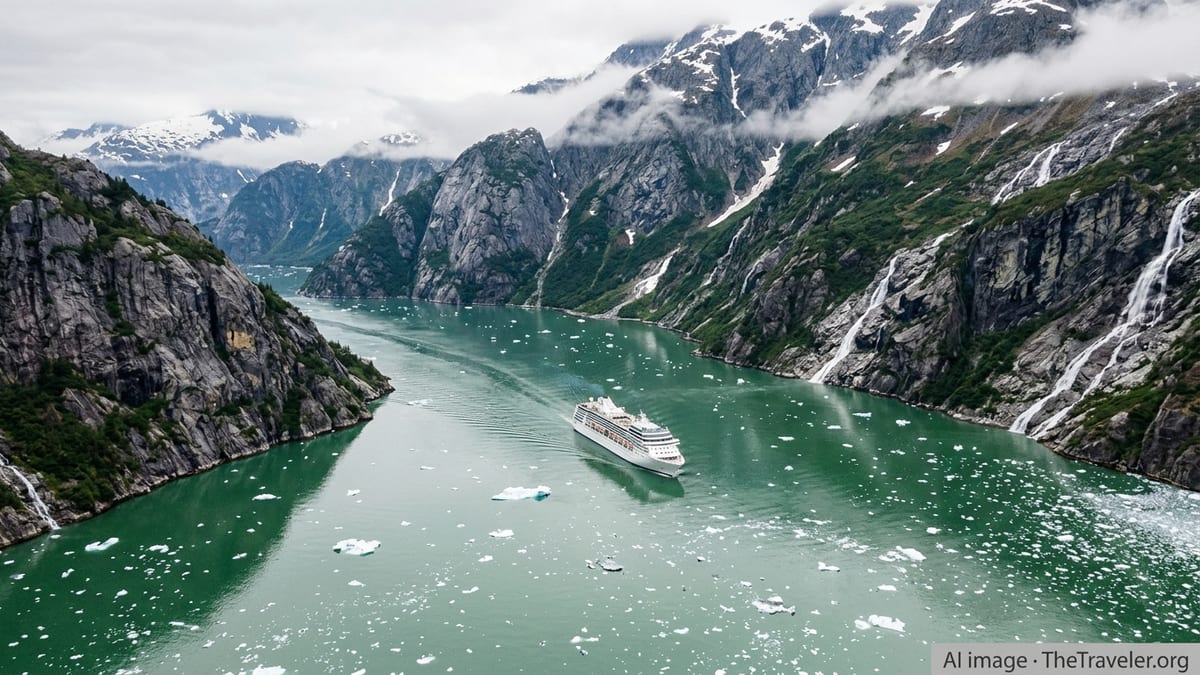
Tracy Arm Fjord, a narrow, glacier-carved waterway south of Juneau, has long been marketed as a highlight of Inside Passage cruises, with towering cliffs, waterfalls and views of the North and South Sawyer Glaciers. For the upcoming 2026 season, however, multiple cruise brands are removing it from scheduled routes, affecting thousands of travelers who booked specifically to see the famed fjord.
Publicly available information from cruise line notices and trade coverage indicates that Royal Caribbean, Carnival Cruise Line, Holland America Line, MSC Cruises, Virgin Voyages and several smaller operators have now either cancelled or replaced calls to Tracy Arm for 2026. In most cases, the substitution is nearby Endicott Arm, a parallel fjord featuring Dawes Glacier that is seen as presenting fewer immediate navigation hazards for large vessels.
The changes come just weeks before the bulk of Alaska sailings are due to begin in late April and May, leaving some guests re-checking their confirmations and excursion bookings. Travel forums and cruise news sites show a surge in reports from passengers receiving updated confirmations that no longer list Tracy Arm, even when brochures printed months earlier still featured the fjord.
While last-minute route adjustments are not unusual in Alaska, where weather and sea ice can be unpredictable, the scale and consistency of this season’s changes around a single destination mark a significant disruption to typical cruise patterns in southeast Alaska.
Landslide-Generated Wave and Ongoing Ice Instability
The immediate backdrop to the itinerary shakeup is a major landslide that struck the region on August 10, 2025. According to widely reported scientific briefings and subsequent news coverage, a slope high above the toe of South Sawyer Glacier collapsed into the water, generating a powerful wave that surged more than a quarter of a mile up the opposite valley wall and out through Tracy Arm.
No large cruise ships were inside the fjord at the time, and reports indicate there were no deaths or serious injuries. However, kayakers camping on an island near the junction of Tracy and Endicott arms saw campsites and gear swept away. The event drew close scrutiny from geologists and hazard specialists, who noted that steep, glaciated slopes in this part of southeast Alaska have long been susceptible to sudden failures.
Subsequent assessments described the area as unstable, with expectations of continued rockfall and small-scale sliding from the exposed landslide scar. Published scientific commentary has warned that additional collapses could again displace large volumes of water, creating localized tsunami-like waves within the confined fjord. For large cruise ships that must turn in tight channels surrounded by cliffs and floating ice, such a scenario presents clear operational challenges.
At the same time, operators and travel observers point out that Tracy Arm has always been sensitive to seasonal ice. Late spring and early summer often bring dense fields of calved ice and brash, and historical accounts from passengers describe visits where ships were forced to turn back far from the face of the glacier due to thick ice in the channel. In 2026, that normal ice variability is now layered on top of fresh concern about slope stability.
Cruise Lines Pivot to Endicott Arm and Dawes Glacier
In response, cruise companies are pivoting toward Endicott Arm, another fjord in the Tracy Arm–Fords Terror Wilderness that provides comparable scenery and glacier viewing at Dawes Glacier. Notices shared publicly by passengers and summarized in cruise trade outlets show that Royal Caribbean, Carnival, Holland America and MSC are among the brands rerouting ships into Endicott Arm for the 2026 season.
Endicott Arm has long served as a contingency option when ice or weather blocked access to Tracy Arm, and smaller ships and day boats regularly use the waterway even in challenging conditions. Travel industry reports suggest that, for cruise operators, Endicott’s combination of dramatic peaks, waterfalls and frequent glacier calving offers a more predictable environment for large-vessel scenic cruising while current assessments of Tracy Arm continue.
Passengers are still likely to experience a full glacier day on board, with ships slowing or pausing to allow time for viewing, photography and commentary as they approach Dawes Glacier. However, travelers who specifically chose voyages for the chance to see the Sawyer Glaciers in Tracy Arm may feel the substitution is a downgrade, a sentiment echoed in recent posts on cruise message boards where guests compare the two fjords.
Industry analysts note that, from an operational standpoint, keeping ships out of Tracy Arm helps companies manage safety risk and potential liability at a time when scientists are still collecting data on the post-landslide environment. Rerouting before the season begins also avoids day-of cancellations that can be more disruptive and frustrating for guests.
Impacts for 2026 Travelers and What to Expect On Board
The shift away from Tracy Arm is already reshaping the experience for travelers booked on 2026 Alaska cruises. Passengers who locked in itineraries months ago are now reviewing updated route maps that show Endicott Arm in place of Tracy Arm, and in some cases see revised timings for Juneau or other southeast Alaska ports.
Based on reports shared across cruise-focused publications and forums, most lines are keeping overall cruise lengths and port counts intact, treating the change as a substitution of one scenic cruising segment for another rather than a cut to the total experience. Some guests report receiving revised excursion information, particularly where previously offered “Tracy Arm fjord explorer” tours from Juneau are now labeled as Endicott Arm boat trips instead.
Travel advisors are recommending that guests pay close attention to pre-cruise communications and online account updates in the weeks before departure. In a region where itineraries are always subject to weather and ice, published schedules are best viewed as intentions rather than guarantees, and the Tracy Arm situation is reinforcing that message in a highly visible way.
For visitors on board, the practical difference may come down to the name of the fjord and the specific glacier in view rather than the overall impression. Accounts from previous seasons describe Endicott Arm as equally photogenic, with abundant icebergs, occasional wildlife sightings and similar early-morning scenic sailing that has become a signature of Alaska cruises.
Longer-Term Questions for Alaska’s Glacier Tourism
Beyond the 2026 season, the decision to suspend visits to Tracy Arm raises broader questions about how cruise tourism in Alaska will adapt to evolving natural hazards and changing ice conditions. The 2025 landslide-generated wave is one of several high-profile slope failures in glaciated fjords worldwide in recent years, events that scientists link to a complex mix of geology, warming temperatures and retreating ice.
Publicly available expert commentary suggests that monitoring efforts around Tracy Arm are ongoing, with specialists analyzing terrain movement and other indicators to better understand future risk. Until that picture becomes clearer, cruise companies appear to be taking a cautious approach, building itineraries around alternatives that provide similar appeal with lower perceived exposure to sudden, hard-to-predict events.
For Alaska communities and tour operators that have built products around the “queen of fjords,” the near-term shift could mean retooling marketing messages and shore offerings toward Endicott Arm and other accessible glacier viewpoints. Some small-ship and expedition operators may continue to assess Tracy Arm on a case-by-case basis, but large mainstream ships are signaling that they will wait for more definitive guidance.
For travelers, the disruption is a reminder that glacier landscapes are dynamic rather than static backdrops. As itineraries for future seasons come to market, those planning once-in-a-lifetime Alaska trips may want to read the fine print on glacier days, understand alternatives such as Endicott Arm and Glacier Bay, and be prepared for last-minute adjustments as nature continues to reshape one of North America’s most dramatic coasts.