


More news on this day
Alaska Airlines is facing renewed turbulence with its flight attendants over how many crew members will work on its new Boeing 787 routes, with union leaders signaling that either staffing must rise or onboard service will have to scale back.
Get the latest news straight to your inbox!
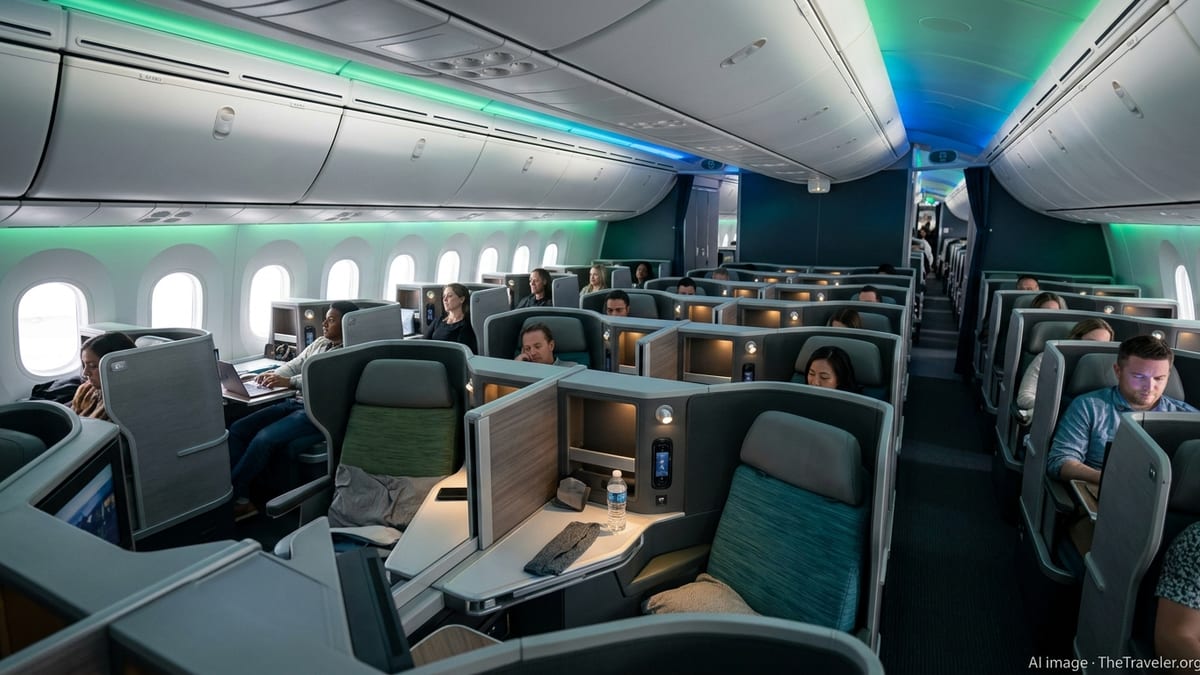
Union Pushes Back on 787 Staffing Model
The Association of Flight Attendants, which represents cabin crews at Alaska Airlines and newly acquired Hawaiian Airlines, is sharpening its criticism of how the carrier plans to staff long haul Boeing 787 services. Publicly available union materials and contract language indicate growing concern that current staffing and service expectations are not aligned.
Union communications summarizing recent bargaining rounds describe a widening gap between Alaska’s ambitions for the 787 and what flight attendants consider safe and sustainable staffing. The "give us more crew or cut service" message has begun to circulate in union updates and member briefings, reflecting a view that complex, full-service international flying cannot be delivered with what crews see as near-minimum staffing.
The dispute has emerged as Alaska deepens its integration with Hawaiian’s widebody operations and rolls out new long haul routes, including transpacific and transatlantic flights. Those services depend heavily on the 787, an aircraft type that can seat more than 300 passengers and is marketed by the combined airline as a flagship experience.
Union-side commentary frames the 787 fight as part of a broader campaign to secure what flight attendants describe as industry-leading standards on pay, scheduling and onboard staffing as Alaska transitions from a largely domestic narrowbody operator to a carrier with a significant long haul footprint.
Contract Language and Seat-to-Crew Ratios Under Scrutiny
At the center of the dispute are detailed staffing charts and seat-to-crew ratios embedded in collective bargaining agreements covering both Alaska and Hawaiian flight attendants. These provisions set out how many flight attendants are assigned to different aircraft types and routes, often exceeding the federal safety minimums but still a point of contention over workload and service delivery.
Recent contract extensions for Hawaiian flight attendants include specific tables for the Boeing 787-9, referencing ratios that cap the number of passengers per flight attendant and allowing limited carve-outs on certain North America to Hawaii routes. Union commentary suggests that many crew members believe these carve-outs risk stretching staff too thin when service expectations remain high.
For Alaska-branded operations, updated contract drafts circulating among crews outline general duty limits and job protections but leave room for disagreement over how many flight attendants will staff new long haul patterns out of hubs such as Seattle. Negotiating teams have highlighted the 787 as an area where more concrete staffing guarantees are needed, particularly when a flight carries a full premium cabin along with expanded economy services.
Union representatives have argued in bargaining summaries that without more robust staffing on the 787, crews will be forced to make trade-offs between safety-related duties, regulatory compliance and the multi-course service Alaska is promoting to customers. That tension underpins the emerging ultimatum that either crew complements rise or company expectations for onboard service must be scaled back.
Customer Experience Feeds Into Labor Tensions
Passenger feedback is adding fuel to the staffing debate. In recent months, travelers posting on aviation forums and social platforms have reported inconsistent service on Alaska and Hawaiian-operated 787 flights, citing delayed meal offerings, limited beverage runs and long stretches without visible cabin crew presence.
Some customers describe the experience as feeling understaffed or disorganized on flights that are otherwise marketed as premium long haul service, particularly on inaugural or early 787 routes to Europe and Asia. Comments have highlighted long waits in premium cabins, reduced attention in economy and a sense that crews are stretched across too many simultaneous tasks.
These public accounts do not prove a direct link between specific staffing levels and every reported shortfall. However, they reinforce the union’s broader argument that service quality and crew workload are closely connected. The more Alaska promotes an upgraded 787 experience, the more visible any gap becomes between the promised product and what a lean crew can practically deliver during a turbulent or delayed flight.
Analysts following the integration of Hawaiian and Alaska operations have noted that aligning service standards, catering models and crew cultures across two legacy brands is a complex process. Perceptions of cutbacks in service can quickly turn into a focal point in labor negotiations, especially when they intersect with safety and fatigue concerns.
From Strike Votes to Ongoing Negotiations
The 787 staffing standoff is unfolding against the backdrop of wider labor unrest at Alaska Air Group. Over the past two years, Alaska mainline and regional flight attendants have authorized strike actions, while union leaders have promoted the CHAOS strategy, a form of targeted labor disruption used in past airline disputes.
Company filings show that contracts with several work groups, including Alaska flight attendants, reached amendable dates and moved into extended bargaining, with mediators engaged in some cases. Union materials distributed to members emphasize that unresolved issues include pay scales, scheduling flexibility and long haul staffing commitments on aircraft such as the 787.
While federal labor rules make actual strikes difficult without clearance from mediating agencies, the threat of work disruptions has kept pressure on management as the carrier launches new international routes and works to maintain operational reliability. The 787 dispute has become a symbolic test of whether the combined airline is prepared to invest in staffing levels that match its long haul ambitions.
Public comments from Alaska executives in investor reports and town-hall style communications have focused on the importance of cost discipline and synergies from the Hawaiian acquisition, but they also emphasize the need to attract and retain frontline staff in a competitive labor market. How these priorities translate into concrete 787 staffing numbers remains at the core of the current negotiations.
Service Cuts or More Crew: What Comes Next
As the summer travel season progresses and Alaska ramps up its 787 schedule, both the union and the company appear to be preparing for potential adjustments. Labor-side messaging suggests that if higher staffing levels are not agreed, flight attendants will push aggressively for simplified or reduced service patterns that better fit the existing crew complements.
Such changes could include streamlined meal offerings, fewer beverage passes or scaled-back premium touches in order to keep workloads within what crews consider a manageable range. While these adjustments might protect safety margins and reduce fatigue, they would also dilute the differentiated experience Alaska aims to offer on its newest long haul aircraft.
On the other hand, increasing crew numbers on 787 flights would raise operating costs at a time when the combined Alaska and Hawaiian network is under competitive pressure from larger global carriers. Industry observers note that long haul success often depends on balancing generous staffing and service with tight control of unit costs, a balance that may be particularly challenging for a carrier still consolidating a major acquisition.
For now, the "give us more crew or cut service" message encapsulates a broader crossroads for Alaska Airlines as it evolves into a more international operator. The outcome of the 787 staffing dispute is likely to shape not only the working lives of thousands of flight attendants, but also the experience that passengers encounter on the airline’s most high-profile routes.