


More news on this day
All six cruise ships that had been trapped in Gulf ports since late February have now slipped through the Strait of Hormuz, ending one of the most unusual disruptions the modern cruise industry has seen while military tensions in the region remain volatile.
Get the latest news straight to your inbox!
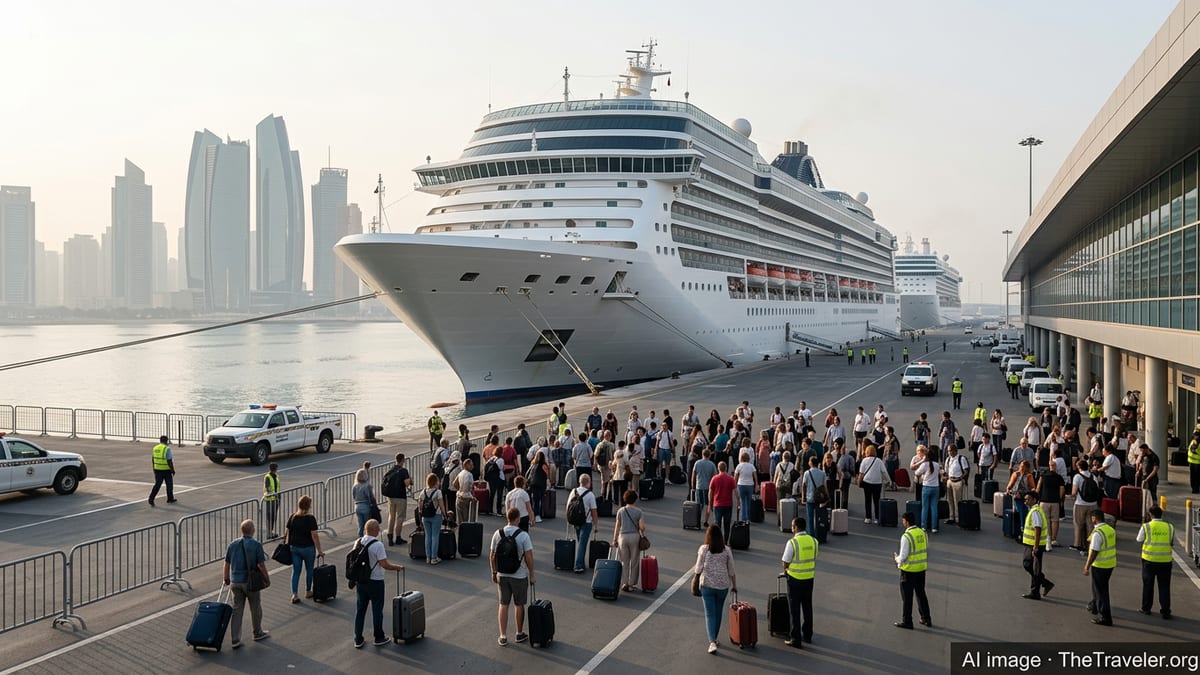
From Sudden Shutdown to Rare Maritime Escape
The six vessels, including MSC Euribia, Celestyal Discovery, Celestyal Journey, Mein Schiff 4, Mein Schiff 5 and Saudi-backed Aroya Manara, were caught in the middle when the Strait of Hormuz was effectively closed following large-scale strikes on Iran on 28 February 2026. Publicly available timelines show that Iran’s restrictions on transit, combined with a United States naval blockade, turned the world’s most critical oil and gas chokepoint into a dead end for passenger shipping.
For nearly seven weeks, the ships remained tied up in ports such as Dubai, Doha and Dammam, their passengers repatriated by air while crew stayed on board. Industry reports describe the episode as a logistical puzzle with few precedents, as operators waited for even a brief window to reposition their vessels without risking entanglement in the broader conflict.
That opening finally arrived in mid-April. According to published tracking data and cruise-industry coverage, Celestyal Discovery became the first cruise ship to make the passage on 17 April, slipping south from Dubai and through Hormuz toward Oman. Over the following days, four more cruise ships followed, forming a loose convoy as they exited the constrained waters of the Persian Gulf.
The last of the stranded fleet, Aroya Manara, cleared the strait over the weekend and was recorded under way off Oman on 20 April. Maritime intelligence sites indicate the ship is now routing toward the Red Sea, confirming that every cruise vessel trapped by the initial closure has escaped the Gulf.
Military Crisis Still Casting a Long Shadow
The breakthrough for cruise operators comes even as the wider security picture remains tense. The 2026 Strait of Hormuz crisis has seen repeated cycles of partial reopening and renewed restrictions as Iran reacts to the ongoing air war and naval pressure. Recent days have brought reports of Iranian fire on commercial vessels, the temporary reimposition of a closure order, and the seizure of an Iranian-linked cargo ship by US forces near the waterway.
Publicly available information outlines a pattern of intermittent safe-transit windows, shaped by negotiations and tactical decisions made far from the cruise terminals of Dubai or Doha. The fact that all six cruise ships were able to depart in a relatively narrow timeframe suggests their operators moved quickly once maritime risk assessments pointed to an acceptable, if still elevated, security environment.
Shipping advisories reviewed by travel and maritime analysts continue to stress that the situation around Hormuz is fluid. While the passenger vessels have exited, tanker and cargo traffic remains heavily scrutinized, and several energy companies have extended earlier decisions to reroute shipments away from the strait when possible.
For travelers watching from afar, the episode underscores how rapidly geopolitical tensions can reshape cruise planning in regions that had been marketed until recently as stable, year-round winter-sun destinations.
Where the Ships Are Heading Next
With the narrow strait behind them, the six vessels are now engaged in a complex game of catch-up. Cruise line updates and schedule reconstructions indicate that several ships are bound for Europe to begin or salvage their summer seasons, while others reposition closer to home markets in the Red Sea and Mediterranean.
Celestyal Discovery, the first to break out, is tracking toward the Eastern Mediterranean, where it is expected to resume short itineraries among the Greek Islands and Turkey in early May. Sister ship Celestyal Journey, as well as Mein Schiff 4 and Mein Schiff 5, are routing toward European cruise hubs to pick up revised deployment plans after losing weeks of operational time.
MSC Euribia, which had spent about 47 days effectively sidelined in Dubai, has also cleared Hormuz and is sailing at full speed toward Northern Europe. Travel press reports indicate that early-season departures from ports such as Kiel and Copenhagen were canceled while the ship sat in the Gulf, and itineraries have been reshuffled to accommodate its delayed arrival.
Aroya Manara represents a different strategy. Tracking data shows the Saudi-backed ship steering toward Jeddah, positioning it for Red Sea cruises that tap both regional and international demand. The decision reflects a broader effort by Gulf tourism authorities to build cruise homeports on the kingdom’s western coast as well as in the Gulf itself.
Passenger Disruption and Industry Fallout
While the dramatic images are of ships finally sailing past the headlands of Hormuz, the human impact played out weeks earlier. Cruise lines moved quickly in late February and early March to disembark passengers at Gulf ports once it became clear that departures would not be possible. According to travel-industry coverage, thousands of guests saw their holidays abruptly shortened or transformed into unplanned land stays while airlines, tour operators and cruise companies pieced together return journeys.
Across the six vessels, dozens of voyages scheduled for March and April were canceled outright. Some departures for May have also been scrapped or reworked, especially for ships that must now traverse long repositioning routes before they can resume normal cruising. Public statements from the lines highlight a combination of refunds, future cruise credits and rebooking options as they seek to maintain customer goodwill.
For crew, the experience has been more drawn out. Many remained on board throughout the immobilization, continuing maintenance and training while awaiting clearance to sail. Reports from maritime labor observers suggest that extended stays in port, although safer than sailing through a conflict zone, can strain contracts and complicate crew-change logistics.
The episode has also created a fresh layer of operational and insurance costs. War-risk premiums for any sailing near the Strait of Hormuz have risen, and some operators are weighing whether winter Gulf programs remain commercially attractive if sudden geopolitical shocks can strand assets for weeks.
Future of Gulf Cruising in Question
Even as the six ships make their way toward new assignments, the long-term outlook for cruising in the Gulf remains uncertain. Industry analysts note that the region had been one of the fastest-growing winter cruise markets before the latest conflict, with new terminals, aggressive marketing campaigns and a steady flow of international visitors.
The closure of Hormuz and the subsequent standoff have undercut that narrative. Travel media commentaries suggest that cruise lines will be cautious about redeploying high-capacity ships to itineraries that depend on an uninterrupted passage through a chokepoint so exposed to regional rivalry. Several operators have already announced adjustments, including shifting capacity back to the Caribbean and Mediterranean for the 2026 and 2027 seasons.
At the same time, Gulf tourism stakeholders are unlikely to abandon cruise development altogether. Investments in port infrastructure in Saudi Arabia, the United Arab Emirates and Qatar are already sunk, and local markets still see value in shorter regional sailings that do not require passing through Hormuz. The experience of Aroya Manara, which now appears set to focus more heavily on Red Sea routes, may offer a template.
For now, the safe passage of all six stranded cruise ships is a rare piece of good news in a fraught maritime theater. Yet their escape also serves as a reminder to travelers and operators alike that cruising in geopolitically sensitive waters carries risks that can surface with little warning, and that even brief windows of opportunity, like the one that opened this week in the Strait of Hormuz, can define an entire season.