


More news on this day
A Ryanair flight from eastern France to Marrakech departed without a single passenger on board after a security staffing failure prevented 192 travelers from passing mandatory checks, leaving them stranded at Vatry Airport and reigniting debate over air passenger protections in Europe.
Get the latest news straight to your inbox!
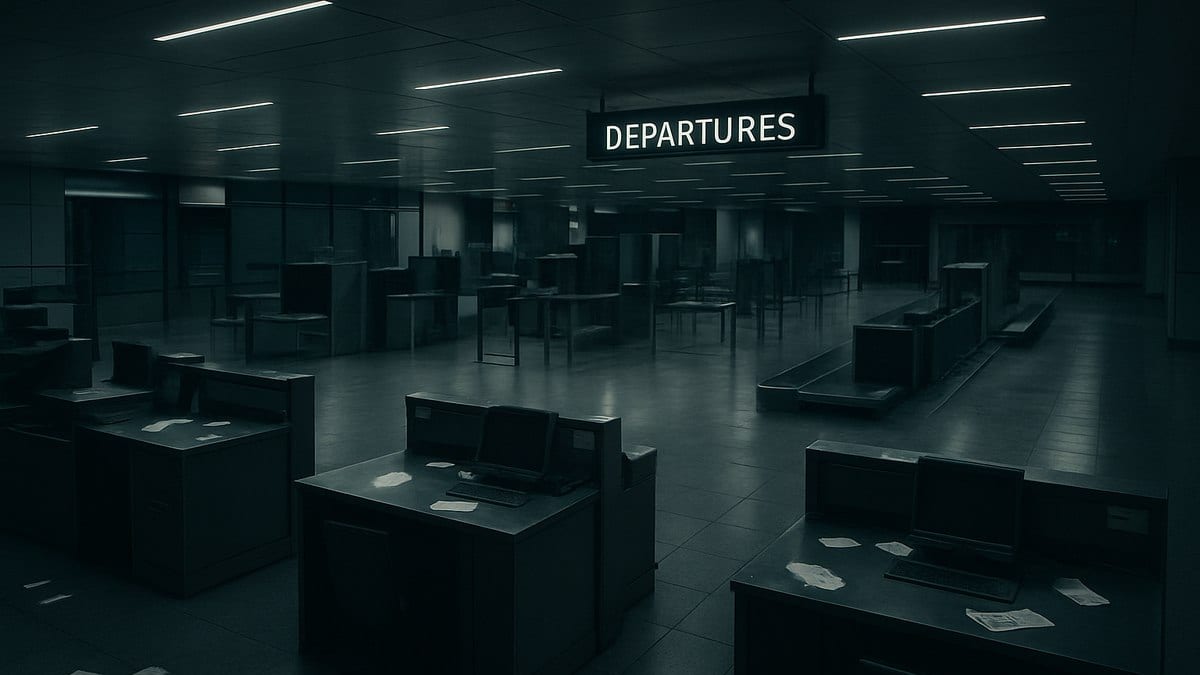
Flight Departs Vatry Airport With No Passengers On Board
The unusual incident occurred on April 14 at Vatry Airport in the Marne department of northeastern France, where a Ryanair service was scheduled to operate a roughly three and a half hour flight to Marrakech. Reports indicate that while the aircraft, crew and flight plan were ready, no passengers were able to reach the boarding gate in time.
According to multiple French and international news outlets, check in for the flight proceeded as normal, with travelers dropping bags and receiving documents for the journey. The disruption emerged only at the next stage, when passengers attempted to access security screening and found no staff present to conduct the required checks.
Airport management has stated in press comments that the security personnel, employed by a private contractor, were unexpectedly absent after a wave of sick calls. Replacement teams could not be mobilized quickly enough to process nearly 200 travelers before the aircraft’s scheduled departure slot.
With the runway slot approaching and no clear timeline for restoring security operations, the aircraft eventually took off empty for Morocco, operating the route with only crew on board while its 192 ticketed passengers remained in the terminal.
Security Staffing Failure Leaves 192 Travelers Stranded
Publicly available information shows that the affected passengers were effectively stuck on the landside of the airport, unable to enter the secure zone without mandatory screening. As a result, they never reached the boarding gate, a key step that typically defines whether a traveler has been formally presented for boarding.
Local and regional coverage describes scenes of confusion and frustration as hours passed without a workable solution. Because the issue stemmed from security staffing rather than aircraft availability or weather conditions, travelers reported uncertainty over who was responsible for arranging alternative transport and care.
Some accounts describe families and holidaymakers bound for Morocco seeking clarification from both the airport operator and Ryanair’s ground handling representatives. Several passengers reportedly only learned that the flight had departed when information screens updated or announcements were made indicating that the service had left.
As of the latest reports, the 192 stranded travelers have been pursuing refunds or compensation and, in some cases, booking replacement itineraries to reach Marrakech at their own expense while they challenge the handling of the disruption.
Dispute Over Responsibility and EU Passenger Rights
The episode has quickly turned into a test case of how European air passenger protections apply when airport security staffing collapses but the flight itself operates according to schedule. Under EU rules, travelers may be entitled to care and compensation in cases of cancellation, long delay or denied boarding under certain conditions.
However, reports indicate that Ryanair is classifying the Vatry service as an operated flight, noting that the aircraft departed and arrived as scheduled. The airline has cited its general policies regarding events viewed as outside its control, a category that can include third party staff shortages.
Airport representatives, for their part, have suggested in public statements that responsibility for dealing directly with passengers and for reimbursing costs lies primarily with the carrier, which can then seek recourse from its security provider. This division of roles has left travelers caught between different interpretations of the same incident.
Specialists in consumer rights note that one critical question will be whether the situation is treated as a form of denied boarding and, if so, whether the absence of security staff falls under exceptional circumstances. Another complication is that most accounts agree passengers never physically reached the gate area, a detail that may influence how regulators and courts interpret their rights.
Wider Strains on Airport Security and Border Operations
The empty departure from Vatry comes amid a broader pattern of disruptions across parts of the European short haul network linked to staffing pressures at security and border control. On the same day that coverage of the Vatry case emerged, separate reports highlighted a Ryanair flight from Marseille to Marrakech that took off without dozens of passengers following bottlenecks at border checks.
Industry observers point out that regional airports, which often rely on subcontracted security services and tight rotation schedules for aircraft, can be especially vulnerable when a small team calls in sick or when border queues suddenly spike. In such settings, a single staffing shortfall can quickly jeopardize an entire departure wave.
The situation has also reopened discussion about the balance between strict security and border procedures and the need to maintain predictable travel for passengers. While rigorous checks remain non negotiable, travelers and consumer advocates argue that clearer contingency plans are needed when contracted providers cannot perform their role on the day of travel.
For carriers serving leisure destinations such as Morocco, particularly during busy holiday periods, these kinds of ground based failures can create reputational damage even when airlines argue the root cause lies with airport partners or government controlled processes.
What Travelers Can Learn From the Vatry Incident
For passengers planning trips between Europe and Morocco, the Vatry case underscores the importance of understanding how responsibility is shared between airlines, airports and third party providers. Tickets and confirmations typically reference the carrier, but key operational steps, from security screening to border checks, depend on separate entities that may not be visible to travelers until problems arise.
Consumer advocates often advise passengers to keep detailed records when a journey is disrupted, including boarding passes, check in receipts, photos of display screens and any written information provided at the airport. In complex cases like Vatry, such documentation can help clarify whether a traveler was present in time and what information was given about the cause of disruption.
The incident may also encourage more travelers to review the practical limits of EU passenger rights, particularly when disruptions stem from security staff shortages or border control issues. While regulations offer significant protection in many circumstances, they do not guarantee compensation in every situation where a passenger is unable to board.
As investigations and potential legal challenges continue, the empty flight from Vatry to Marrakech stands as a striking illustration of how a single point of failure on the ground can unravel an entire trip, leaving nearly 200 people on one side of the security line while their plane departs on the other.