


More news on this day
Thousands of air travelers across Australia and New Zealand faced major disruption today as widespread cancellations and delays at key hubs in Brisbane, Auckland, Melbourne, Sydney and Wellington left terminals crowded with stranded passengers and cascading knock-on effects across airline networks.
Get the latest news straight to your inbox!
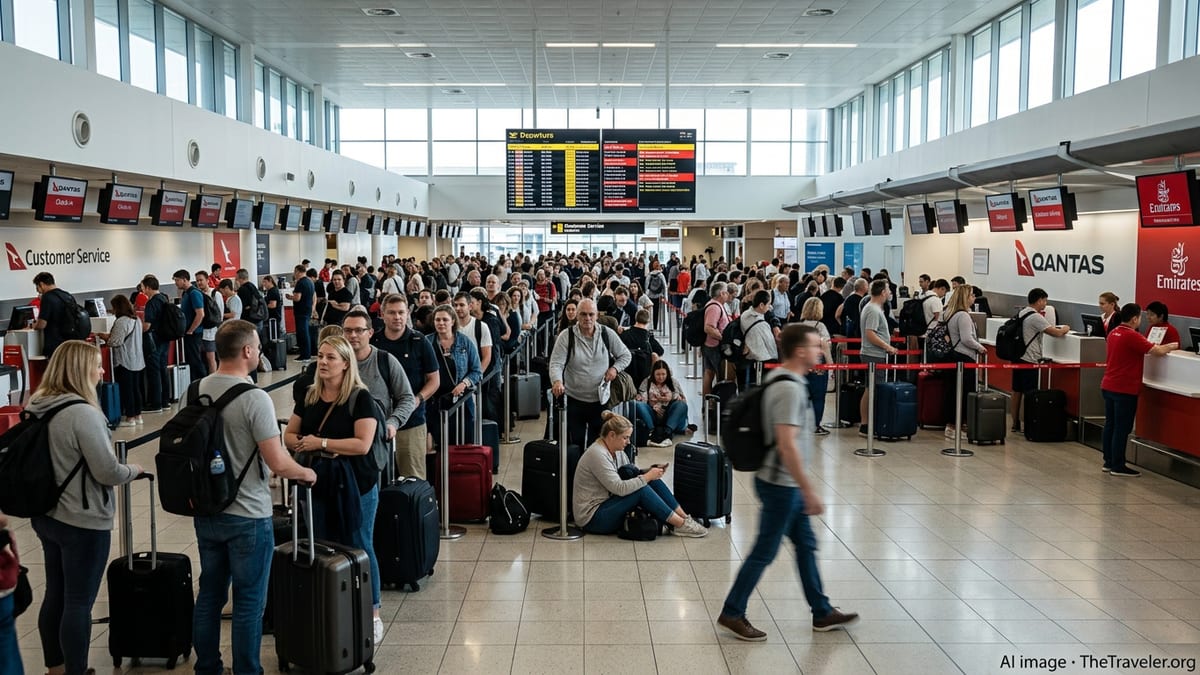
Airports Across the Tasman Struggle With Large-Scale Disruption
Operational data and live tracking services for April 20 indicate that more than 80 flights have been cancelled and close to 700 delayed across Australian and New Zealand airports, with Brisbane, Auckland, Melbourne, Sydney and Wellington among the worst affected. The pattern of disruption closely mirrors previous shock days reported in mid April, when Australian airports recorded more than 400 disrupted services in a single day and thousands of travelers were left waiting for alternative connections.
At Sydney and Melbourne, domestic schedules have been particularly hit, with knock-on pressures for trans Tasman links that feed in from Brisbane and other state capitals. In Auckland and Wellington, regional and trunk routes have suffered repeated schedule changes, compounding earlier network cuts already in place for April and early May. The combined effect has produced crowded departure halls and lengthy queues at customer service desks as airlines work through rebookings.
While precise real time tallies vary between tracking platforms, the overall picture points to a day of severe operational stress for the aviation system on both sides of the Tasman. The disruption has been large enough to affect travel patterns for business travelers, holidaymakers and international visitors using Australia and New Zealand as long haul gateways.
Qantas, Air New Zealand, Virgin Australia and Jetstar Under Pressure
Major carriers including Qantas, Air New Zealand, Virgin Australia and Jetstar have been among the most heavily impacted, reflecting their dominant roles in domestic and trans Tasman markets. Recent reporting on network performance shows that all four airlines have already been managing a difficult mix of factors this year, ranging from high fuel costs linked to Middle East tensions to aircraft maintenance constraints and staffing challenges in ground handling and air traffic control.
In New Zealand, Air New Zealand entered April after announcing the cancellation of around 1,100 flights through early May, a move that has affected tens of thousands of passengers and reduced resilience across its schedule. When additional same day weather or air traffic issues arise, there is less spare capacity to absorb last minute changes, increasing the risk that delays quickly cascade into outright cancellations on key routes such as Auckland to Wellington and Christchurch.
In Australia, consumer-focused coverage over the past week has highlighted days with more than 400 recorded disruptions at major airports, with Qantas, Virgin Australia and Jetstar all featuring prominently in delay and cancellation statistics. The latest wave of irregular operations today appears to extend that pattern rather than represent an isolated incident, particularly around Sydney and Brisbane, where earlier reports have pointed to air traffic control staffing shortages and tight turnaround schedules.
Weather, Capacity Cuts and Global Shocks Combine
Today’s disruption comes after a month of mounting strain on aviation across the region. In late March, forecasters warned of severe rain events in northern New Zealand, prompting airlines and hotels to prepare for several days of potential schedule volatility on flights into and out of Auckland, Wellington and other North Island destinations. Those precautions followed a series of previous weather shocks in recent years, including heavy flooding events that temporarily closed Auckland Airport and forced the cancellation of every flight.
At the same time, carriers have been trimming capacity in response to higher operating costs and international market uncertainty. Jetstar filings published today show fresh frequency reductions of around 2 to 3 percent on dozens of Australian domestic and trans Tasman routes from late May into June, while other low cost and full service airlines have been quietly adjusting schedules to reflect rising fuel prices and complex global supply chains.
The ongoing conflict and airspace restrictions in the Middle East have added another layer of complexity, increasing fuel costs and forcing some long haul services to reroute or operate with greater operational buffers. For Air New Zealand in particular, previously announced cuts to services through early May were directly linked in public reporting to fuel cost pressures stemming from disruptions in key oil transit corridors.
Impact on Travelers: Missed Connections and Overflowing Terminals
For passengers on the ground today, the combined effect of cancellations and delays has been felt most acutely in crowded terminals and missed onward connections. At large hubs such as Sydney and Auckland, the cancellation of a relatively small number of early departures can quickly snowball into a much wider disruption as aircraft and crew fail to be in position for later flights.
Travelers connecting between domestic services and long haul departures are especially vulnerable. When an early morning flight from Wellington to Auckland is delayed or cancelled, for example, passengers booked to continue to destinations such as Sydney, Melbourne or Los Angeles risk missing international departures and being rebooked on later flights, often with limited same day alternatives.
Publicly available guidance from airports and consumer advocacy sites consistently advises passengers caught up in such events to monitor airline apps or departure boards closely, keep documentation of expenses and stay alert for rebooking notifications. On high disruption days like today, check in desks and reissue counters can become congested for hours, increasing stress levels for families and less frequent flyers unfamiliar with their options.
What Today’s Chaos Signals for the Coming Months
The breadth of today’s disruption across Brisbane, Auckland, Melbourne, Sydney and Wellington suggests that flight operations in Australia and New Zealand remain vulnerable to sudden shocks as the region heads into the middle of 2026. Capacity is still tight compared with pre pandemic years, and even modest schedule cuts or localized weather events can ripple through already stretched networks.
Forward looking schedule filings and recent airline announcements point to a cautious approach in the months ahead. Some carriers are selectively reducing frequencies on thinner routes, while others are prioritizing reliability on core city pairs even if that means offering fewer overall seats. For travelers, this mix can translate into fuller flights, fewer backup options on the same day and a higher risk that any cancellation will involve substantial rerouting.
Against that backdrop, the scenes unfolding today at major airports around Australia and New Zealand offer a reminder that travel plans across the Tasman remain exposed to a volatile operating environment. As airlines continue to balance cost pressures, fleet constraints and unpredictable weather, days with widespread cancellations and hundreds of delays are likely to remain a recurring feature rather than a rare exception for the region’s passengers.