


More news on this day
Alstom has exceeded 700 million euros in annual purchases from Spanish suppliers, a record level that highlights Spain’s growing weight in Europe’s rail manufacturing ecosystem and the wider travel and mobility sector.
Get the latest news straight to your inbox!
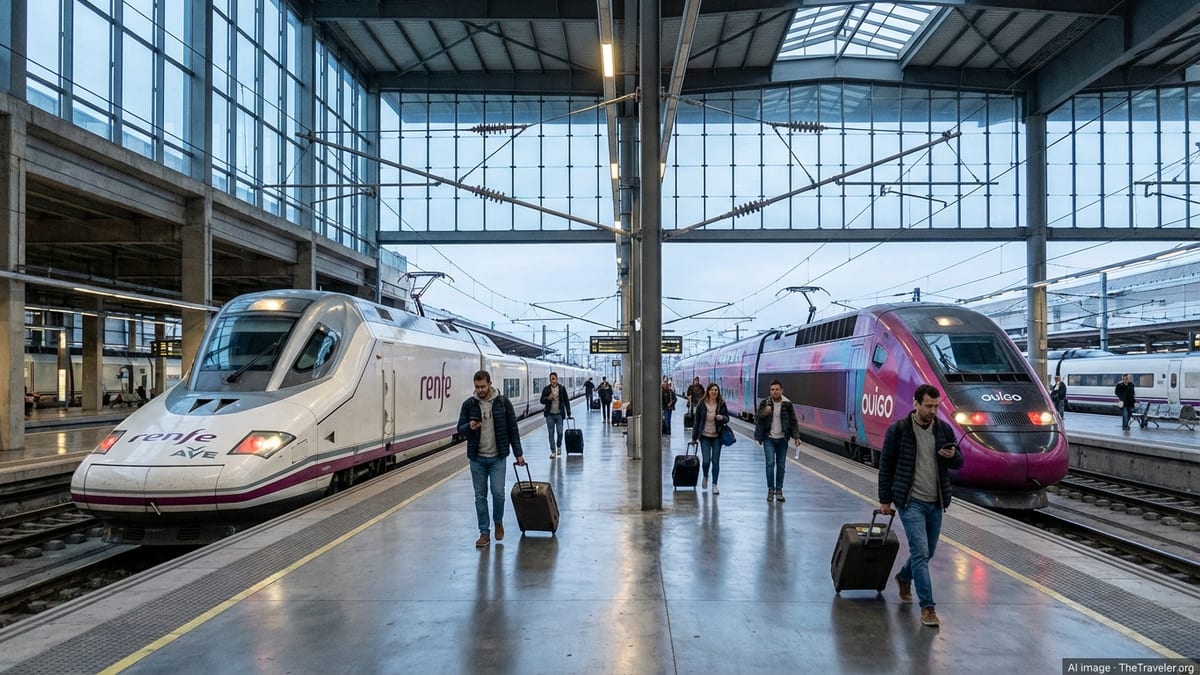
Record procurement points to deepening Spanish footprint
According to recent company disclosures and media coverage, Alstom’s procurement from Spanish suppliers in its 2025 to 2026 fiscal year reached about 700.9 million euros, an increase of roughly one third on the previous year. The figure marks a new high for the French-headquartered rail group in Spain and reflects the country’s strategic role in supplying rolling stock, signalling systems and components to projects worldwide.
Publicly available information indicates that Spain has become one of Alstom’s principal industrial and technological pillars, with the group operating major production, engineering and services sites in regions such as Catalonia and Madrid. The ramp up in local purchasing reinforces these existing facilities, anchoring more of the company’s global supply chain in Spanish territory.
Company impact reports show that Alstom employs more than 3,000 people directly in Spain and supports several thousand additional jobs through its extended supply chain. The surge in procurement beyond 700 million euros strengthens that network, channeling orders to hundreds of Spanish firms that range from large industrial groups to small and medium sized engineering specialists.
Industry observers note that the higher purchasing volume coincides with intense activity in the European rail market, as governments and operators invest in high speed lines, commuter services and low carbon transport alternatives. Spain’s established rail industrial base has positioned the country to capture a significant share of this demand.
From Catalonia to Madrid, a nationwide supply chain
Alstom’s growing orders are distributed across a broad geographic footprint, with notable concentrations in Catalonia and the Madrid region. In Catalonia, the group has highlighted more than 200 million euros in recent purchases from local suppliers, tied to the manufacture of metros, regional trains and signalling equipment for both domestic and export contracts.
In and around Madrid, Alstom maintains large engineering and industrial hubs that design and assemble rolling stock for networks in Spain and abroad. Public information on the group’s activities in the region points to several hundred million euros in annual procurement from local companies, feeding into projects for suburban rail, metro upgrades and airport links.
The supplier base is diverse, spanning mechanical and electrical component manufacturers, software and signalling specialists, design and consultancy firms, and providers of maintenance and professional services. For many of these businesses, inclusion in Alstom’s global sourcing structure provides a route to international markets, since parts designed and built in Spain are integrated into trains and systems delivered to clients across Europe, Africa, the Middle East and the Americas.
Regional development agencies and business associations in Spain have long promoted the rail industry as a strategic cluster with high value added and export potential. The latest procurement figures suggest that this strategy is bearing fruit, with multinational groups using Spain not only as a market but as a key production and innovation base.
Economic impact and jobs linked to sustainable mobility
The rise in Alstom’s purchases from Spanish suppliers carries wider economic implications beyond the rail sector itself. Company impact studies for recent fiscal years estimate that Alstom’s activities contribute hundreds of millions of euros to Spain’s gross domestic product, while supporting more than 7,000 jobs when indirect and induced employment are included.
These positions are spread across manufacturing, engineering, maintenance, logistics and a range of services, aligning with Spain’s push to consolidate higher skilled industrial employment after years of restructuring in other heavy industries. As orders for low emission transport grow, suppliers feeding into rail projects are expected to benefit from relatively stable, long term demand.
The rail manufacturer’s Spanish footprint also dovetails with national and European policies aimed at shifting passengers from air and road to rail, particularly on short and medium haul routes. Spain’s extensive high speed and regional networks have underpinned one of Europe’s most dynamic travel markets, and the reinforcement of domestic rail supply chains complements that infrastructure push.
Analysts following the mobility sector point out that international tourism and business travel increasingly depend on efficient rail connections, both within Spain and linking to neighbouring countries. Investments in rolling stock and signalling therefore have an indirect impact on the visitor economy, by improving reliability and capacity on routes used by tourists and residents alike.
Spanish suppliers integrated into global rail projects
Alstom’s procurement surge is closely tied to its global project portfolio, where Spanish facilities contribute to contracts far beyond the Iberian Peninsula. Recent company communications highlight orders for high capacity commuter trains, metro fleets and signalling systems in multiple regions where components, subsystems or engineering work originate in Spain.
For Spanish suppliers, this integration into a multinational value chain can translate into multi year order books, technology transfer and exposure to international standards. Many firms in Alstom’s Spanish network have expanded their capabilities in advanced manufacturing, digital signalling, on board electronics and cybersecurity as rail systems become increasingly connected and automated.
Specialists in areas such as traction systems, braking technology, passenger information, interior design and energy efficiency are among those benefitting from the higher procurement volumes. By contributing to platforms that are deployed in different markets, they can scale production and innovation beyond what domestic demand alone might sustain.
Observers in the transport industry suggest that this model positions Spain as a reference point for sustainable mobility technologies, enhancing the country’s profile when competing for new industrial investments. The more deeply Spanish suppliers are embedded in global programmes, the greater the resilience of the domestic rail ecosystem to cyclical changes in any single market.
Positioning Spain in Europe’s next rail investment cycle
The timing of Alstom’s procurement milestone coincides with what many analysts see as the beginning of a new rail investment cycle in Europe, driven by climate targets, congestion concerns and the need to renew aging fleets. Spain, with its established high speed network and growing urban transit systems, is well placed to play a central role in that phase.
National and regional authorities have signalled continued backing for rail as a core component of sustainable transport strategies, complementing measures in aviation and road transport. In this context, maintaining and expanding industrial capacity within Spain becomes a priority, both to supply domestic projects and to export technology and equipment.
Alstom’s decision to lift its annual purchases from Spanish suppliers above 700 million euros can be read as a vote of confidence in the country’s ability to deliver complex rail solutions at scale and on schedule. It also reinforces Spain’s status as a competitive base for manufacturing and engineering talent serving the wider European market.
For travellers, the effects of this industrial momentum may be most visible in the form of newer, more energy efficient trains, upgraded signalling and increased frequencies on key routes. Behind the scenes, however, the record procurement figures underline how deeply Spain’s factories, workshops and design offices are woven into the future of rail travel across the continent.