


More news on this day
Alstom is set to deepen its role in Egypt’s rail transformation through a series of new contracts to modernise strategic corridors, targeting safer operations, higher capacity and faster journeys on some of the country’s busiest routes.
Get the latest news straight to your inbox!
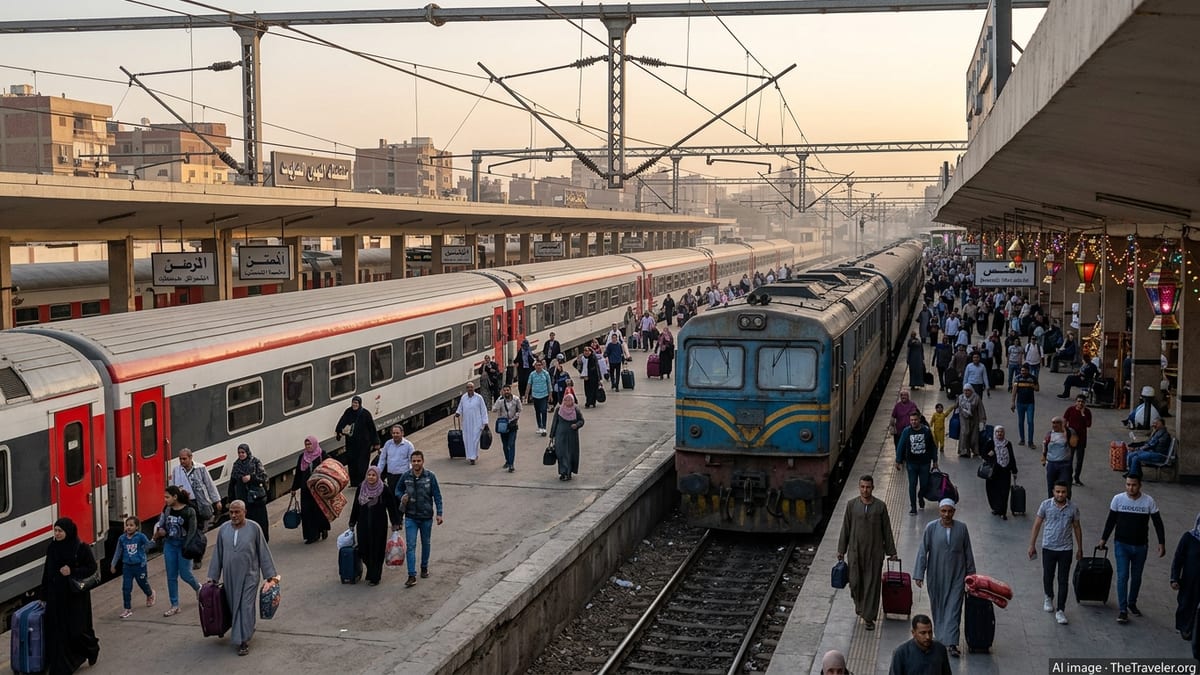
Four new contracts targeting critical commuter corridors
According to recently published corporate disclosures, an Alstom-led consortium has signed four contracts worth a combined 690 million euros with Egyptian National Railways to modernise key rail corridors linking the 6th of October City area with Alexandria and the Belbes–10th of Ramadan line. The agreements, announced on 18 June 2026, position the French group and its local partners Rowad Modern Engineering and Concrete Plus at the centre of Egypt’s latest push to upgrade its conventional rail network.
The programme focuses on what are described as strategic corridors, serving dense commuter flows between new satellite cities and established economic hubs along the Nile Delta and Mediterranean coast. These routes are seen as vital to easing road congestion, improving access to jobs and supporting industrial zones that have expanded rapidly in recent years.
Publicly available information indicates that the 690 million euro package will be booked in Alstom’s 2026–2027 financial year and will run alongside separate high-speed and metro projects underway elsewhere in the country. Together, these schemes are intended to create a layered rail offering, from long-distance express lines to modernised main lines and urban services.
Signalling upgrades at the core of the modernisation
The newly signed contracts build on a decade of signalling work by Alstom on Egypt’s main lines, notably the Beni Suef–Assyut corridor in Upper Egypt, where the company has been replacing legacy electromechanical systems with its computer-based interlocking technology. A press release issued in 2024 confirmed completion of that 250 kilometre route, including 15 stations, with new electronic interlockings and telecoms designed to allow closer train spacing and higher reliability.
On the strategic corridors now being targeted, a similar technology package is expected to underpin the modernisation. This typically includes electronic interlocking for stations and junctions, upgraded trackside equipment, new power supply systems and digital telecoms enabling real-time train supervision. Such systems are designed to reduce the risk of human error, improve response times in case of incidents and support higher service frequencies without expanding track capacity.
Egypt’s wider rail plan, as outlined in previous government and development bank documentation, has identified signalling and telecommunications renewal on almost 2,000 kilometres of main lines as a priority. The goal is to replace older relay-based installations with modern electronic systems on corridors such as Beni Suef–Assyut, Assiut–Nag Hammadi and Benha–Port Said. The new Alstom-led contracts extend this approach to additional segments that play an outsized role in daily commuter traffic.
Linking new cities with historic hubs
The 6th of October–Alexandria corridor sits at the intersection of Egypt’s population growth and industrial expansion. 6th of October City, west of Cairo, has developed as a major residential and manufacturing centre, while Alexandria remains the country’s principal seaport and a key node for trade and tourism. Upgrading signalling and infrastructure along this axis is expected to support more frequent passenger and freight services, improving connectivity between the capital region, the Mediterranean coast and inland logistics platforms.
The Belbes–10th of Ramadan line, often referred to as the B10 corridor, serves rapidly urbanising areas east of Cairo. The 10th of Ramadan City has become one of Egypt’s largest industrial zones, and rail improvements there are intended to support both commuter flows and cargo movements, reducing dependence on road transport and helping to cut travel times for workers.
These projects complement other high-profile investments in Egypt’s transport system, including a separate high-speed network being developed with other international partners and expansions of the Cairo metro and regional light rail lines. Together, these initiatives are reshaping how residents and visitors move between new satellite cities, historic centres and coastal destinations.
Safety, capacity and environmental gains
Egypt’s conventional rail network is among the oldest in Africa and the Middle East, and has faced capacity constraints and safety challenges under growing demand. Modern signalling and traffic management technologies are being promoted as tools to reduce incidents at level crossings, improve adherence to speed limits and enable better control of train movements across the network.
On past projects in Upper Egypt, upgraded signalling has been accompanied by improved level crossing protections, including barriers, lights and alarms designed to prevent road-rail conflicts. Similar measures are anticipated along the newly targeted strategic corridors, which traverse densely populated areas where road and rail infrastructure often intersect at grade.
Capacity is another central objective. By allowing trains to run closer together while maintaining safety margins, electronic interlocking and modern telecoms can support more frequent services during peak hours. For passengers, this can translate into shorter waiting times and more reliable timetables, particularly on commuter-heavy routes linking satellite cities with Cairo and Alexandria.
From an environmental perspective, the government has framed rail modernisation as part of a broader effort to shift trips from private cars and buses to electrified or more efficient rail services. Reducing road congestion and emissions on busy intercity and commuter corridors is seen as supporting Egypt’s climate and air quality goals, while also strengthening the appeal of rail for both domestic travel and tourism.
Long-term partnership and local industry participation
Alstom has been active in Egypt for more than four decades, supplying metro trains and systems in Cairo and taking part in several rounds of mainline modernisation. Company profiles emphasise an expanding local footprint, with engineering, project management and maintenance activities supported by Egyptian staff and suppliers.
The latest contracts continue a trend toward consortium structures that pair international rail technology providers with local construction and civil engineering firms. In the case of the new strategic corridor agreements, Egyptian partners Rowad Modern Engineering and Concrete Plus are expected to play central roles in civil works and on-the-ground implementation, supporting local job creation and skills development.
Observers note that successful delivery of these projects will depend on coordinated planning with other ongoing rail investments, including signalling upgrades managed by different suppliers on adjacent sections of the national network. Ensuring compatibility across systems and maintaining operations during construction are likely to be key challenges as Egypt seeks to keep trains running while overhauling critical infrastructure.