


From the streets of San Pedro on Ambergris Caye, you can hear boat engines start up just offshore and watch divers walk down sandy docks, tanks already loaded. Belize’s tourism officials regularly point to the island’s position beside the Belize Barrier Reef as one of its defining attractions, and in San Pedro that is more than marketing language. Boats really do reach the reef in minutes. The question for traveling divers is whether that reef access makes Ambergris Caye the right base compared with other Belize diving hubs like Turneffe or Placencia. After several days of diving the barrier reef from San Pedro and talking with local operators, I found clear strengths, tradeoffs, and a particular type of diver who will get the most value here.
Get the latest updates straight to your inbox!
Why Ambergris Caye Deserves Its Own Diving Conversation
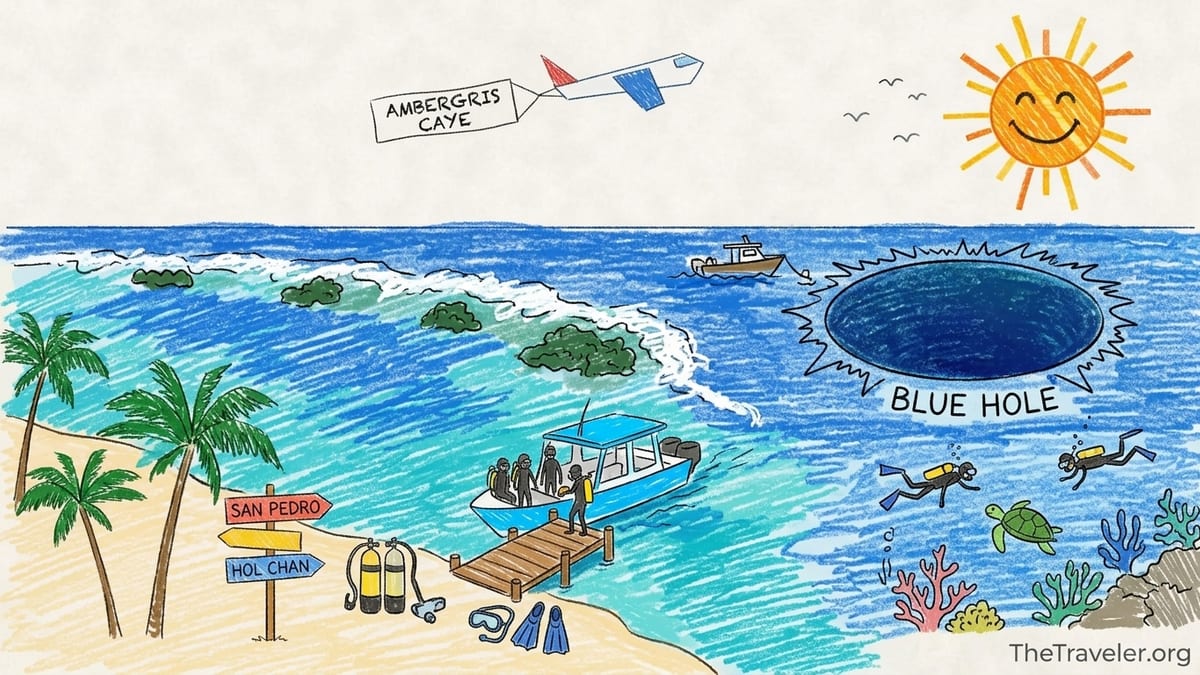
Ambergris Caye is Belize’s largest island, running roughly parallel to the northern stretch of the Belize Barrier Reef, a UNESCO World Heritage Site and one of the country’s marquee natural attractions. The reef sits so close to the eastern shore that from San Pedro Town you can often see waves breaking on the crest, a visible reminder that world-class coral formations and canyons are only a short boat ride away. This geography is what makes Ambergris Caye different from mainland bases where boats spend longer crossing open water before the first descent.
For divers, that proximity translates into quick, repeatable access to the same reef zone from many different angles. Operators in San Pedro routinely describe boat rides of about seven to fifteen minutes to reach local barrier-reef sites sitting just outside the cut in the reef, or slightly farther along its length to north and south. That short commute shapes the entire rhythm of a dive day here: meet at the dock, gear up, splash in, and be back in time for a seaside lunch in town.
It also explains why official and private travel guides alike highlight San Pedro and Ambergris Caye specifically when they talk about Belize diving. This is not a generic Caribbean beach town where diving is an afterthought. The island’s tourism economy is deeply tied to the reef, from marine reserves like Hol Chan and Mexico Rocks to the many small dive outfits scattered along the town’s waterfront. That makes Ambergris Caye a logical base for travelers whose main reason for visiting Belize is to spend several days in the water.
However, the same geography that favors short boat rides to a fringing barrier reef also means that most local diving from San Pedro shares similar depth profiles and reef structure, and that longer specialty trips to offshore atolls require early starts and higher budgets. Evaluating Ambergris Caye as a dive base means weighing that convenient daily access to the barrier reef against what you might want from signature day trips farther afield.
Checking In With San Pedro Dive Shops: How Local Operations Run
San Pedro’s waterfront is lined with small docks, many of them home to one or two boats run by local dive centers. Names that come up repeatedly in traveler reports include Belize Pro Dive Center, Chuck & Robbie’s Dive Shop, Reef Adventures, Belize Diving Adventures, and Scuba School and Family Dive Center. Walking along the beach, it is easy to comparison-shop trips in person, but many divers now reserve online before arrival to lock in morning boats during busy periods such as Christmas and Easter.
A typical check-in for a local two-tank reef dive starts at the shop office, either on the beach or just inland. Divers are usually asked to present a certification card, fill in a medical and liability form, and note the date of their last dive. Operators such as Belize Pro Dive Center publish their requirements straightforwardly: certified divers need to show proof of training, declare recent experience, and discuss any health or flight-timing issues before heading out. Several San Pedro shops explicitly advise contacting them if it has been six months or more since your last dive so they can suggest a refresher or a more conservative first outing.
Gear setup varies depending on whether you rent or bring your own. Rental packages in San Pedro often run in addition to the dive rate, with full sets priced per day rather than per tank. A different Belize City based operator currently lists a 2-tank barrier reef dive at about 150 to 160 US dollars including boat, tanks, and weights, which is broadly in line with what Ambergris Caye operators quote when you factor in local variations and seasonal promotions. Because Ambergris Caye is more remote than the mainland, many San Pedro shops encourage reservations for rental sizes, particularly for smaller or larger wetsuits.
On the dock, crews tend to set up tanks and regulators on the boat benches before divers arrive, with briefings conducted once everyone is aboard. In my experience, San Pedro boats fall into two broad styles: open skiffs with twin outboards and minimal shade, and slightly larger covered boats with benches running lengthwise. The smaller skiffs feel intimate and nimble when the sea is calm, while the covered boats come into their own on windier days when spray and sun exposure are bigger concerns.
What Local Barrier-Reef Diving Actually Feels Like
Most of the daily diving from San Pedro focuses on the nearby barrier reef just outside the island. The journey typically begins with a short run through the lagoon side, then a turn toward a natural cut such as Hol Chan or one of several smaller channels. Once outside the reef crest, boats follow the line of the drop-off to mooring buoys that mark named sites like Tackle Box, Tres Cocos, Cypress Tunnels, and others often described in local dive briefings and guidebooks.
Dive profiles on these local sites generally range from about 40 to 80 feet, depending on the specific spur-and-groove formations you explore along the wall. Inside the Hol Chan channel itself, which many guides describe as dropping to around 30 feet at its deepest, dive operators often plan relaxed first dives with much of the time spent between 20 and 28 feet. This makes the local reef diving accessible for newer divers and helps keep no-decompression limits long, although air consumption and current still dictate actual bottom time.
Visibility along Ambergris Caye’s barrier reef is influenced by wind and swell. When trade winds are moderate and seas are settled, reports from both divers and snorkelers mention clear water with visibility commonly in the range of 40 to 60 feet or more. On windier days, operators sometimes adjust plans and opt for Hol Chan or Mexico Rocks on the lagoon side of the reef crest, where waves and currents are gentler and the water remains clearer than on fully exposed outer-wall sites.
Marine life on standard outside-reef dives tends toward a Caribbean mix rather than concentrated big-animal action. Think healthy populations of grunts, snappers, and angelfish around coral heads, with frequent sightings of nurse sharks, southern stingrays, and occasional hawksbill or green turtles. In canyon-style sites such as those north of town, divers talk about weaving between coral buttresses and along sandy grooves, peering under ledges for lobsters and moray eels. Some visitors report multiple Caribbean reef sharks on single dives at certain locations, while others note that the reef shows signs of bleaching in patches, a reality across much of the region.
Hol Chan, Shark Ray Alley, and Mexico Rocks: Inside-Reef Options
Hol Chan Marine Reserve, established south of San Pedro in the late 1980s, is one of Ambergris Caye’s signature marine protected areas. The main channel, whose Mayan name translates to “little cut,” slices through the barrier reef and reaches depths around 30 feet. For divers basing themselves in San Pedro, Hol Chan is both an easy teaching ground and a fallback site when outside-reef conditions are choppy. Boats from town generally take around twenty minutes or less to reach the reserve, depending on sea state and departure point.
Diving Hol Chan feels different from the outside-wall sites. Depth is limited, but the concentration of marine life can be striking: schools of snappers and jacks, grazing parrotfish, and resident turtles that many guides know individually. Because the reserve is heavily visited and tightly regulated, operators usually provide detailed briefings about buoyancy control, staying close to guides, and not touching coral or wildlife. Separate sections of the reserve, such as Shark Ray Alley, are now managed with stricter rules on scuba and shark interactions, and most standard tours visit them only for snorkeling rather than for tank dives.
North of town, Mexico Rocks offers an alternative inside-reef experience. Designated as an extension of the Hol Chan reserve complex in the mid-2010s, it protects a patch-reef system known for unusually large boulder-shaped brain and star coral. The area sits roughly six miles north of San Pedro, and local operators describe boat rides of about fifteen minutes to half an hour depending on departure dock and weather. Depths are shallow, commonly quoted around 8 to 12 feet for the main snorkeling areas, with scuba tours using slightly deeper spots nearby when allowed by local rules.
From a diver’s perspective, both Hol Chan and Mexico Rocks work best as relaxed, wildlife-focused outings rather than as deep or technical dives. They are well suited to mixed groups where some participants snorkel while others dive, or to returning divers easing back into the water at the start of a trip. On my own shallow sessions at Hol Chan, the lack of depth did not reduce the sense of immersion because turtles, rays, and schools of fish swam within arm’s length in very manageable conditions.
Day Structure, Surface Intervals, and How Tiring Ambergris Dive Days Feel
Because local barrier-reef sites lie so close to San Pedro, a typical two-tank morning from town feels surprisingly compact compared with full-day offshore excursions. Many shops ask divers to check in around 8:00 a.m., conduct gear checks and briefings by 8:30, and depart by 9:00. The first dive usually takes place at a site ten to twenty minutes away. After surfacing, boats either remain on the mooring or shift a short distance along the reef while divers drink water, eat fruit or cookies, and spend a 45 to 60 minute surface interval chatting in the shade.
With depths averaging 40 to 60 feet on the first dive and sometimes shallower on the second, nitrogen loading is moderate for most certified recreational divers. By the time the second tank is finished, many boats are heading back, often docking by early afternoon. This means that a standard two-tank day from Ambergris Caye is physically gentler than some of Belize’s signature all-day trips that involve two to three hours of open-ocean boating in each direction. Motion-sensitive travelers I spoke with appreciated the fact that any seasickness, if it appeared, was at least limited to short hops instead of a full day on long swells.
That does not mean diving from San Pedro is effortless. Repeated days of back-to-back morning and afternoon two-tank trips still add up, especially in summer heat. Hauling tanks up ladder-style boat entries, climbing docks in full sun, and walking sandy streets with gear can leave you pleasantly tired by late afternoon. During my stay, divers who averaged two dives per day over four or five days generally described the routine as sustainable and less exhausting than big-boat liveaboards or remote atoll packages.
Three-dive days are less common directly off Ambergris Caye but are offered on some Blue Hole and atoll itineraries, where schedules often include one deep first dive followed by two shallower dives at Lighthouse Reef or Turneffe. Most divers I met agreed that combining these longer days with gentler local two-tank mornings created a rhythm that balanced rest and adventure. Planning at least one non-diving afternoon in town also helped avoid burnout.
Certification, Refresher Requirements, and Who the Local Reef Suits
San Pedro operators are explicit that certified divers must show training credentials and recent dive history. Guidelines from Belize Pro Dive Center, for example, urge guests to bring certification cards, communicate how recently they dived, and ask about refreshers if it has been six months or longer since their last underwater session. PADI’s own information for courses on Ambergris Caye points visitors toward formal refresher programs such as PADI ReActivate, which combine online theory updates with confined-water skill checks under instructor supervision.
New or rusty divers considering Ambergris Caye should be aware that while many local sites are relatively shallow and current-light, operators may still insist on a check-out or refresher dive before letting you join regular two-tank reef trips. In practice, that might mean a confined-water session off the beach or in a pool, followed by a closely supervised first open-water dive at an easy site like Hol Chan’s shallow zones. Divers who only completed their open water course years ago and have not been in the water since should plan both time and budget for such a refresher rather than assuming they can step straight on to any scheduled boat.
The local reef’s depth and conditions make Ambergris Caye a good match for newer divers building experience, families combining diving parents with snorkeling children, and photographers who like unhurried, mid-depth profiles. Confident advanced divers will still find interesting topography in canyon-style sites, and some operators run night dives at Hol Chan where the shift to nocturnal marine life provides extra novelty even in shallow water.
By contrast, technical divers and those chasing very deep walls or large pelagic encounters may find Ambergris Caye’s day-to-day diving less compelling as a standalone destination. For them, San Pedro works best as a convenient warm-up base before heading to more dramatic locations like Lighthouse Reef, or as a compromise where non-diving companions can enjoy restaurants and beach bars while the divers in the group log relaxed, scenic reef dives.
Specialty Trips: Blue Hole and Atolls Versus Staying Local
One of the most important decisions divers face when basing themselves on Ambergris Caye is whether to book long-range specialty trips to Belize’s famous offshore sites or focus purely on local barrier-reef diving. Boats from San Pedro regularly run full-day excursions to the Great Blue Hole at Lighthouse Reef Atoll, typically including a deep first dive at the Blue Hole itself followed by two shallower dives at nearby sites such as Half Moon Caye Wall and Long Caye Aquarium.
These days start early. Pickups at San Pedro docks can begin before sunrise, with boats covering long stretches of open water before reaching the atoll. Divers I spoke with described the outbound ride as between two and three hours depending on conditions and whether the boat stops to collect guests along the way. The first Blue Hole dive is generally planned as a deep, square-profile descent along the wall, often reaching maximum depths in the range of 120 to 130 feet for those qualified and approved to go that deep, though exact limits vary by operator and diver certification.
Turneffe Atoll is another common destination for specialty days from Ambergris Caye. Trips here emphasize wall dives and richer coral than some sections of the local barrier reef, again at the cost of longer rides and higher prices. While current online rates vary by season and operator, divers can expect offshore day trips to cost noticeably more than a standard local two-tank morning, reflecting fuel, distance, and park fees. Several San Pedro shops require at least Advanced Open Water certification and a minimum number of logged dives for these itineraries, especially for the Blue Hole, and will decline bookings from newly certified or long-inactive divers who have not completed refreshers.
Comparing Ambergris Caye with basing yourself directly on a more remote atoll or on a mainland hub like Placencia, the tradeoff becomes clear. From San Pedro, you get comfort, restaurant choice, and very easy daily access to mid-depth reef dives, with the option to bolt on one or two demanding offshore days. From an atoll lodge or a liveaboard, you immerse yourself in high-end wall diving at the cost of flexibility and easier nightlife. Which model suits you better should be a central part of deciding whether Ambergris Caye is the right hub for your Belize dive trip.
Is Ambergris Caye Worth Choosing Specifically for Diving?
After several days of real-world dives off San Pedro, my conclusion is that Ambergris Caye excels as a diver-friendly base for those who value convenience, shallow to mid-depth reef structure, and an island that balances underwater time with an above-water social scene. The ability to step from a town-center hotel or condo onto a small dock and be at the reef ten to twenty minutes later is a genuine competitive advantage. When conditions cooperate, visibility is good, currents are manageable, and marine life encounters are frequent enough to keep new and intermediate divers engaged.
For travelers deciding where to center a Belize diving trip, it helps to be clear about expectations. If you want day after day of dramatic walls and large pelagics, and you are comfortable spending most of your holiday on boats or in remote lodges, then Turneffe or Lighthouse-based options may rank higher. If you are traveling with non-divers, appreciate variety in restaurants and bars, or plan to mix reef dives with inland excursions, Ambergris Caye’s infrastructure and easy logistics become powerful arguments in its favor.
Cost is another factor. While precise prices shift with inflation and seasonal demand, recent published rates by Belize operators suggest that a standard two-tank local reef dive, plus rental gear, typically comes in below the price of a single full-day Blue Hole or atoll excursion. That makes it feasible to dive several mornings from San Pedro without burning through your budget, reserving only one or two big-ticket days offshore if desired. For many visitors, this hybrid approach delivers the best of both Belize worlds: approachable daily diving plus a headline adventure.
In the end, Ambergris Caye is not the only way to dive the Belize Barrier Reef, but its geography beside the reef, combined with San Pedro’s growing yet still relaxed town feel, justifies treating it as a distinct choice rather than a generic entry in “Belize diving” lists. For the right kind of traveler, that combination makes the island very much worth choosing specifically for diving.
FAQ
Q1. Do I need to be an advanced diver to enjoy Ambergris Caye?
Most Ambergris Caye day-to-day reef dives are well within Open Water limits, with depths often between 40 and 60 feet. Advanced certification becomes more important if you plan to join deep specialty trips such as the Great Blue Hole, where many operators require Advanced Open Water and a minimum number of logged dives.
Q2. How long are the boat rides from San Pedro to the local reef sites?
For standard barrier-reef dives, boat rides from San Pedro typically range from about seven to twenty minutes depending on the departure dock, specific site, and sea conditions. Trips to Hol Chan and Mexico Rocks are usually within that window, while offshore atoll and Blue Hole trips involve much longer open-water runs.
Q3. What kind of visibility can I expect when diving off Ambergris Caye?
On calm days, divers frequently report visibility in the range of roughly 40 to 60 feet or more on the local reef. Wind, swell, and recent weather can reduce clarity, and during choppier periods operators may switch to more sheltered inside-reef sites like Hol Chan or Mexico Rocks where water often remains clearer.
Q4. Is Ambergris Caye a good place for rusty or returning divers?
Yes, many San Pedro dive centers are set up to work with returning divers. Several encourage guests who have been out of the water for six months or longer to arrange a refresher or check-out dive, often using shallow, calm sites in Hol Chan or similar areas. Planning a conservative first day and communicating honestly about your experience is important.
Q5. Are there strong currents on the local reef dives near San Pedro?
Currents around the nearby barrier-reef sites are often mild, although they can pick up around channels and on windier days. Guides typically plan routes that move with the prevailing flow, and when conditions are too rough on the outer wall, they may redirect trips to more protected inside-reef locations.
Q6. How tiring are the typical dive days from Ambergris Caye?
Standard two-tank mornings from San Pedro are relatively gentle physically, thanks to short boat rides and mid-depth profiles. You will still feel the cumulative effect of sun, motion, and repeated gear handling over several days, especially if you add long-range atoll trips, but many divers find the overall pace manageable for week-long stays.
Q7. Can non-divers in my group still enjoy the reef from Ambergris Caye?
Yes, Ambergris Caye is popular with mixed groups. Non-divers can join snorkel versions of Hol Chan, Shark Ray Alley, or Mexico Rocks trips, relax on the beach, or explore San Pedro’s cafes and bars while divers are on the morning boats. This flexibility is one reason many families and couples choose the island as a base.
Q8. How does Ambergris Caye compare to staying on an atoll for diving?
Staying on Ambergris Caye offers short daily rides to the barrier reef, a variety of restaurants and accommodations, and the option to add a few long-range trips. Atoll-based lodges and liveaboards put you closer to dramatic walls and often healthier coral, but at the cost of less nightlife, more fixed schedules, and usually higher package prices.
Q9. Should I book my Ambergris Caye dives in advance?
Booking ahead is wise if you are traveling during peak seasons such as Christmas, Easter, or school holidays, or if you want specific specialty trips like the Blue Hole on particular dates. For standard local reef dives in quieter months, many visitors arrange outings a day or two in advance once they arrive in San Pedro.
Q10. Is Ambergris Caye worth choosing specifically for diving, not just for beaches?
If your priority is convenient access to the Belize Barrier Reef, relaxed mid-depth diving, and an island with enough restaurants and services to keep non-divers happy, Ambergris Caye is a strong choice. It may not replace remote atolls for hardcore wall-dive enthusiasts, but for many travelers it offers an appealing balance of underwater quality and topside comfort.