


On Ambergris Caye, it is easy to fill a week with tours, beach bars and golf cart miles. It is harder to choose the handful of experiences that genuinely feel worth the money, the sunscreen and the early alarms. Drawing on repeatable, real-world itineraries and current prices from San Pedro operators in 2026, this article focuses on the outings I would make time for again, rather than listing every possible thing to do.
Get the latest updates straight to your inbox!
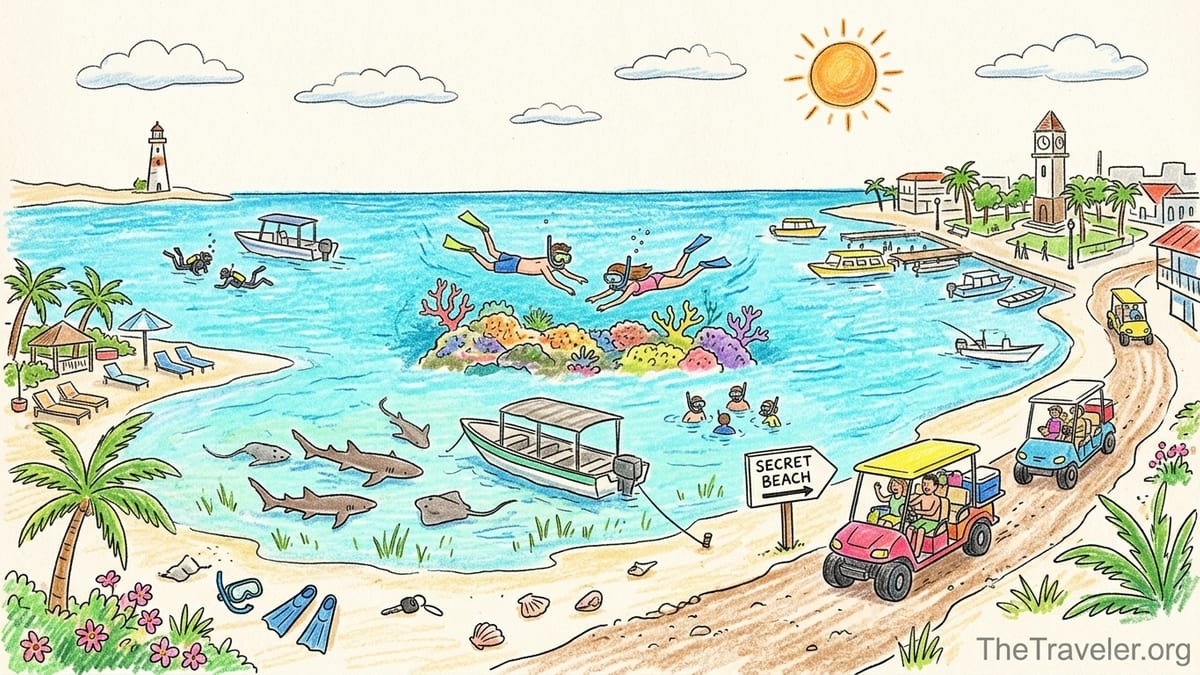
Snorkeling Hol Chan & Shark Ray Alley: The Essential Ambergris Caye Combo
If I had one half day on Ambergris Caye, I would spend it snorkeling Hol Chan Marine Reserve and Shark Ray Alley. Hol Chan sits about four miles south of San Pedro and is managed as a protected marine reserve, which keeps fish life dense and the coral in relatively good shape. Shark Ray Alley is a designated zone within the reserve where nurse sharks and southern stingrays congregate around the boats. Together, they deliver exactly what most travelers imagine when they book an island in Belize: clear water, big schools of fish and a bit of adrenaline without feeling unsafe.
Booking this trip is straightforward. In 2026, most San Pedro beachside operators advertise the standard Hol Chan plus Shark Ray Alley snorkel at about 65 to 85 US dollars per person for a three to four hour tour, including mask, snorkel, fins and water or soft drinks. Park and marine reserve fees are separate and usually collected in cash at check in, around 15 to 20 US dollars per person depending on the exact combination of sites visited. Boats generally depart from docks right in San Pedro town or from hotel piers along the southern strip, so you can often arrange pickup at your own dock if you are staying beachside.
The boat ride to Hol Chan is short, about 20 minutes from San Pedro in moderate seas. That limited transit time matters, especially if you have kids or people who are new to boats. On a typical morning outing, I have spent roughly 40 to 50 minutes in the water at Hol Chan itself, following a guide through a marked channel in the reef while they point out turtles, groupers and the occasional nurse shark resting under ledges. After that, the boat moves a few minutes over to Shark Ray Alley, where you get another 30 minutes or so to drop into a shallow sand flat while the guide keeps an eye on currents and the density of sharks around the boat.
The quality of the experience hinges on the crew. San Pedro has a long-established cadre of licensed guides who work for outfits ranging from small two-boat family operations to hotels such as SunBreeze that bundle tours with rooms. A good guide sets a calm pace, keeps groups together and enforces basic reef etiquette like not standing on coral. Crowding can be an issue in high season when several boats arrive at the same time, and that is when choosing a smaller-boat operator matters. On the best Hol Chan runs I have done, we left San Pedro a little earlier than the pack, our captain used a shaded panga rather than a big catamaran, there were fewer than ten snorkelers in the water and the guide quietly repositioned us to less congested sections of the channel when several bigger groups splashed in nearby.
Diving the Barrier Reef: Short Rides, Big Payoff
For certified divers, Ambergris Caye delivers easy access to the Belize Barrier Reef, part of the second-largest reef system in the world. The headline here is that most dive sites off San Pedro sit just ten to fifteen minutes from shore by boat. That means you spend more of your morning in the water and less pounding through chop. Typical two-tank morning dives in 2026 are priced around 110 to 140 US dollars per person including tanks and weights, with full gear rental usually adding 25 to 35 dollars. Marine park fees are either folded into the package or collected separately, so it is worth asking before you pay.
Most dive shops cluster in or near San Pedro town and along the southern beachfront road, with their own piers as departure points. The routine is similar wherever you book: check in around 8:00 am, gear up on the dock, then board a modest dive boat with a shaded canopy. Sites might include familiar names like Tuffy, Pillar Coral or Cypress Tunnels, all within sight of shore. Bottom times vary by profile, but I have consistently logged about 35 to 45 minutes per dive with a relaxed surface interval spent drifting behind the reef or back inside the lagoon depending on conditions.
Guide quality in San Pedro’s dive community is generally strong, but you notice real differences between shops. On dives I would happily repeat, divemasters gave an unhurried but detailed briefing on the dock, checked certification cards properly and kept groups small, often one guide for every four to six divers. The best crews paired stronger divers together so that newer or more anxious participants could stay closer to the divemaster and conserve air. Equipment ranged from almost-new BCDs and balanced regulators at the higher-end shops to more heavily used yet serviceable gear at budget outfits. If you plan more than a day or two of diving, it is worth bringing your own computer and mask so the rental kit matters less.
What keeps me recommending Ambergris Caye’s local reef dives over and over is the efficiency. With convenient departure points and short boat rides, you can be back at your hotel by lunchtime, showered and in a beach bar chair before the heat really peaks. The diving is not as dramatic as the Blue Hole or the outer atolls, but for repeatable, good-value days underwater with straightforward logistics, the barrier reef off San Pedro is hard to beat.
Driving a Golf Cart to Secret Beach: Freedom on Four Wheels
If you stay on Ambergris Caye for more than a night or two, you will almost certainly rent a golf cart. Cars are essentially absent from San Pedro, and the road network and bridge are built for carts. Current rate cards compiled from several citywide operators in September 2026 put a four-seat cart at roughly 30 to 40 US dollars per day, with weekly rates in the 175 to 185 dollar range for a standard gas-powered model. Some individual companies advertise one-day specials starting around 30 dollars, while larger fleets charge closer to the top of that band for newer or six-seat carts.
Driving a cart to Secret Beach is the classic island day trip I would repeat even in the heat. Most visitors pick up the cart from a depot in or just outside San Pedro town, sign a basic waiver and either pay a modest insurance supplement or accept a pre-authorized hold on a credit card. The route north crosses the Boca del Rio bridge, where reputable rental companies either include the toll via an electronic pass or give you cash and instructions. From central San Pedro to the Secret Beach turnoff, you travel on a relatively smooth main road lined with small shops, lodgings and residential areas.
The last stretch to Secret Beach is what makes it feel like an outing rather than just a commute. Once you turn left toward the western side of the island, the road narrows and the surface switches to packed dirt and patches of potholes. Travelers who have driven it in recent seasons consistently report about 35 to 45 minutes from town to the beach, with the final section described as bumpy but manageable for anyone comfortable with a slow, steady pace. On my favorite runs out there, we left San Pedro just after breakfast, when the sun was up but the clubs had only just gone quiet, and shared the road mostly with other carts loaded with coolers rather than delivery trucks.
Secret Beach itself is not secret anymore, but I still find it worth the trip for at least one lazy afternoon. The water on the leeward side tends to be calm and shallow for a long way out, making it inviting for wading and for those who prefer to float with a drink in hand. Beach clubs and bars line the shore, so you do not need to bring food or chairs unless you want to. That commercial buildup means it can feel busy in high season or on weekends, and music volumes creep up as the day goes on. If you time your visit for a weekday and aim to leave town by mid-morning, you can still claim one of the front loungers, swim in relatively uncrowded water and be back in San Pedro before the heaviest dust clouds kick up on the return drive.
Exploring San Pedro Town: Street Food, Waterfront & Everyday Life
San Pedro town is more than just a staging area for tours. It is a compact, easily walkable grid where golf carts, bicycles and pedestrians intertwine between the lagoon and the sea. I would absolutely set aside half a day without any set tours, simply to wander the back streets, sample local food and watch the traffic of water taxis, dive boats and fishing skiffs along the waterfront. Starting around the central park, you can stroll both north and south on the beach road, ducking into shaded cafes when the sun gets too intense.
In 2026, casual meals in town sit in the 8 to 15 US dollar range for items like fry jacks, tacos or a plate of stewed chicken with rice and beans at family-run spots. Beachfront grills and mid-range restaurants charge more, closer to 18 to 25 dollars for a main course, while happy hour drink specials still appear in the 3 to 6 dollar band for local beer and simple rum mixers. One of the most repeatable pleasures for me has been grabbing a plate of street tacos from a stand set up on a side street north of the park, then walking to the public dock to eat while watching school kids and commuters hop off the late-afternoon boats.
Crowding in San Pedro shifts hour by hour. Midday can feel hectic around the ferry terminals when luggage carts, workers and golfers all compete for space. Early mornings and the period just after sunset are gentler, especially on the side streets that run parallel to the main waterfront strip. Safety-wise, standard city travel sense applies. Stick to lit streets at night, keep wallets and phones secured and be cautious if you have had more than a couple of drinks. In return, you get a window into daily life that you do not see from a resort lounger: shopkeepers sweeping sand from thresholds, kids in school uniforms riding bikes to class, fishermen cleaning their catch at simple tables right beside the lagoon.
What makes unstructured time in San Pedro memorable for me is the contrast between that everyday rhythm and the heavy tourism overlay. You might walk past a boutique dive shop, a small Catholic church, a fruit stand and a beach bar pumping international pop music all on the same short block. Building an afternoon like this into your trip gives balance to the more curated excursions and makes the island feel like a place you visited, not just a collection of tour check-ins.
Fishing & Sailing: On the Water Without a Schedule
While much attention goes to snorkeling and diving, Ambergris Caye is just as rewarding from the deck of a small fishing panga or sailing catamaran. Inshore half-day fishing charters from San Pedro in 2026 commonly price out at about 250 to 350 US dollars for a private boat that can take two to four anglers, including basic tackle and bait. These trips often depart from town docks around 7:00 or 8:00 am, motor to flats or mangrove channels inside the reef and give you three to four hours of casting for snapper, barracuda or bonefish depending on your interests and the guide’s specialty.
The rhythm of these fishing outings is very different from a group snorkel tour. With only a handful of people aboard, you get more instruction and more conversation. On charters I would do again, the guide spent real time explaining the tides and how they affect where fish hold, rather than simply running from spot to spot. Many operators will clean your catch at the dock and either send you back to your hotel with fillets or arrange a local restaurant to prepare it for dinner for a modest fee. That end-to-end arc, from casting in the lagoon to sitting down later to a plate featuring your own fish, gives the day a kind of narrative you remember long after your tan fades.
Sailing and sunset trips cater more directly to the romantic and social side of a Belize vacation. Shared sunset sails out of San Pedro town typically run 40 to 70 US dollars per person for two to three hours on the water, often with open-bar rum punch and light snacks like chips and salsa or ceviche. Boats range from smaller monohulls that feel intimate to broad-decked catamarans with space for a couple of dozen passengers. Departure is usually timed for the late afternoon, allowing a glide up or down the coast inside the reef while the sun sinks toward the mainland and the water turns gold.
These trips succeed or disappoint on two fronts: crowding and crew. A catamaran at full capacity can feel more like a floating bar than a sailing experience, which might be exactly what some travelers want and the opposite of what others envision. On the most enjoyable sunset sails I have repeated or recommended, the operator capped numbers well below the theoretical maximum, left extra space on deck for people to move and mingle, and had a crew that was quick with both safety briefings and refills. Music volume is another subtle factor. A mix that allows you to hold a normal conversation without shouting often does more to build good memories than a playlist cranked to drown out the wind.
Bacalar Chico: The Remote Edge Of Ambergris Caye
For travelers willing to invest a full day and a higher price point, Bacalar Chico National Park and Marine Reserve offers one of the most distinctive outings available from Ambergris Caye. This combined protected area covers about 28,000 acres on and off the northern tip of the island, with roughly 15,500 acres set aside as a marine component. It forms part of a UNESCO-recognized World Heritage Site and sits far beyond the standard belt of half-day snorkel spots south of San Pedro, which makes it feel genuinely remote compared with the usual tours.
Full-day Bacalar Chico excursions from Ambergris Caye are priced to reflect that distance and complexity. Packages promoted by established lodges and tour operators cluster around the 160 to 220 US dollar range per person as of 2026, usually including snorkel gear, park fees, a barbecue or picnic lunch and plenty of drinking water. Departures tend to be early, often between 8:00 and 8:30 am from resort or town docks, because the journey itself is a major part of the experience. Boats travel north inside the lagoon, making strategic snorkeling stops along the way at coral heads and reef cuts, then navigate the narrow, mangrove-lined Bacalar Chico channel that marks the border with Mexico.
Time on the water is substantial. Including snorkeling, a quick look at small Mayan ruins or a beach walk on the northern shore, and lunch, I have easily spent six to seven hours away from my hotel on Bacalar Chico runs. The upside is that boat traffic thins dramatically compared with Hol Chan. On the best days out there, we saw only one or two other tour boats in the distance for hours at a time, and some snorkel stops were entirely ours. Guides who work this route tend to be experienced captains comfortable handling the winding channel and reading weather conditions, which is important because the area has fewer nearby docks or shelters if a sudden squall rolls through.
Equipment and amenities feel different from the slicker, high-volume operations closer to San Pedro. Boats are often open pangas with canvas shade rather than polished catamarans. Lunch might be grilled on a small beach or served from coolers at a sheltered spot, with simple but satisfying options such as chicken, rice, salad and fruit. There are usually no fixed restroom facilities once you leave the more developed stretch of the island, something that guests should be prepared for. Yet this stripped-down, expedition style is precisely what makes Bacalar Chico a trip I would make time for again. You trade swim-up bars and curated playlists for stretches of coastline where mangroves and low forest meet shallow, clear water with very little human infrastructure in sight.
Sunset Moments & Simple Evenings
The tours and day trips are memorable, but some of my favorite Ambergris Caye moments have cost little or nothing: lingering on a hotel pier at sunset, or sitting on the beach in San Pedro as the sky blushes pink behind the palms. Because the island runs north to south and the mainland lies to the west, sunsets are often best appreciated from lagoon-facing spots, rooftop bars or anywhere with a clear view inland. Many hotels and beach bars have simple drink specials timed to this hour, and a Belikin beer or rum punch in hand becomes part of the ritual.
Structuring your days so that you are back from big outings by late afternoon pays off here. After a morning snorkel or dive and a midday rest, walking to a quiet dock to watch the colors shift takes no planning and no guide, yet it often becomes the mental postcard you carry home. On evenings I remember most clearly, there was usually a soft breeze, the low growl of distant golf carts rather than loud music, and maybe a local family fishing casually off the same pier while tour cats ghosted back to their berths out on the horizon.
Simple dinners round out those evenings. Instead of booking a formal reservation every night, I like to mix in takeaway from town taco stands or smaller local eateries and eat on a veranda or balcony if my lodging allows. It saves money after higher-ticket days like Bacalar Chico or multiple dives and lets you process the day without watching the clock or catching a ride back to a distant resort restaurant. These unhurried, lightly structured hours at the margins of the day are not something you will see splashed on tour brochures, but they are absolutely experiences I would engineer room for on every return trip to Ambergris Caye.
The Takeaway
Ambergris Caye rewards travelers who choose depth over breadth. Rather than cycling through a long checklist of sights, anchoring your stay around a few key experiences creates a more satisfying and coherent trip. For me, those anchors are clear: at least one Hol Chan and Shark Ray Alley snorkel, a couple of easy-access reef dives if you are certified, a full day with a golf cart out to Secret Beach and back, unhurried exploration of San Pedro town, time on the water with a rod or on a sail at sunset, and, if budget and stamina allow, a remote journey to Bacalar Chico.
All of these experiences are bookable on the ground in San Pedro with up-to-date prices and local operators who know the conditions. By paying attention to departure points, travel times, guide ratios and what is included in the quoted price, you can avoid the disappointments that sometimes come with crowded, cookie-cutter tours. In their place, you can build a small set of days that you would happily repeat, the kind that make Ambergris Caye feel less like a backdrop and more like a place you know.
FAQ
Q1. How much does a Hol Chan and Shark Ray Alley snorkel tour from San Pedro cost in 2026?
Most shared half-day tours are priced around 65 to 85 US dollars per person, with an additional 15 to 20 dollars in marine reserve and park fees collected separately.
Q2. Do I need to book Ambergris Caye tours before arriving, or can I arrange them in San Pedro?
You can do either, but many visitors successfully book after arrival by walking the beachfront in San Pedro, checking current prices and choosing operators with suitable departure times and group sizes.
Q3. What are typical golf cart rental prices on Ambergris Caye?
In 2026, four-seat golf carts generally rent for about 30 to 40 US dollars per day, with weekly rates often in the 175 to 185 dollar range depending on the company and season.
Q4. How long does it take to drive a golf cart from San Pedro to Secret Beach?
Allow roughly 35 to 45 minutes each way, including a smooth run over the bridge and a final stretch of slower, bumpier dirt road on the western side of the island.
Q5. Is Bacalar Chico Marine Reserve worth the higher tour price?
If you value remote settings, fewer boats and a full day on and in the water, Bacalar Chico is often worth the 160 to 220 US dollar price tag and early start required.
Q6. Can beginners enjoy snorkeling at Hol Chan and Shark Ray Alley?
Yes, both sites are suitable for reasonably comfortable swimmers, and reputable operators provide life vests, guides in the water and clear safety briefings to support less experienced snorkelers.
Q7. What should I budget for a two-tank local reef dive off Ambergris Caye?
Plan for around 110 to 140 US dollars per person for a standard two-tank trip including tanks and weights, plus roughly 25 to 35 dollars if you need full gear rental.
Q8. Are sunset sailing trips in San Pedro crowded?
It depends on the boat and operator. Some catamarans run near capacity and feel lively, while others deliberately cap numbers to create a more relaxed, spacious sunset cruise.
Q9. Is San Pedro town safe to walk around at night?
Generally yes for most visitors, provided you stick to well-lit streets, avoid carrying obvious valuables, moderate your drinking and use licensed taxis or golf cart services if you feel uncomfortable walking.
Q10. How many days should I spend on Ambergris Caye to do these key experiences?
A stay of five to seven nights lets you fit in snorkeling, at least one day of diving or fishing, a Secret Beach outing, town time, a sunset sail and, if desired, a full-day trip to Bacalar Chico without rushing.