


More news on this day
American Airlines is reshaping its future fleet with a multibillion-dollar shift that favors new-generation single-aisle jets and upgraded cabins arriving from 2026, prompting fresh debate over whether long-haul flying on narrowbody aircraft has already peaked or is only just beginning.
Get the latest news straight to your inbox!
A Mega Order That Redraws Airbus–Boeing Balance
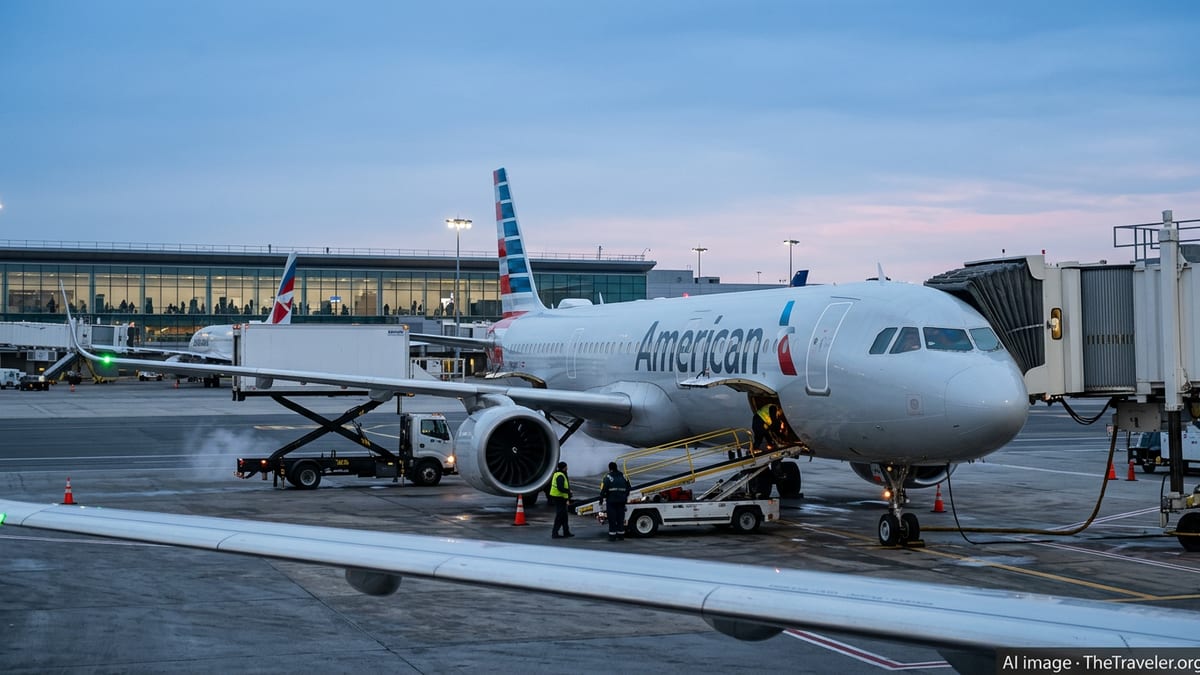
American Airlines announced in March 2024 that it would purchase 260 new single-aisle aircraft, splitting the deal between Airbus, Boeing and Embraer in what analysts describe as one of the most consequential fleet decisions in the carrier’s history. Public filings and company materials indicate the package includes 85 Airbus A321neo, 85 Boeing 737 MAX 10 and 90 Embraer E175 regional jets, with additional purchase rights attached.
The move strengthened American’s already substantial A321neo backlog but also signaled a firmer commitment to the Boeing 737 MAX family after years in which Airbus had taken a lead in new narrowbody deliveries. Industry coverage notes that American converted part of its existing 737 MAX 8 pipeline into the larger MAX 10, concentrating growth in higher-capacity jets aimed squarely at dense domestic and short-haul international routes.
What the order did not do is expand American’s headline count of long-haul Airbus aircraft. The airline kept its existing order for 50 A321XLRs, the extended-range narrowbody positioned to fly thinner transatlantic routes, but it chose not to increase that number even as competitors have leaned into the type. For Airbus, that means continued presence on American’s long-haul network through the A321XLR, but less incremental growth than some observers once expected.
Alongside the narrowbody commitments, American has a standing order book for Boeing 787-9 widebodies that will support long-haul expansion through the second half of the decade. Industry analysts see the combined strategy as a pivot away from aggressive growth with long-range single-aisle aircraft and toward a more balanced mix of widebody 787s and a tightly focused A321XLR program.
2026 Cabin Tech: Flagship Suite and a New Narrowbody Experience
American’s aircraft choices are tied closely to a sweeping onboard product overhaul timed for the mid-2020s. Publicly available fleet documents show that from 2024 onward the carrier is introducing its new Flagship Suite business-class product and updated premium economy on both Airbus A321XLR and Boeing 787-9 aircraft, with deliveries and retrofits expected to ramp up into 2026.
The A321XLRs are set to feature long-haul style interiors with enclosed business suites, direct aisle access and expanded premium seating, a layout designed to bring widebody-style privacy and services into a single-aisle cabin. The 787-9 fleet will mirror this design language on larger airframes, giving American a common high-end experience across both its narrowbody and widebody long-haul platforms.
At the same time, American is reshaping the rest of its narrowbody fleet to emphasize more premium seats on domestic and regional routes. The 2024 order for A321neo, 737 MAX 10 and Embraer E175 jets is tied to a plan to add higher-paying seats at the front of the cabin and refresh interiors with newer inflight entertainment, power and connectivity. By the 2026 summer season, many of the airline’s busiest North American markets are expected to see these higher-capacity, premium-heavy single-aisle aircraft.
The technology underpinning these cabins, from upgraded seat shells to expanded Wi-Fi and digital services, is central to the carrier’s 2026 vision. Rather than relying on a single aircraft type to transform long-haul flying, American appears to be betting that a consistent, tech-forward passenger experience across multiple fleets will matter more than whether a given route is operated by a narrowbody or a widebody.
Has Narrowbody Long-Haul Reached Its Limit?
The question for travelers is whether American’s strategy signals the beginning of the end for long-haul routes flown by single-aisle aircraft. Over the past decade, airlines across the Atlantic have used the Airbus A321LR and A321XLR to open routes that could not economically support larger widebodies, connecting secondary cities with nonstop flights that were once unthinkable.
American was early to place a substantial A321XLR order, viewing the aircraft as a tool to reach European destinations that did not justify a Boeing 777 or 787. Corporate presentations and investor materials highlight the type’s role in complementing, rather than replacing, widebodies on the Atlantic. Yet the absence of additional A321XLR orders in the 2024 deal has been interpreted by some analysts as a sign that the airline sees a finite ceiling for narrowbody long-haul growth.
There are practical constraints. Single-aisle aircraft offer fewer galleys and restrooms relative to the number of passengers, and their cabins can feel more crowded on overnight sectors that stretch to seven or eight hours. Regulatory and union requirements around crew rest, as well as payload and range performance in adverse weather, further limit exactly which city pairs can be served comfortably and reliably by narrowbodies.
However, the A321XLR still occupies a distinct niche between traditional narrowbodies and widebodies. Rather than marking the end of narrowbody long-haul, American’s restrained growth in this segment may indicate a more surgical use of the aircraft on a select set of routes, while widebodies absorb broader long-haul expansion as new 787-9s join the fleet.
Widebodies Regain Ground in the Long-Haul Strategy
American’s order book shows a renewed emphasis on widebodies through the Boeing 787-9 program, with deliveries scheduled across the mid-2020s. Industry reporting has linked these jets to both capacity replacement and modest growth on key transatlantic and transpacific routes, helping the airline address what commentators have described as a structural shortage of long-haul lift in recent years.
As 787-9s arrive, American is expected to phase out older twin-aisle aircraft while adding seats on high-demand routes to Europe, South America and Asia. Combined with the premium-focused interiors, the 787-9 provides more cargo capability, additional crew rest options and greater operational resilience than a narrowbody on lengthy flights.
The carrier’s decision not to dramatically increase its A321XLR commitment aligns with this trend. Observers note that widebodies remain more flexible for network planning, able to be redeployed across seasons and regions as demand shifts. They also give airlines more room to differentiate premium cabins, especially as business-class suites, premium economy and high-yield leisure markets become central to profitability.
In this context, the era of narrowbody long-haul looks less like a wholesale replacement of widebodies and more like a phase of experimentation that is now being integrated into a traditional hub-and-spoke strategy. The A321XLR will likely serve specific transatlantic and deep Latin American routes where its lower trip costs shine, while the 787-9 and other widebodies carry the bulk of American’s long-haul ambitions.
What It Means for Travelers by 2026
For passengers, American’s billion-dollar pivot is less about abstract fleet metrics and more about what the cabin will feel like from 2026 onward. On long-haul routes, travelers are likely to see a clearer split: premium-heavy A321XLRs on carefully chosen thinner routes, and 787-9s with similar next-generation suites on flagship corridors where demand supports larger aircraft.
Within North America and to nearby international destinations, the huge order for A321neo, 737 MAX 10 and Embraer E175 jets points to more seats and more premium options on busy business and leisure routes. Reports indicate that American aims to have more premium seats across its narrowbody network than any other U.S. airline, a step that could reshape upgrade dynamics and fare structures in key markets.
Whether this represents the twilight of narrowbody long-haul or simply its maturation, travelers can expect a more mixed reality than the early hype suggested. Single-aisle aircraft will remain a feature of the transatlantic map, especially for secondary cities, but widebodies appear to be reclaiming center stage in American’s long-haul strategy.
If current plans hold, the summer 2026 schedule should reveal the full impact of these choices. For now, American’s latest orders and cabin investments suggest that the future of long-haul travel will not be defined by a single aircraft type, but by a carefully curated blend of technology, comfort and economics across a diversified fleet.