


More news on this day
American Airlines is sharpening its summer 2026 strategy across the Atlantic, adding new nonstop routes from Philadelphia and Dallas Fort Worth to key European cities while overhauling hub schedules in an effort to curb flight disruptions, smooth airport chokepoints and better withstand the kind of travel chaos that has dogged recent peak seasons.
Get the latest news straight to your inbox!
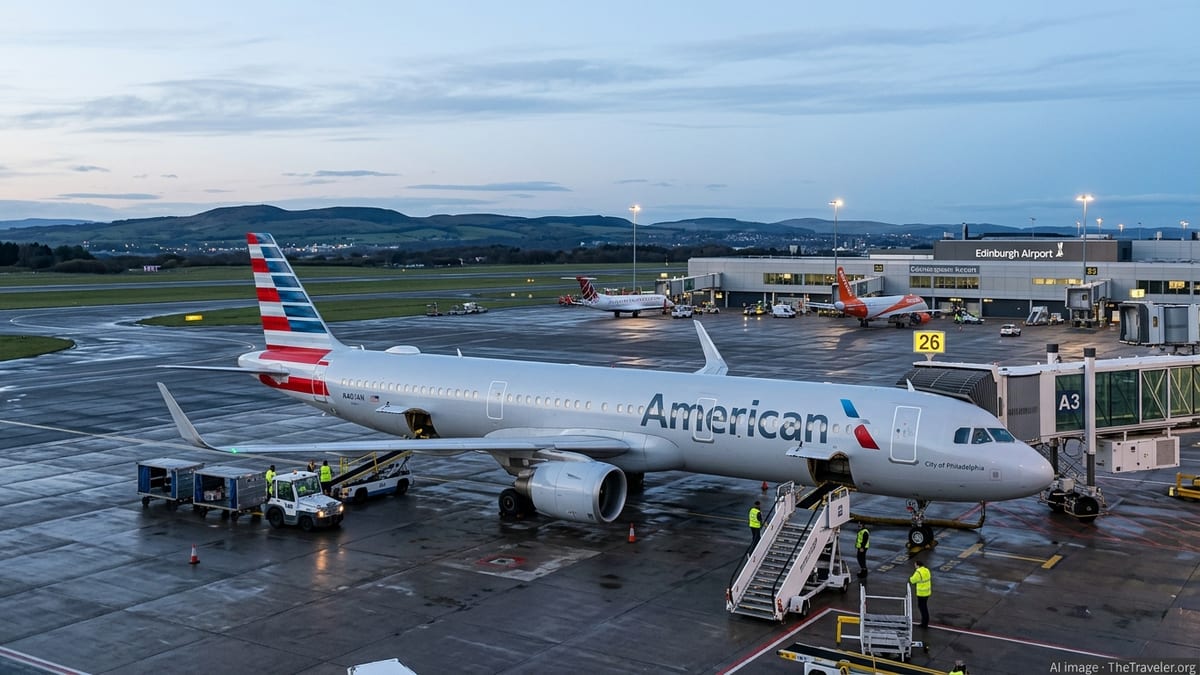
Four New Europe Routes Anchor American’s 2026 Push
For summer 2026, American Airlines is rolling out four new nonstop routes between the United States and Europe, centered on its transatlantic gateway in Philadelphia and its largest hub in Dallas Fort Worth. The carrier has begun selling seasonal service from Philadelphia to Budapest and Prague, and from Dallas Fort Worth to Athens and Zurich, with flying concentrated in the late spring and summer peak.
From Philadelphia, customers gain new access to Budapest Ferenc Liszt International Airport and Prague Václav Havel Airport, both served by Boeing 787-8 aircraft on a daily seasonal basis. These flights introduce Budapest and Prague as fresh points in American’s network and add two more leisure-focused capitals to the airline’s East Coast transatlantic portfolio.
At Dallas Fort Worth, American is launching new nonstop connections to Athens and Zurich using a mix of Boeing 777-200ER and 777-300ER aircraft. The Athens route opens another option to Greece beyond existing East Coast gateways, while Zurich strengthens links to a major European financial center and alliance partner hub, building on Dallas Fort Worth’s role as a long-haul connecting powerhouse.
Industry coverage indicates that the four European additions are part of a broader set of long-haul changes for 2026 that include extended South America flying and additional Europe capacity from other hubs. Public schedules show the summer peak beginning around late May and running into early October, aligning the new routes with school holidays and major events across Europe.
Philadelphia’s Redesigned Schedule Targets Missed Connections
Beyond adding new destinations, American is using Philadelphia to test structural changes aimed at reducing delays, cancellations and missed connections that have plagued busy summer periods. According to the airline’s published information, the summer 2026 schedule at Philadelphia International Airport is being rebuilt around seven distinct “banks” of arriving and departing flights, up from six previously.
By spreading flights more evenly throughout the day, the updated bank structure is designed to ease pressure at security checkpoints, gate areas and baggage facilities while still preserving tight transatlantic connections. Reports from the airline and airport partners indicate that early operational data has shown improved on-time performance and better baggage handling as the new pattern has been phased in.
Philadelphia’s role as American’s primary transatlantic gateway is also being reinforced through network breadth. Public schedules for summer 2026 show more than 120 destinations served nonstop from the airport, including close to 20 across the Atlantic once Budapest and Prague are added. That density gives the airline more options to rebook customers during irregular operations, an important factor when weather or air traffic constraints disrupt the schedule.
Local planning documents from the city highlight transatlantic growth as a strategic objective, with new European links seen as a way to drive inbound tourism and business travel. As American refines its bank structure and lounge facilities at Philadelphia, the hub is emerging as a test case for how schedule design and infrastructure upgrades can mitigate peak-season strain.
Dallas Fort Worth Leans on Hub Scale to Absorb Disruptions
Dallas Fort Worth International Airport remains American’s largest hub and a central pillar of its resilience strategy. The airport already connects to more than 230 destinations, and the addition of Athens and Zurich for summer 2026 further expands a long-haul map that stretches deep into Europe, Latin America and Asia through partners.
Dallas Fort Worth’s scale is a double-edged sword. In past severe-weather events, the concentration of traffic has contributed to extensive delays and cancellations, reverberating across the network. In response, American has been rebuilding its Dallas Fort Worth schedule and gate utilization, with publicly available commentary pointing to a sharp reduction in missed connections as bank structures and staffing have been adjusted.
For the 2026 peak, the new Europe routes out of Dallas Fort Worth are timed to feed the hub’s largest connecting waves while offering longer ground times for some inbound transatlantic flights. That approach creates additional slack for customs, immigration and potential delays, and can make it easier to protect same-day onward connections to smaller U.S. cities when irregular operations occur.
Cargo planning is also playing a role in how the schedule is designed. Industry cargo updates show American operating up to roughly 4,400 monthly transatlantic flights during the summer of 2026, many with widebody aircraft. This additional capacity gives planners flexibility to swap equipment or adjust frequencies in response to disruptions while maintaining both passenger and freight commitments on critical lanes.
Systemwide Changes Aim to Tame Transatlantic Chaos
American’s 2026 transatlantic buildout forms part of what the airline is calling its centennial summer, with projections that it will carry around 75 million customers across roughly 750,000 flights during the season. With that scale, even incremental gains in reliability can have an outsized impact on how much disruption travelers experience when weather or air traffic issues arise.
Across its Europe network, publicly available information shows American adjusting departure times, adding buffer into key connections and coordinating more closely with alliance partners at major European hubs. The goal is to reduce the domino effect when a single delayed inbound aircraft would previously have cascaded across several onward flights, creating missed connections and baggage complications.
Industry analysis of American’s schedule filings indicates that the new Budapest, Prague, Athens and Zurich routes are layered on top of returning seasonal services such as Milan and Edinburgh from U.S. hubs. Rather than relying on a small number of trunk routes that become choke points during disruptions, the airline is spreading demand across a broader mix of leisure and business markets, which can provide more rerouting options when operational stress builds.
Travel data providers also point to a trend of U.S. carriers moderating capacity growth compared with the rapid rebound that followed the pandemic, especially on the most crowded transatlantic corridors. For American, the 2026 plan appears focused on carefully targeted new destinations and schedule refinements at key hubs instead of simply adding more seats on existing routes, a strategy that can help avoid overloading airports already operating near capacity.
What Summer 2026 Travelers Can Expect
For travelers departing the United States in summer 2026, the immediate benefits of American’s moves will be visible in the form of more nonstop options to Europe from Philadelphia and Dallas Fort Worth. Budapest and Prague become easier to reach for East Coast and Midwest travelers connecting through Philadelphia, while Athens and Zurich open new one-stop itineraries for customers across the airline’s domestic network via Dallas Fort Worth.
Passengers may also notice subtler changes intended to mitigate disruptions, such as slightly longer scheduled connection times in congested hubs, more evenly spaced departure banks and additional widebody aircraft operating across the Atlantic. While these adjustments cannot eliminate the risk of delays or cancellations, they can make it easier for the airline to re-accommodate customers and keep baggage flowing when operational challenges arise.
Given the strong appetite for European travel reported by airlines and travel agencies, demand for the new American routes is expected to be robust, particularly during school holidays and major sporting and cultural events in 2026. Industry observers advise travelers to book peak summer departures early and build in time buffers on complex itineraries, even as carriers like American introduce schedule changes designed to provide a smoother journey.
As American enters its centennial summer with an expanded European footprint and reworked hub operations, its performance during the 2026 peak will be closely watched by travelers, competitors and airports alike. The combination of new destinations, adjusted bank structures and increased widebody utilization offers a real-time test of whether schedule design and network planning can meaningfully reduce the transatlantic chaos that has become a recurring feature of recent summers.