


More news on this day
A sinkhole discovered near a main runway at New York’s LaGuardia Airport on Wednesday, May 20 has set off a cascade of delays and cancellations across the United States just as Memorial Day holiday travel ramps up, with disruptions reported from New York to Chicago, Atlanta, and Miami.
Get the latest news straight to your inbox!
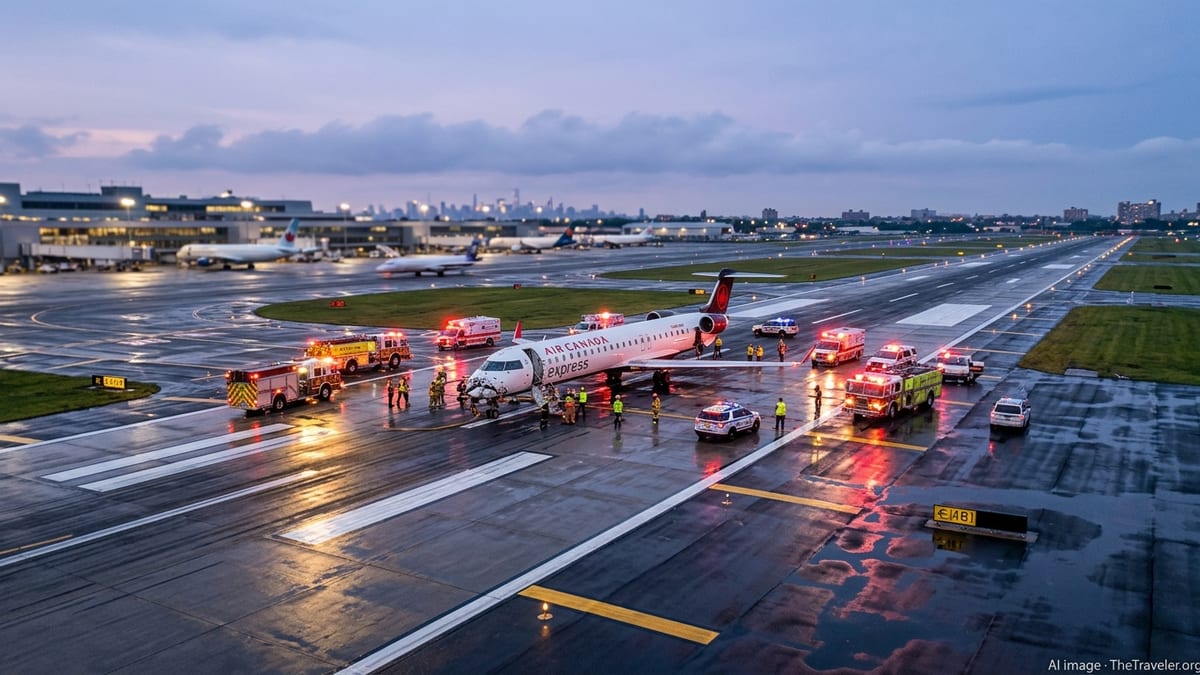
Runway 4/22 Closure Intensifies LaGuardia’s Pre‑Holiday Strain
Publicly available information from airport and media reports indicates that the sinkhole was identified during a routine morning inspection near Runway 4/22, one of LaGuardia’s two critical landing strips. The runway was immediately taken out of service while construction and engineering crews moved in to stabilize the affected section and investigate the cause.
The closure left LaGuardia temporarily operating on a single runway at one of the busiest moments of the spring travel calendar. Coverage from New York outlets describes hours long departure delays and a growing stack of cancellations as airlines adjusted schedules, rerouted aircraft, and consolidated flights. Weather systems moving through the Northeast further constrained operations, compounding the congestion triggered by the infrastructure issue.
By early Saturday, May 23, New York television coverage reported that repairs and inspections had been completed and that the runway had reopened. However, airlines were still working through residual disruptions, with passengers continuing to face rebookings and altered itineraries as carriers attempted to reposition planes and crew.
Hundreds of Flights Disrupted as Airlines Reshuffle Networks
According to aviation and travel trade reports, the immediate impact at LaGuardia was measured in the hundreds of delayed and canceled flights over the first 48 hours after the sinkhole was discovered. Some carriers issued travel waivers for New York area airports, allowing customers to change itineraries without fees, while others consolidated lightly booked flights in an effort to free up aircraft and mitigate knock on effects.
Industry coverage notes that LaGuardia typically has limited slack in its schedule, with tightly spaced departures and arrivals and little unused gate capacity. The loss of a runway during peak hours significantly reduces the airport’s arrival and departure rate, forcing airlines to trim schedules at short notice. Travelers reported missed connections, last minute gate changes, and overnight delays as crews and aircraft found themselves out of position.
Even with the runway now back in service, airlines are expected to spend much of the holiday weekend restoring normal patterns. Operational planners will continue to weigh whether to hold flights for connecting passengers, cancel rotations with few travelers, or reroute aircraft through other hubs to restore balance to their networks.
Ripple Effects in Chicago, Atlanta, and Miami
The sinkhole at LaGuardia has been felt well beyond New York. Publicly available flight tracking and schedule data show delays and cancellations spreading across major domestic hubs that handle significant New York traffic, including Chicago, Atlanta, and Miami. Carriers that rely on LaGuardia as a key business travel gateway have had to shift passengers through alternative airports such as Newark and John F. Kennedy, putting added pressure on other parts of the system.
In Chicago, travelers on connecting itineraries to and from LaGuardia have encountered rolling delays as aircraft arriving from New York turn late and crew duty time limits tighten. Aviation reports describe similar patterns in Atlanta, where one of the largest domestic hub operations is working around gaps caused by grounded or late running LaGuardia flights.
In South Florida, Miami and nearby airports have also seen ripple effects, particularly on routes that depend on tight turnarounds and business heavy schedules linking New York with major corporate markets. While weather and routine congestion also play a role, the LaGuardia runway issue has emerged as a central driver of the latest wave of disruptions heading into the holiday.
Memorial Day Travel Surge Meets Aging Infrastructure
The timing of the sinkhole could hardly be worse for travelers. Memorial Day weekend is traditionally considered the informal start of the U.S. summer travel season, and early projections from airline and government sources had already pointed to one of the busiest holiday periods since the pandemic. With planes running near capacity, even a modest loss of runway capacity at a major hub can have an outsized impact.
Analysis from aviation specialists highlights how a single infrastructure failure at a slot constrained airport like LaGuardia can cascade across the national network. The airport’s location on reclaimed shoreline and fill, combined with heavily used pavement and complex underground utilities, has long drawn scrutiny from engineers and safety analysts. The sinkhole quickly reignited debate over the resilience of older airfields that have undergone repeated expansions on challenging ground.
Recent federal reports on airport construction and maintenance have emphasized the need for proactive inspections and rapid response protocols when issues are detected. In this case, the discovery of the sinkhole during a scheduled inspection likely prevented a more serious incident, but it also underscored the operational vulnerability created when critical infrastructure must be taken offline at short notice.
What Airlines and Travelers Are Doing Next
Airlines are responding with a mix of schedule adjustments, fee waivers, and operational workarounds. Several major carriers have publicly posted flexible travel policies for customers booked to or from LaGuardia around the affected dates, allowing changes to flights that are delayed or canceled without additional charges, subject to fare rules and rebooking windows.
Travel industry reports recommend that passengers check flight status early and often, arrive with additional time at the airport, and be prepared for last minute gate or routing changes. With aircraft and crews still out of position following the runway closure, same day rebooking options may be limited on certain high demand routes, particularly during peak hours.
For the airlines, the LaGuardia sinkhole is likely to feature in broader discussions about infrastructure resilience, contingency planning, and the balance between aggressive scheduling and operational buffers. As the holiday weekend unfolds, attention is expected to remain focused on how quickly carriers can restore reliability at New York’s close in airport and prevent a localized problem from snowballing into wider summer travel turmoil.