


More news on this day
A main runway at New York’s LaGuardia Airport has reopened after a sinkhole discovered during a routine inspection forced a two-day closure that disrupted hundreds of flights at the height of the busy Memorial Day travel period.
Get the latest news straight to your inbox!
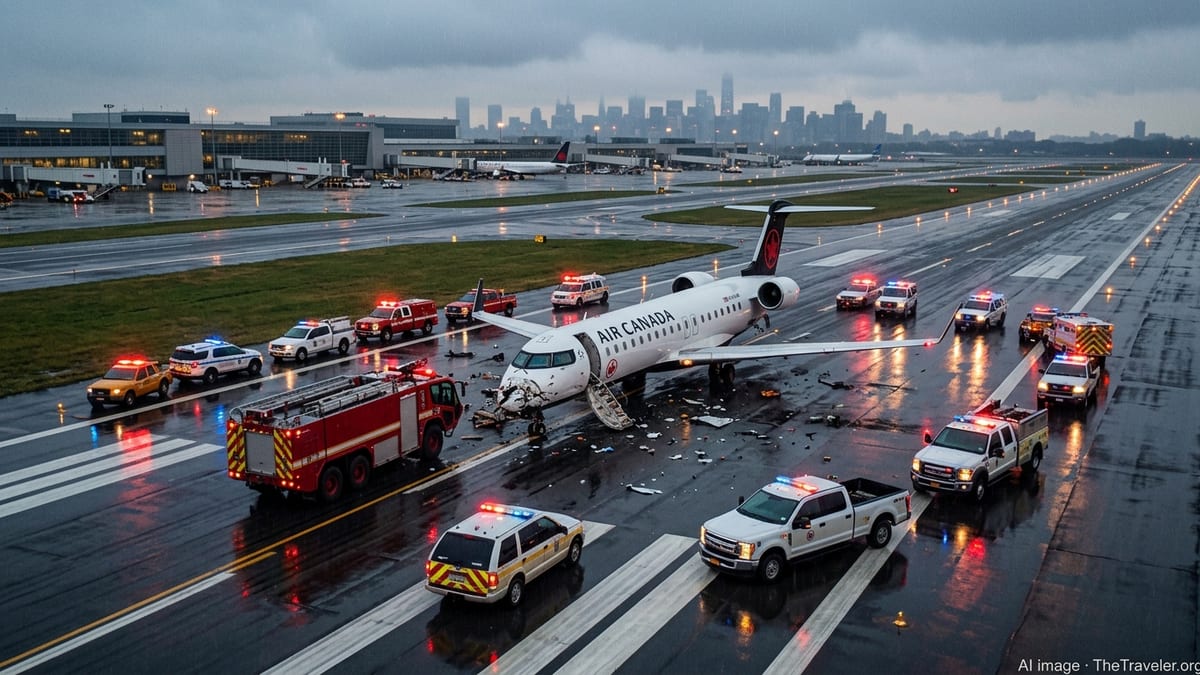
Runway reopens after intensive repair work
According to published coverage from local and national outlets, the sinkhole was first detected late Wednesday morning, May 20, beside Runway 4/22 during a standard airfield inspection. The finding prompted an immediate shutdown of the strip and a flurry of emergency repair activity, while LaGuardia continued operating on its remaining runway at reduced capacity.
Publicly available information indicates that engineers and construction crews worked around the clock to excavate the affected area, stabilize the subgrade and repave the damaged section of pavement. The runway remained out of service through much of Friday, with inspectors carrying out multiple rounds of testing before the surface was cleared for aircraft movements.
By Friday evening, the airport confirmed through public statements that the runway was back online following completion of repairs and safety checks. The reopening came roughly 48 hours after the closure, a timeline that travel analysts describe as rapid given the complexity of airfield pavement work and the need to coordinate closely with federal aviation regulators.
Initial operations on the restored runway are expected to be closely monitored, with air traffic control sequencing arrivals and departures to ensure the surface and surrounding taxiways perform as expected under full load.
Two days of delays, cancellations and missed connections
The runway closure significantly constrained LaGuardia’s capacity, with tracking data and airline updates showing hundreds of delays and cancellations rippling through schedules on Wednesday and Thursday. With only one runway available, arrival and departure rates were cut, forcing carriers to pare back frequencies and reroute some flights through other Northeast hubs.
Published reports from flight-tracking services show that disruption continued into Friday morning as airlines worked through backlogs and repositioned aircraft and crews. Many travelers faced missed connections, extended waits in terminal queues and unexpected overnight stays across the region’s airports.
The timing amplified the impact. The closure overlapped with the start of the Memorial Day travel surge, traditionally one of the busiest periods of the late-spring season. Industry commentators note that even relatively short airfield outages at a slot-controlled airport like LaGuardia can produce outsized effects across domestic networks, particularly on shuttle routes along the Northeast Corridor.
While the reopening of Runway 4/22 is expected to ease congestion over the weekend, airlines are cautioning that residual delays may persist as they rebuild normal rotations and accommodate passengers who were rebooked during the shutdown.
What caused the sinkhole near Runway 4/22
Early assessments reported in regional news coverage describe the problem as a sizable sinkhole that opened near, rather than directly beneath, the runway. The void appeared in an area that includes complex buried infrastructure and decades of layered pavement, on ground historically built out over shoreline and fill.
Engineering specialists consulted in prior studies of New York’s airports have long pointed to settlement and water intrusion as ongoing concerns for airfields constructed on reclaimed land. While a definitive technical explanation for the LaGuardia sinkhole has not yet been published, experts suggest that factors such as aging drainage systems, subsurface erosion or the failure of an underground utility structure may have contributed to the collapse.
Repair crews reportedly removed damaged material down to stable soil, reinforced the base with modern fill and compaction techniques, and then installed new pavement and sealant designed to withstand the heavy wheel loads of commercial jets. Additional inspections of adjacent pavement and drainage channels are expected as part of the follow-up response.
Regulators and airport managers typically review such events to determine whether broader maintenance programs or design changes are needed elsewhere on the airfield, especially at busy hubs where redundancy is limited.
Heightened sensitivity after recent runway incident
The sinkhole appeared on the same runway where a fatal collision between an Air Canada regional jet and an emergency vehicle occurred in March, an incident that also drew national attention to LaGuardia’s constrained layout and safety margins. In that case, the runway was closed for several days for accident investigation and structural checks before flights gradually resumed.
Travel and aviation commentators note that the close succession of a major collision and a significant pavement failure on the same strip is likely to sharpen scrutiny of operations and infrastructure at the airport. Although the two events stem from different causes, both underscore how dependent the facility is on maintaining full use of both of its short, intersecting runways.
Industry analysts point out that modern safety management systems emphasize learning from each disruption, whether operational or structural. Reviews following the sinkhole are expected to consider not only engineering questions, but also how contingency plans for maintaining capacity and informing travelers performed under stress.
For now, the reopening of Runway 4/22 restores LaGuardia’s standard two-runway configuration, a key factor in keeping delays in check as the peak summer travel season approaches.
What passengers should expect in the coming days
With the runway back in service, schedules into and out of LaGuardia are expected to stabilize, but passengers may still encounter uneven operations over the next several days. Airlines typically phase their return to normal patterns after a disruption, prioritizing core shuttle and hub routes while gradually restoring lower-frequency services.
Travel advisories from major carriers encourage passengers to monitor their flight status closely, use mobile apps for rebooking when needed and arrive early at the airport in case security lines and boarding processes are busier than usual. Some airlines have extended fee waivers for itinerary changes tied to the sinkhole closure, especially for those originally scheduled to travel during the height of the disruption.
Consumer advocates advise that travelers keep documentation of significant delays, cancellations and out-of-pocket expenses, as some may qualify for compensation or reimbursement under airline policies or, on certain international itineraries, under applicable passenger rights regulations. Even when formal compensation rules do not apply, carriers sometimes offer travel credits or goodwill gestures after major operational events.
As the long weekend unfolds, operational data will show how quickly LaGuardia’s system absorbs the shock of the two-day runway shutdown. For passengers and airlines alike, the hope is that the newly repaired pavement beneath Runway 4/22 will help keep traffic flowing smoothly through one of the country’s most capacity-constrained airports.