


More news on this day
American Airlines customers flying in 2026 are navigating a new mix of federal refund regulations and airline policies that determine what they are owed when flights are delayed, cancelled or significantly changed.
Get the latest news straight to your inbox!
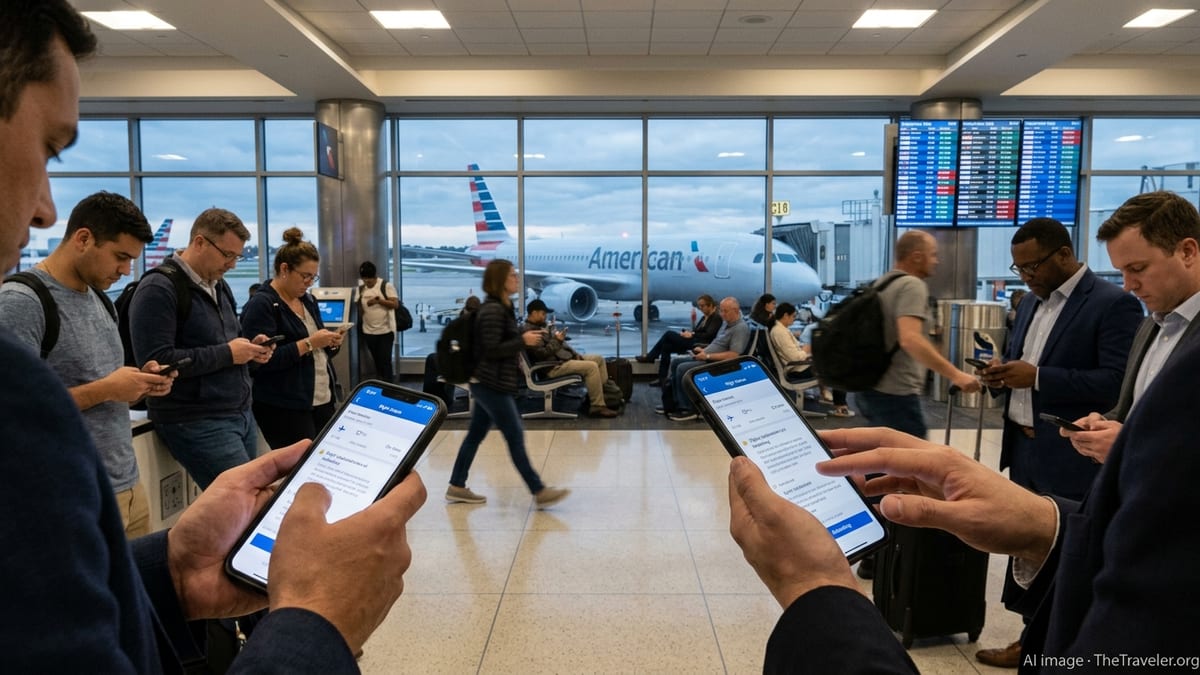
New U.S. refund rules reshape what airlines must pay
For American Airlines passengers, the most important shift in 2026 comes from federal rules that strengthen rights to refunds when trips are disrupted. A U.S. Department of Transportation final rule on refunds and other consumer protections, adopted in 2024 with compliance deadlines extending into 2025, now defines when airlines must issue automatic cash refunds instead of travel credits when a flight is cancelled or significantly changed and the traveler does not accept alternatives.
Under these rules, a “significant change” includes substantial schedule moves, long delays, and certain changes in routing or airports. If American cancels a flight or makes one of these defined significant changes and a customer chooses not to travel, the airline is required to return the unused portion of the ticket price and certain fees, rather than only offering vouchers. Federal guidance also specifies timelines for “prompt” refunds once an eligible disruption occurs and a refund is due.
The updated regulations stop short of requiring U.S. carriers to pay extra cash compensation for most delays, as is common in the European Union. Instead, the focus is on making sure passengers can recover what they already paid when a flight they bought no longer operates as promised or is substantially altered. For American Airlines, that means its refund processes must align with the new federal definitions and automatic refund requirements while its discretionary compensation policies for delays remain largely governed by its own customer commitments.
What American Airlines’ policies promise in 2026
American Airlines sets out its delay and cancellation practices primarily in its published Customer Service Plan and Conditions of Carriage. As updated into 2025 and applied through 2026, these documents explain how the airline handles schedule irregularities, which benefits are guaranteed, and which are offered on a discretionary basis depending on the cause of the disruption.
The Conditions of Carriage outline when customers may cancel and obtain a refund due to a significant schedule change. American’s policies indicate that if the airline changes a schedule by several hours or more, travelers on many itineraries can request to be rebooked or, in some circumstances, refunded if they choose not to travel. The exact threshold and remedies can depend on the type of ticket purchased, routing, and whether the change is made before the day of departure.
In its Customer Service Plan, American also describes what it will do when delays or cancellations are within the airline’s control, such as many maintenance or crew issues. The plan generally commits to rebooking affected customers on the next available American or partner flight at no additional fare, prioritizing same day and next day options when seats are available. Where seats are tight, travelers may be offered itineraries with connections or travel on partner carriers, with the goal of arriving as close as possible to the original arrival time.
When disruptions are categorized as outside the airline’s control, such as severe weather or air traffic control restrictions, the same rebooking assistance usually applies, but additional financial assistance is limited. In those cases, American emphasizes that it will try to help passengers find alternate options, but that many extra expenses fall to travelers or to any third party travel insurance they may hold.
Hotels, meals and other on-the-ground costs
One of the most common questions for American Airlines passengers in 2026 is whether the carrier must pay for hotels and meals when a delay stretches overnight or a cancellation creates a long layover. Federal law in the United States does not require airlines to provide hotel rooms or meal vouchers in most delay or cancellation scenarios, even when the cause is within the airline’s control. Instead, those benefits are governed by each airline’s own written policies.
According to American’s Customer Service Plan, when a delay or cancellation that is within its control forces passengers to stay overnight away from home, the airline may provide a hotel voucher or arrange a room, subject to availability. It may also offer meal vouchers during extended waits and, in some cases, transportation to and from the hotel. The wording of the plan emphasizes that these benefits are not guaranteed in every case and often require travelers to work directly with airport agents to obtain vouchers before arranging their own lodgings.
In circumstances classified as beyond American’s control, such as weather systems, security events, or air traffic control programs, the airline typically does not commit to paying for hotel rooms, meals, or ground transport. Passengers in those situations are usually advised to check the protections built into their credit cards or independent travel insurance. Consumer advocates note that even when American is not obliged to cover such costs, customers can sometimes secure vouchers or gestures of goodwill, but these outcomes are case specific and not enforceable rights.
Beyond immediate expenses, American may also offer frequent flyer miles or coupons when travelers experience lengthy disruptions, but these forms of compensation are discretionary and negotiated through customer relations channels after travel is completed. They do not replace the right to a cash refund where federal rules say one is owed for a cancellation or significant schedule change.
Missed connections, oversales and tarmac delays
Delayed or cancelled American Airlines flights can cause passengers to miss onward connections, with different consequences depending on the cause and location of the disruption. When a missed connection is tied to a delay or cancellation within the airline’s control, American’s policies indicate that it will rebook passengers on the next available flight to their final destination without extra fare, even if that involves a different routing. Where the disruption is caused by weather or another uncontrollable factor, rebooking assistance is still provided, but there is less scope for additional compensation.
Separate rules apply when travelers are denied boarding on American due to an oversold flight. In those involuntary bumping cases, federal regulations require airlines to pay cash compensation based on the ticket price and the length of the delay to the passenger’s final destination when acceptable alternative transportation is not provided quickly. American’s Conditions of Carriage incorporate these federal standards, and passengers who are involuntarily denied boarding are generally entitled to fixed cash or check payments at the airport in addition to rebooking.
There are also federal limits on how long passengers can be held on the tarmac while waiting to depart or after landing. U.S. tarmac delay rules generally cap the amount of time an aircraft can remain on the ground with passengers aboard before they must be given the option to deplane, subject to safety and air traffic control constraints. When extended tarmac delays occur on American flights, compensation such as miles or vouchers is determined by the airline on a case by case basis and is not mandated by law, though passengers may use those events as grounds for service complaints.
For travelers who experience cascading disruptions, like an initial delay leading to a missed connection, then an overnight stay and a rebooked flight the next day, American’s obligations are a patchwork of federal refund rights, denied boarding rules, and the airline’s own customer commitments. Understanding which protections apply in which segment of the journey can help passengers frame any claim they pursue.
How travelers can pursue refunds or compensation
For American Airlines customers seeking to make use of the 2026 rules, the first step is to determine whether they are entitled to a refund under federal regulations or whether they are looking for discretionary compensation under American’s policies. If a flight was cancelled or significantly changed under the federal definitions and the traveler chose not to fly, the claim is typically for a refund of the ticket price and certain fees. Those refunds should be requested through American’s standard channels and processed within the time frames set by the Department of Transportation.
When the disruption involved a long delay but the passenger ultimately traveled, refund rights are narrower and center on services that were paid for but not provided, such as seat selection or baggage fees where bags were significantly delayed. In those situations, American’s obligations again flow from the federal rules on ancillary fees, while its customer service policies determine whether travelers might receive vouchers, miles or other gestures for the inconvenience.
Passengers seeking hotels, meals, or other out of pocket costs must show that the delay or cancellation was within American’s control and that the airline’s own plan contemplates assistance. Even then, travelers often need written authorization or a voucher issued at the airport before booking their own room if they expect American to pay. Without such authorization, reimbursement is less certain and handled through post travel customer service reviews.
As 2026 progresses, regulators are continuing to signal interest in additional rulemakings on airline refunds and consumer protections. For now, American Airlines passengers face a system in which strong rights to refunds for cancellations and significant schedule changes coexist with more limited and discretionary compensation for delays, leaving it crucial for travelers to understand the difference when their plans go off schedule.