


Airport parking comparison sites promise to take the stress and guesswork out of leaving your car at the terminal, but many travelers only discover the real cost and reliability of these services after something goes wrong. Flyparks, one of several airport parking intermediaries operating in the UK and Europe, has attracted both loyal repeat users and angry critics. Understanding how Flyparks’ fees work, where its success stories and failures come from, and how it fits into the wider airport parking landscape can help you decide whether to trust it with your keys or look elsewhere.
Get the latest updates straight to your inbox!
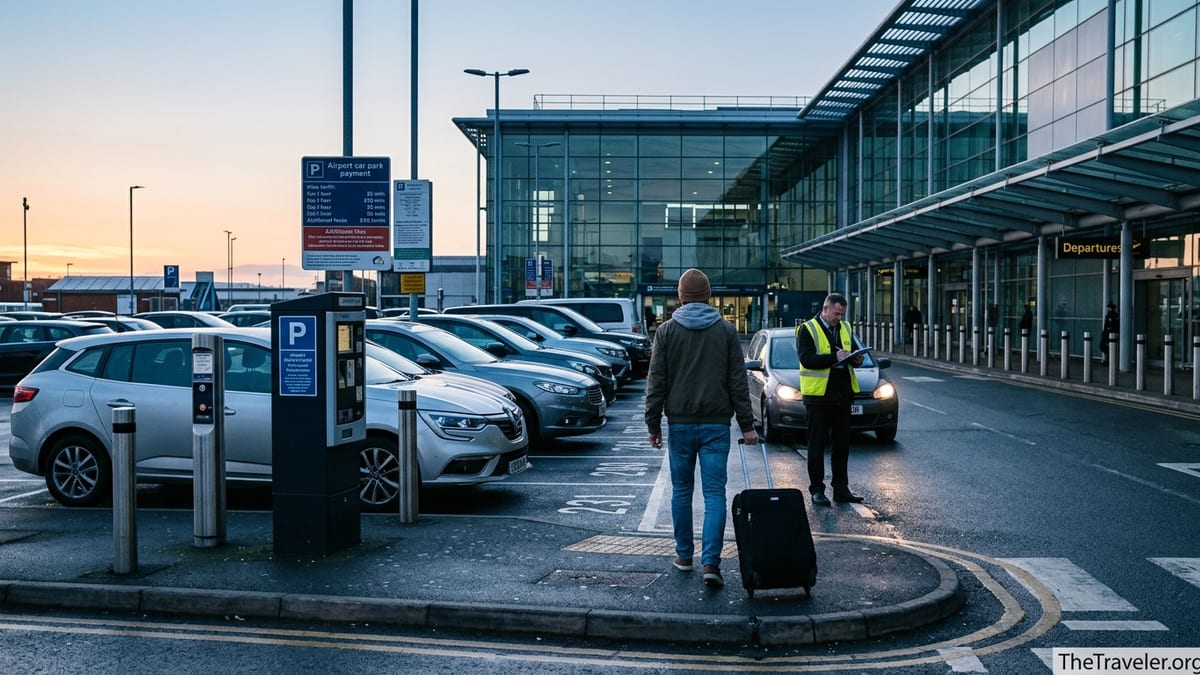
What Flyparks Actually Is in the Airport Parking Ecosystem
Flyparks is not a car park in its own right. It operates as a booking and comparison platform, sitting between travelers and a network of independent airport parking providers, from basic park-and-ride lots outside regional airports to premium meet-and-greet services at major hubs. When you book through Flyparks you are contracting with a third-party operator, while Flyparks takes a commission or service fee for processing the reservation and handling customer contact.
In practice this means that your experience depends at least as much on the underlying parking operator as on Flyparks itself. A Flyparks booking might place you with a well-known national brand that runs fenced, CCTV-monitored compounds near Gatwick or Manchester. Equally, it could connect you to a much smaller local firm running a single off-airport lot next to Birmingham or Luton. The brand name on your confirmation email may be Flyparks, but day-to-day operations – from shuttle punctuality to how your car is handled – sit with the provider named in the fine print.
This intermediary role is similar to better-known platforms that sell hotel rooms or hire cars. The upside is access to discounted rates and easy comparison of options across multiple airports. The downside is that complaints can be bounced between Flyparks and the local operator, each insisting the other is responsible. Several recent online reviews of Flyparks describe this “blame triangle”, where a traveler returns to find extra mileage or damage, the parking company denies liability, and Flyparks says it is only an agent.
Because Flyparks is not the company that actually parks your car, evaluating its value means looking at two questions separately: how transparent and fair its fees are, and how consistently it points customers toward reliable partners with solid success rates.
Decoding Flyparks Fees, Surcharges, and the “Total Price”
Many travelers first question Flyparks after discovering that the amount charged to their card is higher than the headline price that drew them in. User reports on major review platforms describe several fee patterns that appear regularly across Flyparks listings and confirmations. Understanding these patterns before you book can prevent unpleasant surprises when you check your bank statement.
The most common frustration involves airport access or forecourt charges for meet-and-greet services. At airports like Heathrow, Gatwick, Manchester, and Birmingham, private firms must pay the airport a fee each time they enter certain drop-off zones or short-stay car parks to collect or return a vehicle. Some reputable operators bundle this cost into their advertised price. Others list a lower base rate on comparison sites, then mention the airport fee only later in the booking flow or in small print on the confirmation email. Recent Flyparks reviewers have complained that an additional airport access fee was only revealed after booking, pushing an apparently competitive quote much closer to the prices of better-known brands.
Another area to watch is peak-season or early-morning surcharges. Around busy periods such as school holidays, parking providers often increase their wholesale rates. Some intermediaries simply pass these on in the up-front price; others present a generic low “from” rate in search results, then adjust sharply when exact dates and times are entered. Travelers booking Flyparks for summer departures from Manchester or Gatwick in 2025 and 2026 report seeing evening and pre-dawn drop-offs cost slightly more than daytime slots, a pattern now common in the wider industry.
Payment methods can introduce further fees. While Flyparks generally allows standard credit and debit cards, some users say they were charged foreign transaction or currency conversion costs when booking in pounds for a European departure airport. In most cases this appears to be down to the card issuer rather than Flyparks, but it underlines that the “total price” shown on the site is not always the final figure that will appear on your bank statement, especially for non-UK customers.
The safest practical approach is to treat any Flyparks quote as a first draft. Before you hit “pay”, scan for fine-print references to “airport access charges”, “short-stay ticket not included”, “local taxes payable on arrival”, or “supplements for oversized vehicles”. If you are comparing Flyparks against going direct to a big operator such as Airparks, APH, or Maple Parking, make sure you are comparing like-for-like inclusive totals rather than base rates.
Success Rates: When Flyparks Bookings Go Right and When They Go Wrong
Measuring the “success rate” of a platform like Flyparks is not as simple as asking how many customers got what they paid for. For a basic park-and-ride booking at a well-run compound, success looks routine: a ten-minute shuttle ride each way, a car left untouched in a numbered bay, and a straightforward exit. Many Flyparks customers report exactly that sort of frictionless experience at regional airports where Flyparks works with established providers.
The picture gets murkier with meet-and-greet services. Across the UK, meet-and-greet has been at the heart of some of the worst parking scandals of the last decade, with rogue companies at Manchester and Birmingham accused of leaving cars on muddy fields or residential streets instead of in secure compounds. In recent years newspapers and local police forces have highlighted cases where vehicles booked with very cheap valet-style services racked up hundreds of miles, were returned filthy, or in some instances were stolen entirely.
Flyparks’ role in this landscape has drawn criticism when its listings have included smaller meet-and-greet operators that later turned out to be unreliable. For example, reviewers have described returning from holidays to find long waits for their cars, vehicles covered in mud, and evidence that cars had been parked off-site in unpaved lots despite claims of secure, surfaced compounds. In some of these cases, customers booked through Flyparks, only to discover that getting compensation for damage or delays meant dealing directly with the operator, as Flyparks maintained that it was only an intermediary.
It is important, however, to separate systemic risk from individual platform performance. Rogue meet-and-greet companies have appeared across many comparison sites, not just Flyparks, because they deliberately target channels where tens of thousands of price-sensitive travelers shop. At the same time, reputable operators with strong security credentials, including Park Mark accredited compounds near major airports, also sell their spaces via intermediaries like Flyparks. Travelers who make a point of choosing those brands, even when booking through Flyparks, tend to report much higher success rates than those who simply pick the absolute cheapest option on screen.
Real-World Examples: Fees, Complaints, and Smooth Experiences
Recent online commentary about Flyparks includes strikingly different stories, some of them positive and others deeply frustrating. One traveler who used Flyparks to book off-airport parking for a family trip from a major UK hub in 2025 described the process as simple and reasonably priced: the shuttle bus arrived within ten minutes both ways, the car had clearly not been moved during a week-long stay, and the only extra cost was a pre-advertised fee for keeping the keys at reception rather than carrying them. For that customer, Flyparks did exactly what it promised by connecting them to a competent local operator at a price lower than booking direct.
By contrast, another reviewer recounted how an attractive meet-and-greet price on Flyparks for a Birmingham departure translated into a far more expensive and chaotic reality. The base rate looked excellent, but the confirmation email included a separate airport forecourt charge that the traveler said was never highlighted clearly during booking. On return, the couple waited more than half an hour in the cold for their vehicle to appear. When it finally arrived, it was dusty and showed a handful of extra miles. The meet-and-greet company refused any refund, pointing to its terms and conditions, and the traveler said Flyparks declined to intervene beyond forwarding on emails.
There are also mixed experiences where Flyparks fares well on price and accuracy but leaves users exposed to operational weaknesses of partners. For example, some customers who booked well-reviewed off-site compounds through Flyparks for Manchester reported that shuttle bus frequencies late at night were thinner than advertised. Others said that phone lines to the parking operator were hard to reach when their flights were delayed. In each case, the core issue was not Flyparks mischarging or misrepresenting the fee, but the gap between the service level implied by glossy marketing and the reality of an under-staffed overnight operation.
These examples underline that the true “success rate” of any Flyparks booking is shaped by three factors working together: how clearly the total cost is presented up front, how carefully the traveler reads and understands the conditions, and how trustworthy the underlying parking company is. The last of these is where travelers have the most to gain by looking beyond just the lowest headline price on the Flyparks results page.
How Flyparks Compares With Other Airport Parking Platforms
Flyparks competes in a crowded field of airport parking brokers and comparison tools. In the UK alone, travelers are more likely to recognize names such as Holiday Extras, Purple Parking, APH, Airparks, or direct airport-owned brands like Manchester Airport’s own Meet & Greet or Birmingham Airport’s official car parks. These more visible brands often spend heavily on advertising and sometimes appear at the top of search results, but behind the scenes they too work with networks of independent operators to fill spaces.
One key difference lies in how transparent rival platforms are about who actually holds the contract. Holiday Extras, for instance, typically names the provider clearly and provides separate review scores for each car park rather than for the broker itself. At larger airports, it often sells official airport-run products alongside off-site alternatives, making it easier for travelers to choose between a premium on-airport lot and a cheaper shuttle option. Flyparks tends to focus more on price and product type, such as “Park & Ride” or “Meet & Greet”, with somewhat less emphasis on the operator’s standalone reputation.
Pricing patterns are otherwise similar. At Gatwick or Stansted during peak August holidays, an off-site park-and-ride booked a month or two in advance might cost somewhere in the region of 60 to 90 pounds for a week, depending on distance and demand. A full meet-and-greet booked through a broker could run 100 to 150 pounds or more for the same week, with official airport valet services often higher still. Flyparks’ quotes tend to sit within this general band, occasionally undercutting rivals by a few pounds if a smaller operator is discounting unsold capacity.
Security standards and regulatory oversight do not change simply because a booking flows through Flyparks instead of a competitor. Park Mark, the police-backed Safer Parking accreditation, applies to individual car parks, not to the platforms that sell them. Likewise, any local authority controls on off-airport parking lots and driveways near airports like Luton or Stansted apply regardless of which website handled the reservation. For travelers, the practical implication is that a Park Mark compound or official airport car park will bring similar security benefits whether it was booked through Flyparks, direct, or via a rival comparison site.
Practical Strategies to Minimize Risk When Using Flyparks
For travelers who like Flyparks’ pricing or interface but worry about horror stories, a few practical tactics can dramatically improve the odds of a smooth experience. The first is to use Flyparks as a search tool but vet each suggested car park independently. Once you see a promising deal, search for the operator’s name plus the airport on review platforms and travel forums. If the provider has a long track record at that location, clear contact details, and a mix of positive and negative feedback that feels authentic, you are on much firmer ground than if you find only a handful of recent five-star comments and little else.
Second, favor park-and-ride over ultra-cheap meet-and-greet where budget matters more than convenience. Across the industry, the most serious scandals have clustered around meet-and-greet providers offering deals that look too good to be true. A fenced off-site park-and-ride compound with a shuttle every 15 minutes may not feel as glamorous as handing your keys to a uniformed driver at the terminal, but the operational model is simpler and often safer. Your car usually stays parked in the same bay for the duration of your trip, which reduces both the temptation and the opportunity for staff to rack up unnecessary miles.
Third, before you travel, print or save all Flyparks documentation, including any notes on fees, mileage limits, fuel, and damage procedures. When you drop the car off, take date-stamped photos of its condition and a clear shot of the dashboard showing mileage and fuel gauge. This is now standard advice across the UK parking sector, especially after high-profile cases where customers had difficulty proving that damage occurred while vehicles were in a valet company’s custody. Having this evidence will strengthen your position if you need to involve your card provider or travel insurer later.
Finally, pay close attention to how reachable both Flyparks and the operator are before you book. If a company only lists a mobile number, responds slowly to email, or cannot explain clearly where your car will be stored, consider paying slightly more for an operator with a landline, a registered address, and a detailed description of their compound. Some of the worst recent cases of cars abandoned in farmer’s fields near airports involved companies that were difficult to trace and whose names changed frequently; using Flyparks does not shield you from that risk if you choose such providers.
The Takeaway
Flyparks occupies a familiar but sometimes misunderstood space in modern travel: it is a facilitator rather than a direct service provider. Its fees generally reflect the same mix of base parking charges, airport access costs, and platform commissions that shape prices across the airport parking industry. Where travelers run into trouble is less often with Flyparks itself and more often with the underlying operators it lists, especially at the very cheapest end of the meet-and-greet market.
Success or failure on a Flyparks booking depends on a combination of transparent pricing, realistic expectations, and careful operator selection. Parking your car for a week near a major airport will never be genuinely inexpensive if done by a fully insured, professionally run outfit. When a quote on Flyparks seems to undercut every other option by a wide margin, that is usually a sign to slow down, read the conditions twice, and research the company behind the offer before you commit.
Used thoughtfully, Flyparks can deliver fair-value parking at busy airports, especially when you prioritize park-and-ride services or well-reviewed operators with visible security credentials. Used carelessly, it can become a gateway to the same problems that have plagued the wider UK meet-and-greet sector: hidden fees, muddy fields, unexplained mileage, and long waits in the cold after a late-night landing. Knowing how the fees are structured and where the real risks lie is the best protection you have when deciding whether Flyparks deserves a place in your next trip.
FAQ
Q1. Is Flyparks itself a parking company or just a booking agent?
Flyparks operates as a booking and comparison agent rather than a car park owner. It lists spaces run by independent operators and processes your payment, but the company that actually looks after your car is the specific provider named on your confirmation.
Q2. Why do Flyparks prices sometimes increase after I select my exact dates and times?
Prices can rise when you enter precise dates and hours because many operators apply peak-season or early-morning surcharges. The initial “from” rate is often a low off-peak example, not a guaranteed price for your particular flight schedule.
Q3. What kind of hidden fees should I watch for when booking through Flyparks?
The most common extra charges involve airport access or forecourt fees for meet-and-greet services, plus occasional supplements for oversized vehicles. Always check the booking summary and confirmation for mentions of “airport access”, “short-stay ticket”, or “local charges payable on arrival”.
Q4. Are Flyparks meet-and-greet bookings riskier than park-and-ride?
Meet-and-greet bookings across the industry carry more risk because your car is driven off by staff and may be stored off-site. Park-and-ride services typically leave your car in a fixed bay and are less vulnerable to the sorts of abuses seen in some rogue meet-and-greet operations.
Q5. How can I check if a Flyparks partner car park is reputable?
Search the operator’s name and the airport on independent review platforms and travel forums. Look for a track record over several years, a real address and landline, and any mention of security accreditations such as Park Mark for the compound itself.
Q6. Who is responsible if my car is damaged or goes missing after a Flyparks booking?
In most cases the underlying parking operator is contractually responsible for your vehicle once it is handed over. Flyparks usually acts as an intermediary, so any damage claim will normally need to be pursued directly with the operator and, if necessary, your card issuer or insurer.
Q7. Can Flyparks help if the parking company refuses to respond to my complaint?
Flyparks can sometimes pass on messages or provide contact details, but travelers report mixed success in getting it to intervene substantively. You should not assume Flyparks will compensate you directly if the operator proves uncooperative.
Q8. Are Flyparks fees generally cheaper than booking airport parking direct?
Flyparks can be cheaper than booking direct, especially for off-site park-and-ride services that discount heavily through intermediaries. However, official airport-run car parks sometimes offer advance-purchase deals that match or beat broker prices, so it is worth comparing both.
Q9. What payment method is safest when booking with Flyparks?
Paying by credit card gives you the strongest potential protection if something goes badly wrong, because you may be able to use your card provider’s dispute process. Avoid bank transfers or cash payments to operators, especially for very cheap meet-and-greet deals.
Q10. How early should I book airport parking through Flyparks for the best balance of price and safety?
Booking several weeks to a few months in advance often yields lower prices without pushing you toward untested operators. Last-minute bargains can exist but are more likely to involve smaller firms or more basic lots, so early booking gives you a wider choice of reputable options.