


More news on this day
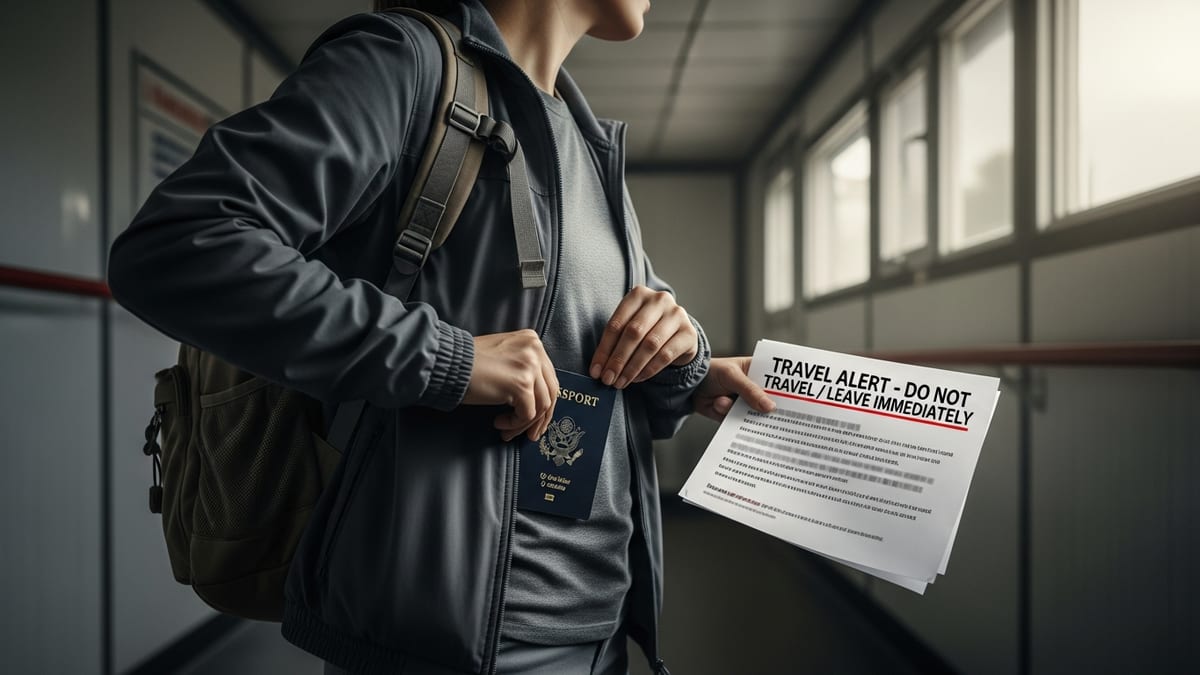
The coveted blue US passport, long seen as a near-guarantee of global mobility, has slipped to its weakest position in at least a decade on a leading international ranking, signaling what analysts describe as a warning about the country’s shifting place in the world.
Get the latest news straight to your inbox!
What the New Ranking Shows
Recent results from a leading global passport index place the United States outside the very top tier of travel documents for the first time in years, reflecting a steady erosion of relative visa-free access. The ranking, based on the number of destinations US citizens can enter without securing a visa in advance, now sits at its lowest point in a decade for the country, even as the headline number of accessible destinations remains relatively high.
Published coverage of the latest Henley Passport Index update indicates that US citizens currently enjoy visa-free or visa-on-arrival access to around 180 countries and territories, putting the passport behind those of several European and Asian states that now allow entry to more destinations. Earlier editions of the index repeatedly placed the United States near the top of the global table, and at one point in the mid-2000s it briefly shared the number one spot.
The new position does not mean that Americans suddenly face widespread visa barriers where there were none before. Instead, other governments have moved more aggressively to expand reciprocal travel arrangements, particularly within Europe and parts of Asia, while US access has plateaued or slipped in key markets.
Analysts following global mobility trends describe this relative decline as a structural shift rather than a one-off fluctuation, pointing to a decade in which the United States has gradually ceded ground to smaller but highly connected economies.
How the US Lost Ground
Global passport rankings are influenced both by how many countries a government allows in without prior visas and by how many countries grant the same privilege in return. In recent years, several destinations that once offered straightforward entry for US tourists have tightened requirements, citing changes in security protocols, diplomatic tensions, or a desire to align entry rules with how their own citizens are treated when traveling to the United States.
Reporting on the latest index notes that the US passport has fallen behind a cluster of European Union states as well as countries such as Singapore, Japan, and South Korea, which have invested heavily in broad visa-waiver networks. While Americans can still travel widely, rivals now offer their citizens access to more destinations, often including emerging markets where business and educational ties are growing quickly.
Some coverage highlights that Washington’s own visa and entry rules, including security screenings and electronic travel authorization systems, have grown more complex over the past decade. These changes have occasionally prompted reciprocal measures that make it harder for US travelers to enjoy seamless short-stay visits abroad.
At the same time, the pandemic-era collapse and restart of international travel gave many governments a chance to renegotiate visa arrangements. Several countries used that moment to deepen regional mobility blocs or to court visitors from particular markets, while the United States maintained a more cautious posture that did not always translate into new reciprocal deals.
What “The Direction Is a Warning” Really Means
The phrase “the direction is a warning,” used in recent commentary about the US passport’s slide, reflects concern less about the current ranking itself and more about the trajectory. The United States still sits high on any global list, but the movement from shared first place two decades ago into the lower half of the top tier today is interpreted by some observers as a barometer of waning soft power.
Passport strength is often described as a shorthand for how much trust and openness a country commands from others. When more destinations waive prior visas for a given nationality, it can signal confidence in that country’s security systems, economic ties, and political relationships. The gradual loss of relative access therefore suggests that others are either catching up quickly or reconsidering how they calibrate risk and reciprocity with US travelers.
Commentary in international outlets stresses that this is not just a symbolic issue. A passport that provides slightly less frictionless access can shape where students choose to enroll, which hubs businesses use for meetings, and how easily tourists pivot to new destinations. For Americans accustomed to near-unlimited travel options, incremental restrictions and more frequent visa paperwork can accumulate into a tangible change in how the world feels.
The warning, in this view, is that if the trend continues, the US may face a long-term competitive disadvantage in the global contest for talent, investment, and influence, particularly relative to countries that have stitched together more generous mobility corridors for their citizens.
Implications for Travelers and the Travel Industry
For most US passport holders planning leisure trips to familiar destinations, the immediate impact of the ranking shift is limited. Popular hotspots across Western Europe, the Caribbean, and much of Latin America remain accessible without advance visas or with straightforward electronic pre-clearance. Travel professionals say that for standard vacations, the blue passport still functions much as it did a few years ago.
The pressure is felt more at the margins: in fast-growing tourism markets where visa-free access has been rolled back or never granted, and in destinations where Americans now compete with Europeans or Asians whose passports open more doors. In those cases, travelers may face longer lead times to obtain visas, higher fees, or narrower options when it comes to spontaneous trips and multi-country itineraries.
For the tourism sector, the change carries a subtler message. US travelers remain valuable customers, but the perception of a slightly less powerful passport may encourage airlines, tour operators, and global hotel brands to diversify more aggressively toward markets whose citizens encounter fewer bureaucratic hurdles. That shift could shape route networks, marketing priorities, and even pricing strategies over the coming decade.
Travel advisers are increasingly urging US clients to check entry rules carefully, allow more time for paperwork where required, and consider the knock-on effects of regional policies, such as Europe’s forthcoming travel authorization system, which will add a new layer of pre-travel registration for many visitors.
Policy Choices That Could Reverse the Slide
Specialists who track mobility indexes point out that passport rankings are not fixed and can be influenced by policy decisions. Countries that have climbed the tables in recent years often did so by rolling out targeted visa-waiver agreements, streamlining e-visa platforms, and prioritizing reciprocity in their diplomacy.
Publicly available commentary on the US ranking suggests that Washington could strengthen its position by expanding trusted traveler programs, modernizing consular processing, and negotiating broader short-stay waivers with strategically important partners. Any such moves would likely be weighed against domestic political debates over border management and security screening.
There is also a broader conversation about how passport strength intersects with perceptions of national reliability during crises. Events of the past decade, from rapidly shifting pandemic entry rules to conflict-zone evacuations, have drawn attention to how governments support citizens abroad. Analysts argue that a reputation for consistent assistance and predictable policy can indirectly bolster a passport’s appeal, even if these factors are not counted directly in formal indexes.
For now, the latest ranking serves as a snapshot of a changing landscape. The US passport remains one of the world’s more powerful travel documents, but its recent slide to the lowest position in ten years is being read as a signal that others are overtaking it in the race to unlock frictionless global mobility.