


More news on this day
Nigeria’s airline punctuality debate escalated this week after Air Peace pushed back against the Nigeria Civil Aviation Authority’s (NCAA) newly published August 2026 disruption scorecard, arguing that the scale of delays reflects airport and airspace constraints as much as airline performance.
Get the latest news straight to your inbox!
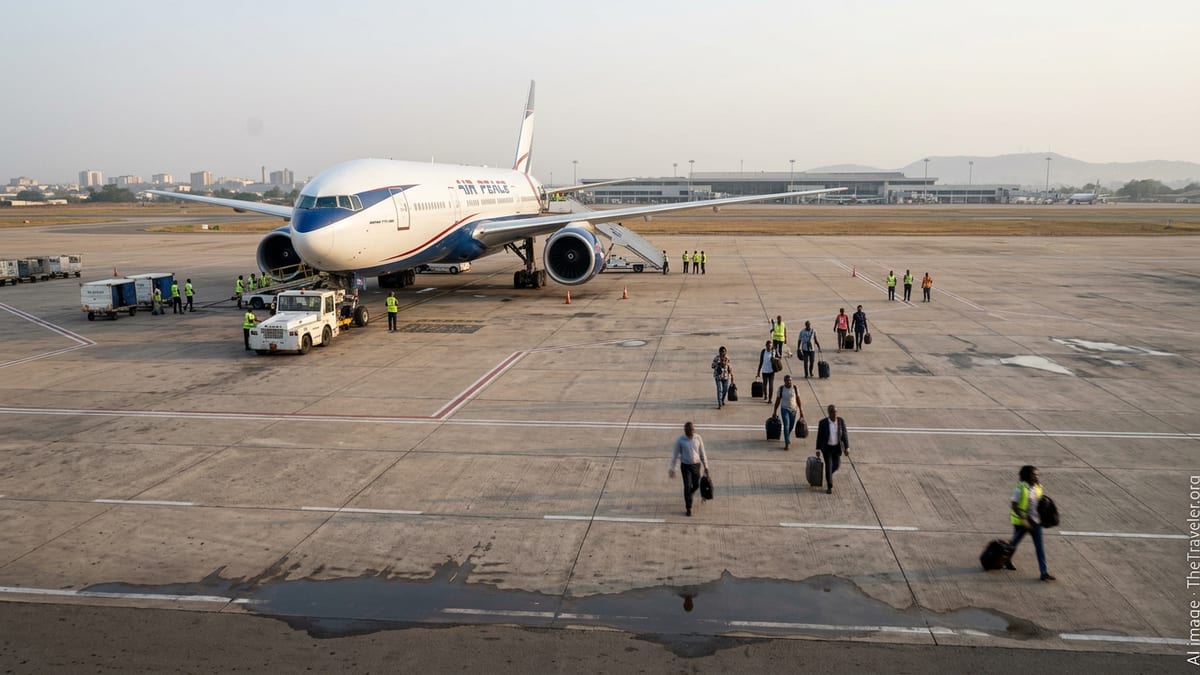
NCAA scorecard spotlights widespread August disruption
The NCAA published a “Summary of Domestic Airline Flight Disruption Operations” for August 2026 on September 13, presenting a carrier-by-carrier breakdown of delayed and cancelled flights. The document shows 7,961 domestic flights recorded across the listed airlines, with 4,765 delayed and 36 cancelled.
Air Peace, the country’s largest carrier by domestic flight volume, operated 1,864 flights in August and logged 1,330 delays alongside seven cancellations, according to the NCAA table. United Nigeria Airlines operated 1,231 flights and recorded 943 delays and eight cancellations in the same period, the scorecard shows.
The regulator’s breakdown also separates delays by duration bands, including delays of 16 minutes to one hour, one to two hours, two to three hours, and three hours and above. The aggregated totals show 2,801 flights delayed 16 minutes to one hour, 1,322 delayed one to two hours, 407 delayed two to three hours, and 235 delayed three hours and above.
Air Peace disputes the framing and points to infrastructure limits
Published coverage of the airline’s response indicates Air Peace and industry voices have challenged the NCAA’s headline interpretation of the August figures, arguing that delay percentages risk implying airlines alone are responsible for the disruption level.
Reports describe Air Peace attributing persistent delays to constraints that sit outside airline control, including limited airport infrastructure, congestion around major hubs, and operational choke points that can cascade across schedules once peak-hour backlogs build. In such settings, a single late arrival can trigger knock-on delays for subsequent sectors, particularly for carriers running high-frequency shuttle routes.
The pushback has landed amid heightened public scrutiny because the scorecard ties airline brand names to easily shareable delay and cancellation totals. While the NCAA’s table presents raw operational outcomes, the airline’s argument centers on what the numbers do not show, including the infrastructure and airspace conditions underlying those outcomes.
Regulatory pressure mounts, with United Nigeria ordered to slow expansion
The NCAA has signaled a tougher posture on punctuality and passenger treatment beyond publishing the August scorecard. On September 10, the regulator released a separate notice stating it ordered United Nigeria Airlines to improve flight operations, adhere to passenger-rights regulations, and stop expanding routes beyond its current fleet capacity.
That directive followed a consultative meeting held at the NCAA’s headquarters in Abuja on September 9, according to the regulator’s published notice. The NCAA’s message emphasized that operational growth should not outpace aircraft availability, particularly where irregular operations leave passengers stranded without adequate information or assistance.
The enforcement tone suggests the August data release is not merely informational, but part of a broader effort to tighten operational discipline, including contingency planning, communications during disruptions, and realistic scheduling aligned with fleet and crew resources.
August operational strains were compounded by labor action and cost pressures
August’s disruption picture also arrived during a period when aviation labor action affected the sector. The NCAA published a statement on August 11 acknowledging an ongoing industrial action by aviation unions and its impact on passengers, while urging restraint and dialogue as the dispute played out.
Separate published coverage around that period described airlines gradually restoring services after a temporary suspension of the industrial action. Reports also indicated Air Peace and United Nigeria experienced material operational impacts, adding another variable to already stressed domestic schedules.
Beyond episodic labor disruptions, industry reporting continues to point to broader structural pressures that can amplify delay rates, including tight aircraft availability, high operating costs, and infrastructure constraints at key airports. The NCAA’s scorecard format makes the end result visible to travelers, but the policy debate is increasingly focused on how responsibility is shared between airline planning, airport capacity, and system-wide constraints.
What the delay debate means for travelers booking Nigeria domestic flights
For passengers, the immediate takeaway from the NCAA’s August scorecard is that irregular operations were common across the network, with delays affecting roughly six in 10 recorded departures. The data also indicates a meaningful share of delays extended beyond two hours, and that cancellations, while far fewer than delays, still occurred across multiple operators.
In practical terms, the dispute between Air Peace and the regulator underscores why travelers may want to build buffer time into same-day connections, especially on high-demand corridors linking Lagos and Abuja with Port Harcourt, Enugu, and other commercial centers that feed business travel and onward international departures.
The regulator’s recent focus on passenger rights and operational planning suggests more scrutiny of how airlines communicate and support passengers during disruptions, not only the fact that delays occur. With both the NCAA and airlines publicly contesting the causes, the coming weeks are likely to bring additional pressure for clearer performance reporting, more realistic scheduling, and targeted infrastructure improvements at the bottlenecks both sides cite.