


More news on this day
A protracted American Airlines delay that stranded three House Republicans and caused them to miss a series of closely watched House votes has triggered sharp criticism on Capitol Hill, adding new political heat to ongoing concerns about airline reliability during one of the busiest summer travel periods in years.
Get the latest news straight to your inbox!
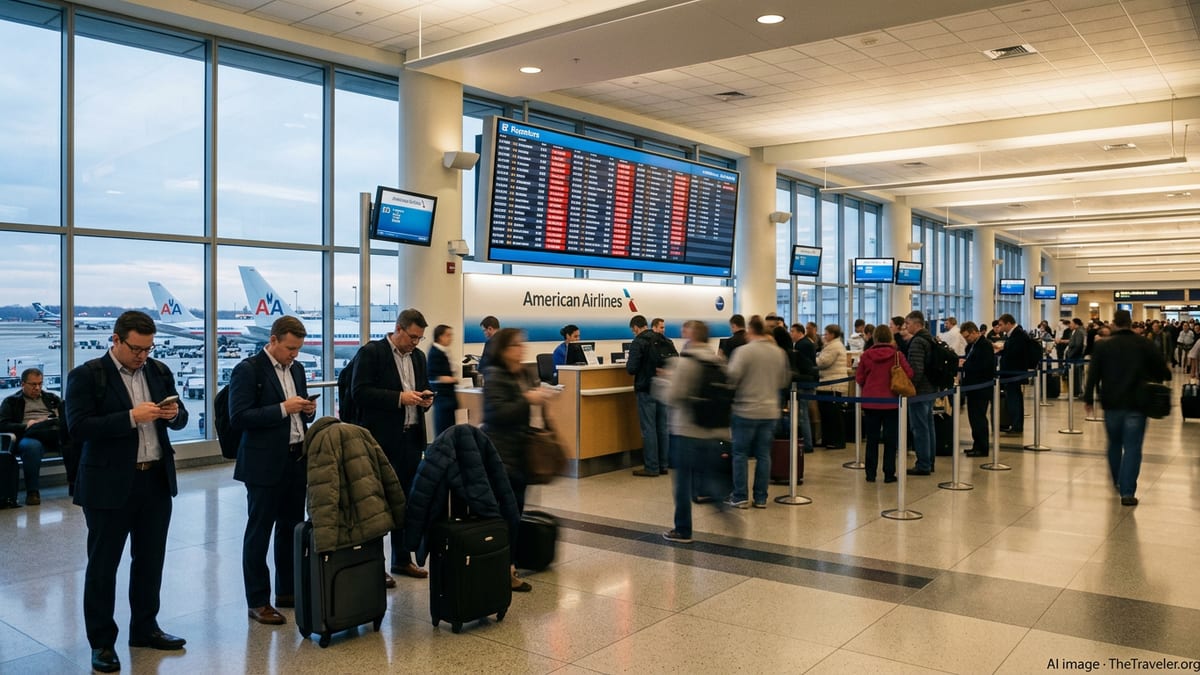
Delay Strands Lawmakers and Disrupts Key House Votes
According to recent coverage of the incident, Representative Max Miller of Ohio and two Republican colleagues were scheduled to return to Washington on an American Airlines flight earlier this week when an extended delay left them stuck at the departure airport for hours. By the time the aircraft finally left, the lawmakers had already missed several evening roll calls in the House of Representatives.
The missed votes reportedly included measures that Republican leaders had framed as important to their legislative agenda, among them the Kids Internet and Digital Safety Act, which ultimately passed with a wide bipartisan margin. Even though the outcome of that vote was not affected, the episode underscored how a thin House majority can be vulnerable to even minor disruptions in members’ travel plans.
Publicly available information indicates that Miller, a frequent critic of airline performance, reacted with unusually pointed remarks after the delay, accusing the carrier of poor operations and saying the disruption had concrete consequences for governance. His comments quickly circulated on political and aviation news sites, drawing wider attention to the circumstances of the delay and the broader reliability of airline schedules.
The incident comes as House leaders have repeatedly urged members to remain in Washington when critical votes are scheduled, warning that even a small number of absences can derail party priorities. In this case, the absence was not voluntary, but the political fallout has been similar, reviving debate over how lawmakers manage official travel during a packed floor calendar.
Summer Travel Strain Puts Airline Operations Under the Microscope
The American Airlines disruption unfolded during a peak summer travel stretch when federal security agencies expect record passenger volumes at airports across the United States. Forecasts for the Independence Day period indicate that more than 18 million passengers could move through security checkpoints in a single week, intensifying pressure on carriers to keep flights on schedule.
Industry observers note that, while weather and air traffic control constraints remain perennial challenges, airlines have faced rising criticism over maintenance-related delays and crew scheduling issues that can cascade throughout their networks. Recent online accounts from travelers have described routine delays stretching into overnight ordeals, fueling perceptions that domestic operations remain fragile despite strong demand for air travel.
American Airlines, like its competitors, has been working to rebuild margins and restore operational resilience after several years of volatility. Reports on the company’s financial and labor picture show that unions representing pilots and flight attendants have pressed management over performance and profitability, arguing that frontline employees often bear the brunt of passenger frustration when schedules break down.
The timing of the latest disruption, involving sitting members of Congress on their way back to vote, has amplified those concerns beyond the usual customer-service context. Lawmakers who experience lengthy delays firsthand are positioned to shape future policy debates on passenger protections, compensation rules and airline oversight, elevating what might otherwise be a routine operational failure into a national political talking point.
Thin House Majority Magnifies Impact of Absences
The backlash against American Airlines also reflects the unusually tight margins now defining day-to-day operations in the House. With only a small buffer between the majority and minority, party leaders have little room for unplanned absences, and transportation disruptions can carry outsized consequences for high-stakes votes.
Recent reporting on House dynamics shows that leaders from both parties have been pressing members to prioritize floor time over campaigning or other travel, mindful that even a handful of missing lawmakers can stall major legislation or force leadership to delay action. In several instances this year, key votes were postponed or rescheduled after it became clear that the majority did not have enough members physically present in the chamber.
Against that backdrop, the American Airlines delay has become a symbol of what some lawmakers view as an increasingly brittle system, in which external factors such as airline schedules, weather and security lines intersect with internal party divisions to shape outcomes on consequential policy questions. The fact that the flight in question involved members returning from official business has sharpened those critiques.
Publicly available commentary from political analysts suggests that the episode could intensify calls for more conservative scheduling on days with critical votes, including earlier flight bookings, same-day backup options or greater use of overnight travel to minimize risk. However, such changes would come with higher costs and greater strain on members who already juggle committee work, constituent meetings and frequent trips between Washington and their districts.
Potential Policy Ripples for Airline Oversight and Passenger Rights
While a single delayed flight is unlikely to drive sweeping legislative changes on its own, the incident adds to a cumulative body of frustration in Congress over airline operations and customer treatment. In recent years, major disruptions at several large carriers, along with near-miss safety incidents and high-profile customer-service disputes, have already drawn pointed questions from lawmakers and transportation committees.
Current debates in Washington include proposals to strengthen passenger compensation standards for significant delays and cancellations, clarify refund requirements, and increase transparency around schedule reliability. Some members have also pushed for deeper data reporting on maintenance-related disruptions and crew availability, arguing that better visibility would help consumers and regulators understand where chronic problems originate.
The presence of aggrieved lawmakers among those affected by the American Airlines delay may give such proposals fresh momentum. Even members who generally favor a light regulatory touch have expressed openness in recent months to revisiting consumer protections when disruptions cause measurable economic or civic harm, such as missed court dates, business deals or, in this case, votes on federal legislation.
For travelers, the controversy highlights the broader stakes attached to on-time performance. What might appear as an inconvenience at the gate can ripple into missed school events, medical appointments or democratic obligations. As summer travel peaks and airlines seek to demonstrate that they can manage heavy loads, incidents that entangle national politics are likely to intensify demands for both improved reliability and clearer rules when flights do not go as planned.