


More news on this day
British holidaymakers heading to Europe this summer are being urged to build in extra time and flexibility, as the European Union’s new Entry/Exit System leads to longer queues, missed flights and growing concern among travellers and the UK travel industry.
Get the latest news straight to your inbox!
What the EES Is and Why It Matters This Summer
The EU Entry/Exit System, known as EES, digitally registers non-EU visitors when they cross the external Schengen border. Instead of a simple passport stamp, first-time users must provide facial images, fingerprints and travel document details at automated kiosks or staffed booths. Publicly available information from EU institutions indicates that the system was phased in from October 2025 and became fully operational at all Schengen borders in April 2026, making the 2026 summer peak its first real stress test.
For British travellers, who are now treated as third-country nationals after Brexit, this means every leisure, business or family trip to most of continental Europe involves an EES check. Each enrolment is intended to remain valid for several years, but reports from travel forums and news coverage suggest that data errors or connection problems have occasionally forced repeat registrations, adding to processing times.
The technology is designed to strengthen border security and automate record-keeping, and officials argue that it should eventually speed up checks once the initial enrolment surge has passed. In practice, however, the combination of biometric capture, technical teething problems and heavy summer traffic has translated into longer queues at many airports and land crossings used by Britons.
Reports of Long Queues, Missed Flights and Patchy Rollout
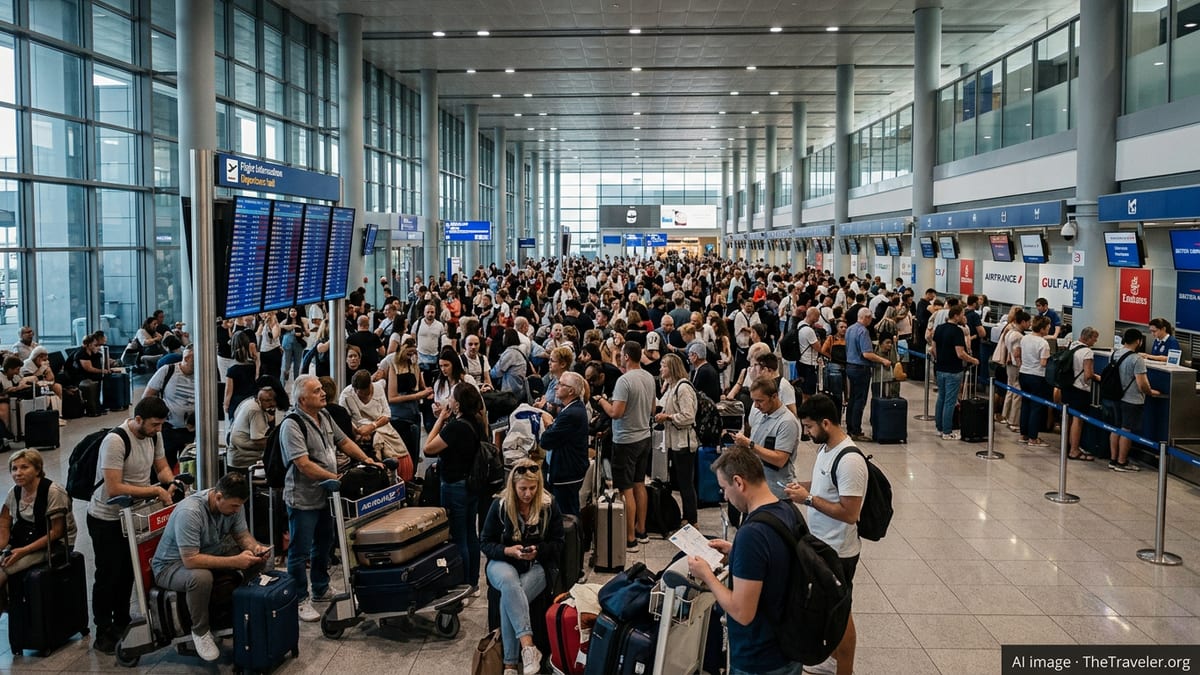
Travel coverage in recent weeks has highlighted a patchwork picture across Europe. Some airports report relatively smooth operations, while others have seen waiting times stretch to several hours, particularly during bank holidays and school breaks. Survey-based reporting cited by travel media suggests that during the spring and early summer peak, queues of two to four hours were recorded at some gateways, with warnings that waits could reach six hours at the busiest hubs if traffic spikes coincide with system glitches.
Several outlets, including Euronews and UK newspapers, have drawn attention to warnings from airline and airport industry bodies that EES processing has already caused missed flights. Budget carrier Wizz Air has publicly advised British passengers returning from Europe to arrive at least three hours before departure, rather than the traditional two, because of the extra time needed at border control.
The experience at ferry ports and rail terminals has been similarly uneven. Coverage of the May half-term period described queues at the Port of Dover stretching for hours as French border staff processed biometric data for departing Britons. Trade and consumer reports indicate that operators on other routes, such as Eurotunnel and Eurostar, have been cautious about ramping up volumes while integrating EES equipment at UK departure points serving the Schengen zone.
At the same time, the EU legal framework allows member states to temporarily scale back digital checks in exceptional circumstances to avoid excessive waiting times. Parliamentary briefings and regional news coverage show that some authorities, including in Greece earlier in the rollout, have at times relaxed or suspended full EES registration for specific traveller groups or periods, underlining how uneven the implementation remains.
How EES Delays Are Shaping British Travel Plans
Evidence from booking trends and consumer surveys suggests that the prospect of long EES queues is starting to influence how Britons plan their trips, even if it has not triggered a wholesale retreat from European holidays. Travel trade commentary points to a rise in demand for longer stays, as some travellers decide that if they must invest extra time at the border, it is more worthwhile to stay abroad for a full week or more rather than a short weekend break.
There are also indications that some holidaymakers are shifting away from the very busiest peak dates or choosing flights at less congested times of day. Industry analysts note that early-morning and late-evening services are particularly vulnerable to congestion, because multiple flights can feed the same passport control area within a short window just as staffing levels are stretched.
Alternative destinations are benefiting too. Travel features and tour operator updates highlight increased interest in non-Schengen options such as Ireland, Turkey, parts of the Balkans and long-haul trips where travellers expect more complex formalities as standard. For some British travellers, avoiding the new EU checks altogether has become part of the decision-making process, especially for last-minute getaways.
Business travel patterns are also being reassessed. Corporate mobility advisers and professional services bulletins recommend allowing additional buffer time for meetings and connections involving Schengen borders, and some firms are consolidating trips so that employees attend multiple meetings in a single journey rather than several short visits.
Industry Warnings and Official Flexibility
Aviation and travel organisations have been increasingly vocal about the risk of disruption. Publicly reported comments from the International Air Transport Association and European airport bodies warn of a “hard risk” of significant waiting times and knock-on effects on flight punctuality if EES issues coincide with peak holiday traffic. Their analysis stresses that even modest extra processing per passenger can have an outsized impact when thousands of travellers are funneled through a limited number of control points.
UK travel trade groups have echoed those concerns, pointing to cases where families have queued for hours to complete biometric checks, only to miss flights or face rebooking costs. Consumer advocates argue that communication about EES has often been inadequate, with many first-time users unaware they would need to provide fingerprints and facial images on arrival, or that follow-up trips might still require time-consuming checks while the system beds in.
On the EU side, publicly available legal and policy documents emphasise that border authorities can partially suspend EES or revert to more limited checks in exceptional circumstances. This flexibility has already been used at some crossing points during the rollout, with national authorities citing the need to prevent excessive queues and maintain safety in crowded terminals. However, such measures are temporary and selective, so British travellers cannot rely on reduced checks across the board during the summer peak.
EU communications also frame 2026 as a transition year in which technology, staffing and traveller behaviour will gradually adjust. That message has been picked up in UK parliamentary briefings, which note that while the system aims to streamline travel in the long term, it is currently adding friction for many non-EU visitors, including large numbers of Britons.
Practical Advice Emerging for British Travellers
In response to the first season of widespread EES use, a rough consensus is emerging from airlines, airports and travel advisers on how Britons can reduce their exposure to disruption. The most consistent recommendation is to arrive earlier than before, particularly for flights from busy European hubs to the UK. Three hours is now widely cited as a sensible minimum at major airports during school holidays, with even more time advised if travellers need to check bags or navigate unfamiliar terminals.
Travellers are also being encouraged, through airline guidance and consumer travel columns, to pay close attention to airport communications on which lanes to use, to have passports ready and to travel with ample time between connecting flights that cross the external Schengen border. Families with young children, and travellers accompanying non-EU relatives, are being advised to factor in the slower-moving queues that EES can create when multiple passports must be enrolled together.
For now, the system’s impact on British travel plans remains significant but manageable. Tens of millions of UK residents are still expected to holiday in the EU this summer, yet many are adjusting departure times, choosing different routes or packing extra patience alongside sunscreen and swimwear. Whether EES ultimately becomes a minor administrative step or a lasting source of friction at Europe’s borders will depend on how quickly the technology stabilises and how effectively authorities respond to the lessons from this first full summer under the new regime.