


More news on this day
American Airlines Flight AA2600 from Chicago O’Hare International Airport to Dallas Fort Worth International Airport diverted on Tuesday to Tulsa International Airport, where it landed safely after an in-flight issue prompted a precautionary landing, according to publicly available flight tracking data and media reports.
Get the latest news straight to your inbox!
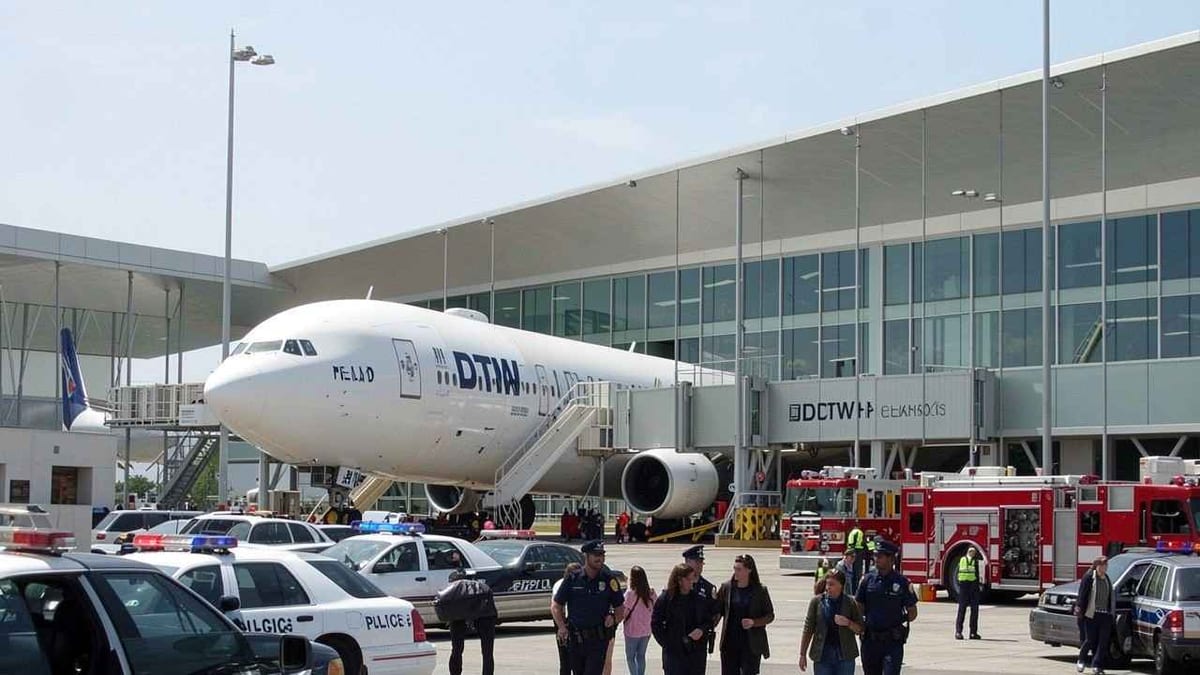
Chicago to Dallas Service Interrupts Journey Over Oklahoma
Flight AA2600 is a regularly scheduled American Airlines service operating between Chicago O’Hare and Dallas Fort Worth, typically completing the route in just over two and a half hours. On the latest rotation, flight tracking records show the aircraft departing O’Hare in the evening and routing south toward Texas before diverting toward Tulsa instead of continuing to Dallas.
Data from aviation tracking platforms indicates that the aircraft began its descent earlier than usual for a standard arrival into Dallas, turning toward northeastern Oklahoma and lining up for approach into Tulsa International Airport. The flight subsequently landed there without reported injuries, and no damage has been publicly documented.
As of early Wednesday, American Airlines had not posted a detailed public incident summary, and the cause of the diversion had not been specified in initial coverage. Early reports describe the landing as precautionary, a term commonly used in commercial aviation when a crew elects to land as a safety measure in response to a potential or developing issue rather than a catastrophic failure.
Passengers on the Chicago to Dallas route experienced an unplanned stop in Tulsa, a city that regularly features in American’s diversion patterns because of its location and infrastructure. The delay and subsequent re-accommodation are expected to ripple into later connections for some travelers, based on the aircraft’s originally scheduled onward operations from Dallas.
Tulsa’s Role as a Strategic Diversion and Maintenance Hub
Tulsa International Airport occupies a distinctive place in American Airlines’ network as both a commercial destination and a cornerstone of its maintenance operations. Publicly available airport and company information show that Tulsa hosts one of American’s largest maintenance, repair and overhaul complexes, supporting hundreds of aircraft from the airline’s narrowbody and widebody fleets.
Because of this maintenance presence, Tulsa is frequently used as a diversion point for flights operating across the central United States. Aircraft that experience suspected technical issues can access specialized facilities and engineering staff more quickly than at many other regional airports, allowing for detailed inspections, troubleshooting and, when needed, repairs.
Aviation analysts often point to Tulsa’s combination of long runways, ample ramp space and proximity to heavily trafficked north-south routes as reasons it appears in diversion patterns. When crews decide to discontinue a flight to its planned destination, they are required to select an alternate that balances factors such as weather, runway length, available services and air traffic complexity. For American Airlines, Tulsa often meets those criteria.
Recent years have seen several American flights rerouted to Tulsa in connection with weather, maintenance concerns or operational constraints elsewhere in the system. While the specific circumstances on AA2600 have not been formally detailed, industry observers note that routing an aircraft into a maintenance hub can be a sign that the airline intends to have specialized teams quickly assess the aircraft before returning it to regular service.
What a Diversion Means for Passengers
For travelers on AA2600, the diversion translated into an unplanned stop and additional time on the ground as airline staff worked to determine how best to continue the journey to Dallas. Publicly available policy documents show that American Airlines treats diversions as irregular operations, with customer support measures varying depending on the cause and duration of the disruption.
If the underlying issue is within the airline’s control, such as a mechanical problem, American’s customer service plan outlines assistance that can include hotel and meal vouchers when passengers are kept overnight in a diversion city. When weather or air traffic control constraints drive a diversion, travelers are often rebooked at no additional fare but may be responsible for their own incidental expenses.
In the case of AA2600, passengers were likely provided with updated itineraries, either through the airline’s mobile app, airport displays or assistance at the gate in Tulsa. Some travelers may have been rebooked directly from Tulsa to Dallas or onward destinations, while others could have been accommodated on later flights once the aircraft’s status became clear.
Travel industry commentators regularly advise passengers on diverted flights to monitor airline apps closely and keep boarding passes and receipts, as these can be important for documenting delays and any out-of-pocket costs. Diversions such as that of AA2600 are relatively rare compared with the total number of daily departures, but they can create complex re-accommodation scenarios across a carrier’s network.
Safety First: How Airlines Approach In-Flight Issues
Although details of the in-flight issue on AA2600 remain limited in public reporting, the decision to divert underscores a recurring theme in commercial aviation: crews are trained to prioritize landing at the nearest suitable airport whenever they have concerns about an aircraft, its systems or conditions in the cabin.
Industry safety guidance emphasizes that precautionary landings are a proactive measure. When pilots receive cockpit indications that warrant additional caution, or when crew members identify potential problems in the cabin, diverting to an alternate airport with appropriate facilities is a standard response. This approach is consistent with global air safety practices and regulatory training requirements.
Records from previous incidents across multiple airlines show that many diversions ultimately involve issues that, after inspection, prove non-critical. Even so, airline operations departments and regulators encourage conservative decision-making, recognizing that erring on the side of caution contributes to commercial aviation’s strong safety record.
In the context of AA2600, observers note that the safe completion of the flight into Tulsa aligns with that philosophy. For passengers, the experience may be disruptive and stressful, but transportation experts frequently highlight that a diversion followed by an uneventful landing is an indicator that safety systems, training and procedures are functioning as intended.
Growing Scrutiny of Disruptions Across U.S. Air Travel
The diversion of AA2600 comes at a time when disruptions, including weather delays, diversions and crew scheduling challenges, are under growing scrutiny from regulators and travelers across the United States. Recent seasons have seen multiple high-profile diversions involving major carriers, prompting renewed discussion about passenger rights and airline responsibilities.
Publicly available federal guidance notes that, in the United States, refunds are typically tied to cancellations or significant schedule changes rather than diversions alone, though outcomes can vary based on the specifics of a disruption. Consumer advocates continue to call for clearer, more uniform standards for compensation when passengers face lengthy delays or substantial itinerary changes stemming from diversions.
Airlines, including American, have responded by expanding self-service tools that allow customers to rebook flights on mobile apps or websites when irregular operations occur. These tools are designed to reduce wait times at customer service counters and help travelers secure alternative routes more quickly, especially during widespread disruptions.
For those aboard AA2600, the episode is likely to be remembered more for the unexpected arrival into Tulsa than for any lasting operational implications. Yet within the broader U.S. aviation system, each diversion adds new data points that carriers and regulators can study as they work to balance safety, reliability and passenger expectations in an increasingly busy airspace.