


More news on this day
American Airlines travelers headed to Atlanta are seeing periodic delays as FAA airport-status updates and air-traffic management advisories flag congestion and weather-related constraints across portions of the Southeast, a reminder of how quickly conditions can ripple into one of the nation’s busiest hubs.
Get the latest news straight to your inbox!
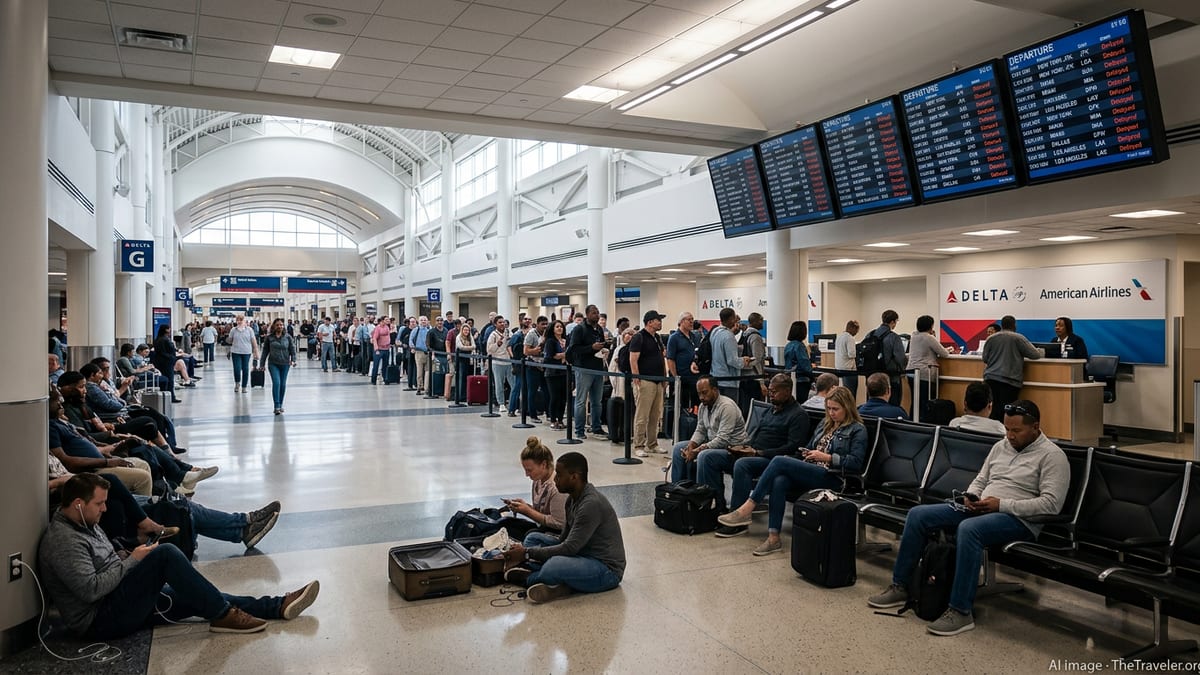
What FAA reports are showing for Atlanta right now
Publicly available FAA airport-status information for Hartsfield-Jackson Atlanta International Airport (ATL) has recently indicated modest, system-managed slowdowns, including gate-hold and taxi impacts for departures and short airborne arrival delays. The FAA’s airport-status pages provide general conditions rather than flight-specific forecasts, meaning travelers can see a “delays” designation even though some individual flights may still operate close to schedule.
Separate FAA operations-planning advisories, which outline anticipated constraints across the National Airspace System, have also pointed to thunderstorm-driven initiatives in broader regional corridors. While these planning notes are not airline-specific, they can shape how carriers like American Airlines meter departures into ATL when airspace demand outpaces arrival capacity.
The FAA’s Daily Air Traffic Report, updated on September 14, 2026, underscored the broader theme: thunderstorms and winds across multiple metro areas can produce arrival and departure delays, and passengers should still rely on their carrier for flight-by-flight status. That framework helps explain why delays into Atlanta can appear even when the airport itself is not reporting major disruption.
Why American Airlines flights can be affected even at a Delta-heavy hub
Atlanta is best known as Delta Air Lines’ primary hub, but American Airlines operates a meaningful schedule into ATL from major business and connecting markets. When ATL arrival rates are reduced or when en route airspace becomes constrained, the impact is shared across carriers, because traffic management initiatives are applied across the system rather than to a single airline.
FAA advisories and traffic-management tools can include ground stops, ground delay programs, reroutes, and miles-in-trail spacing. In practice, that can translate to later pushback times at the origin airport for flights bound for Atlanta, longer taxi queues, or airborne holding if demand spikes faster than runway and airspace capacity.
Earlier FAA advisories this month show how quickly conditions can shift: on September 4, 2026, an ATCSCC advisory referenced weather-related constrained departure routes connected to Atlanta Center airspace. Even when the core issue is weather or route availability in a particular slice of airspace, knock-on effects can reach arriving flights into ATL from across the country.
What to watch in the FAA system when delays start to stack up
For travelers trying to understand whether a delay is likely to worsen, the FAA’s real-time airport status for ATL is one of the clearest public indicators, because it summarizes whether delays are primarily on arrivals, departures, or both. It also shows whether any destination-specific programs are in place, which can help explain why one city pair is impacted more than another.
FAA planning advisories can offer additional context, especially when they flag thunderstorms, wind, low clouds, construction, or staffing triggers. Those notices often reference specific regions and air-traffic control areas rather than a single airport, and they may include “possible” initiatives hours before they are implemented.
It is also common for delays into a hub to be driven by issues at the departure airport rather than Atlanta itself. The FAA’s own guidance notes that travelers should check both the departure and arrival airports for delays that could affect a flight. That is particularly relevant for American Airlines customers connecting through large Northeast or Florida markets when convective weather disrupts traffic flows.
Passenger options: monitoring, rebooking, and day-of travel decisions
American Airlines typically uses its mobile app and email notifications to communicate flight disruptions, but travelers can often get earlier warning by watching airport-wide delay notices and then checking their specific flight status. Because FAA airport-status pages are not flight-specific, pairing them with an airline’s real-time flight tracker is the most practical approach.
When disruptions are tied to weather or other uncontrollable events, American’s travel alerts and advisories page can sometimes include flexibility policies that allow one-time changes within a defined window. Those policies vary by event and geography and may include rebooking conditions such as keeping the same origin and destination while adjusting dates.
For travelers booked on American Airlines into Atlanta during periods of active FAA constraints, a few day-of choices can reduce friction: arriving earlier to account for longer security and gate-area crowding during irregular operations, keeping connections realistic if Atlanta is part of a larger itinerary, and considering alternate routings if seats are available through other hubs. In many cases, the delay is short, but the compounding effect of missed connections can be more disruptive than the initial late departure.
What comes next for Atlanta-bound travel this week
FAA operations planning notes for mid-September continue to emphasize the potential for thunderstorm-driven initiatives in multiple regions. Even when Atlanta itself is not listed as the primary constraint, the wider Southeast and East Coast airspace can influence ATL arrival flows, especially during peak afternoon and evening travel banks.
Because these are dynamic, short-notice developments, travelers may see conditions change within hours, including an airport shifting from “on time” to experiencing measurable delays and back again. The FAA’s guidance also stresses that air traffic control does not cancel flights, and that the most actionable traveler guidance remains flight-specific information from the airline paired with airport-wide status indicators.
For American Airlines passengers headed to Atlanta, the near-term outlook is best described as intermittent and situational: delays may flare during weather peaks or flow-management initiatives, then ease as thunderstorms dissipate and arrival rates rebound. Checking status early and often remains the most reliable tactic when FAA reports begin signaling constraints.