


More news on this day
Families of children with autism turned a routine Saturday at Charlotte Douglas International Airport into a vital learning experience, as American Airlines brought its “It’s Cool to Fly American” practice-flight program to one of its busiest hubs.
Get the latest news straight to your inbox!
A Practice Run for the Real Thing at Charlotte Douglas
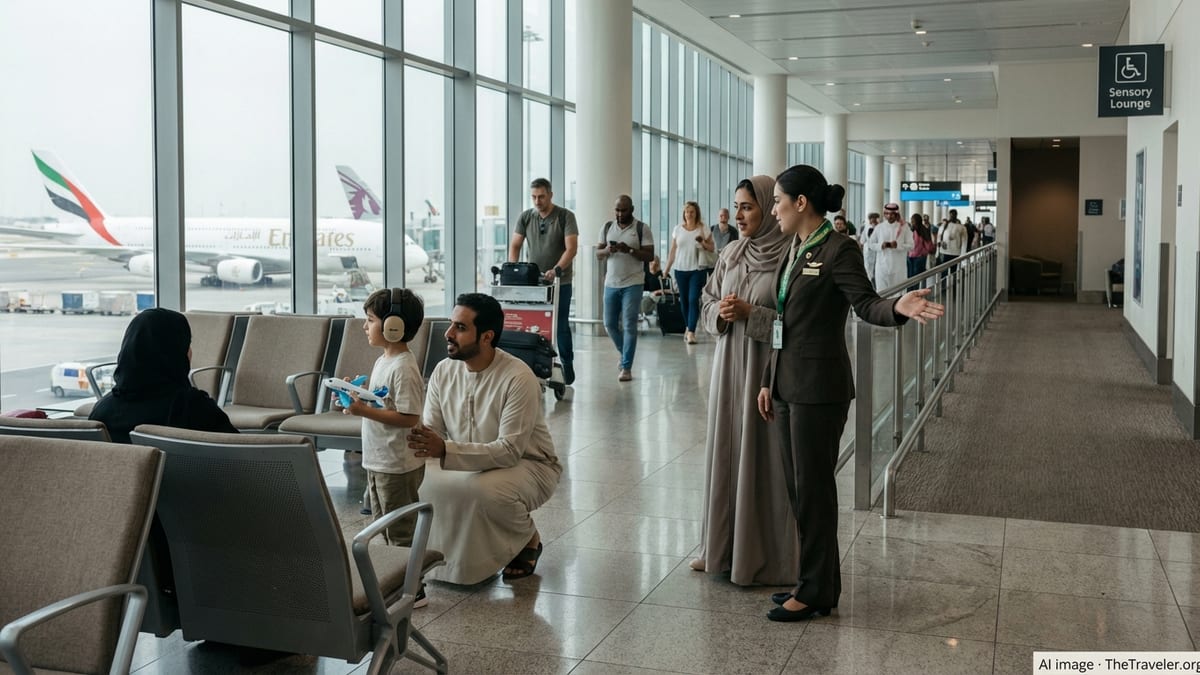
According to recent coverage of the April 11, 2026 event, approximately 50 families took part in the latest “It’s Cool to Fly American” session at Charlotte Douglas International Airport. The program is designed to walk participants through nearly every stage of a real trip, but without leaving the ground. Families check in at the counter, pass through security, wait at the gate, board an aircraft and experience a taxi and simulated takeoff before returning to the terminal.
The goal is to ease the sensory and emotional strain that air travel can pose for children on the autism spectrum and for those with other developmental disabilities. Airports can be crowded and noisy, and elements such as security screening, public address announcements, bright lights and confined cabin spaces can quickly become overwhelming. By turning those elements into a predictable and rehearsed routine, the Charlotte event aims to transform an unknown ordeal into a familiar series of steps.
Reports indicate that the Charlotte program mirrored similar events held at other American Airlines locations, with volunteers guiding families through each touchpoint. The mock flight format allows participants to practice showing identification, handling boarding passes and navigating the jet bridge, while caregivers can observe how their children respond and adjust strategies before an actual trip.
Publicly available information suggests that families also receive practical tips during the Charlotte event, including guidance on ideal flight times, how to communicate specific needs in advance and what airport and airline services are available for travelers with disabilities. For many attendees, the experience is described as a key step in deciding whether a vacation or long-distance visit is feasible.
A Decade of “It’s Cool to Fly American” Support
American Airlines launched “It’s Cool to Fly American” in 2014 as a volunteer-driven initiative to support travelers with autism and other cognitive disabilities. Company materials and independent coverage describe it as a mock travel experience that closely replicates a full journey, from parking at the airport to baggage claim at the end of the flight. Over time, the program has expanded to dozens of airports across the United States.
Recent corporate reports indicate that by 2024 the initiative had marked its 10-year anniversary, having hosted more than 8,500 participants from roughly 4,500 families in more than 60 locations. The program is organized through American’s Abilities Employee Business Resource Group, which focuses on disability inclusion within the airline’s workforce and customer experience.
Events are typically scheduled multiple times a year at select airports, often in cooperation with local advocacy organizations and disability service providers. These partners help identify families who might benefit, provide additional training resources and ensure that information about autism-friendly travel practices is shared widely in the community.
While the structure of each event is similar, individual airports adapt details to fit their facilities and local needs. Some incorporate quiet rooms or decompression spaces, while others emphasize repeated practice on the jet bridge or extended time on board the aircraft so that children can grow more comfortable with seatbelts, tray tables and cabin sounds.
Charlotte’s Role in Accessible Air Travel
Charlotte Douglas International Airport occupies a central position in American’s network as one of its largest hubs, handling tens of millions of passengers a year. Holding an “It’s Cool to Fly American” event at such a major connecting point underlines how central accessibility and disability inclusion have become to the airline’s broader customer strategy.
Publicly available descriptions of the Charlotte event show that airport staff, American Airlines team members and volunteers from partner organizations collaborated to replicate the full sensory experience of a flight while allowing families to move at their own pace. Participants could step out of the process at any time, return when ready or skip stages that might be too intense on a first attempt.
Travel industry reports suggest that programs like this can have a ripple effect within airports. As ground staff, security officers and gate agents participate in repeated practice flights, they gain experience in recognizing nonvisible disabilities and adjusting communication styles. That can translate into more confident support for passengers with autism on regular operating days, not only during special events.
In addition, the Charlotte initiative reinforces the airport’s positioning as a regional gateway that serves a wide variety of travelers, from business passengers and connecting families to those undertaking their first-ever flight. By highlighting mock-flight opportunities during Autism Acceptance Month and beyond, the airport and airline signal that accessibility is part of everyday operations rather than an occasional add-on.
Turning Anxiety into Confidence for Families
For many families, worries about how a child will handle the airport environment can be a decisive factor in whether to travel at all. Accounts from parents who have taken part in “It’s Cool to Fly American” at various locations often describe hesitation and anxiety before the event, followed by increased confidence and in some cases the booking of a first real vacation.
During the Charlotte Douglas session, children and caregivers were able to rehearse key moments that often cause stress, such as removing shoes at security, hearing boarding announcements, feeling the aircraft door close and listening to safety briefings. Because the event is framed as a practice run with no pressure to complete the entire sequence, families can treat any difficult point as a learning opportunity instead of a crisis.
Experts and advocacy groups outside the airline industry have long noted that previewing environments and breaking complex processes into smaller, predictable steps can help many autistic individuals manage change. By applying those principles to the airport setting, the Charlotte event aims to equip families with practical coping strategies, from noise-cancelling headphones and visual schedules to preferred seating arrangements and planned breaks.
Reports also highlight that siblings and extended family members benefit from the program, gaining a clearer understanding of how sensory overload can affect their loved one. This broader awareness can make future trips smoother for the entire travel party, turning air travel from a source of tension into an activity that everyone can share.
Part of a Wider Shift Toward Inclusive Travel
American Airlines’ ongoing investment in “It’s Cool to Fly American” at Charlotte Douglas and other hubs reflects a wider movement within the aviation and tourism sectors to make travel more inclusive. Various carriers and airports now offer autism-friendly initiatives, from quiet rooms and sensory maps to specialized training for frontline employees.
Industry observers note that such programs are increasingly seen not only as community outreach but also as a response to growing demand. As diagnostic rates and public awareness of autism have increased, more families are seeking to travel for leisure, education and medical care, and they are looking for clear signals that airlines and airports can meet their needs.
American’s practice-flight events are one example of how airlines are adapting, providing structured exposure to the realities of flying before a ticket is ever purchased. At Charlotte Douglas, this translates into an opportunity for local and regional families to test whether a long-awaited trip is realistic, and to identify what supports will be necessary to make it successful.
As airports and airlines continue to refine their accessibility measures, programs like “It’s Cool to Fly American” at Charlotte Douglas are likely to remain a visible part of efforts to ensure that the experience of flight is within reach for a broader range of travelers.