

More news on this day
American Airlines is transforming its Miami hub into a 100-destination gateway across Latin America and the Caribbean, a sweeping expansion designed to give storm-battered and disruption-weary travelers more nonstop options and fewer risky connections.
Get the latest news straight to your inbox!
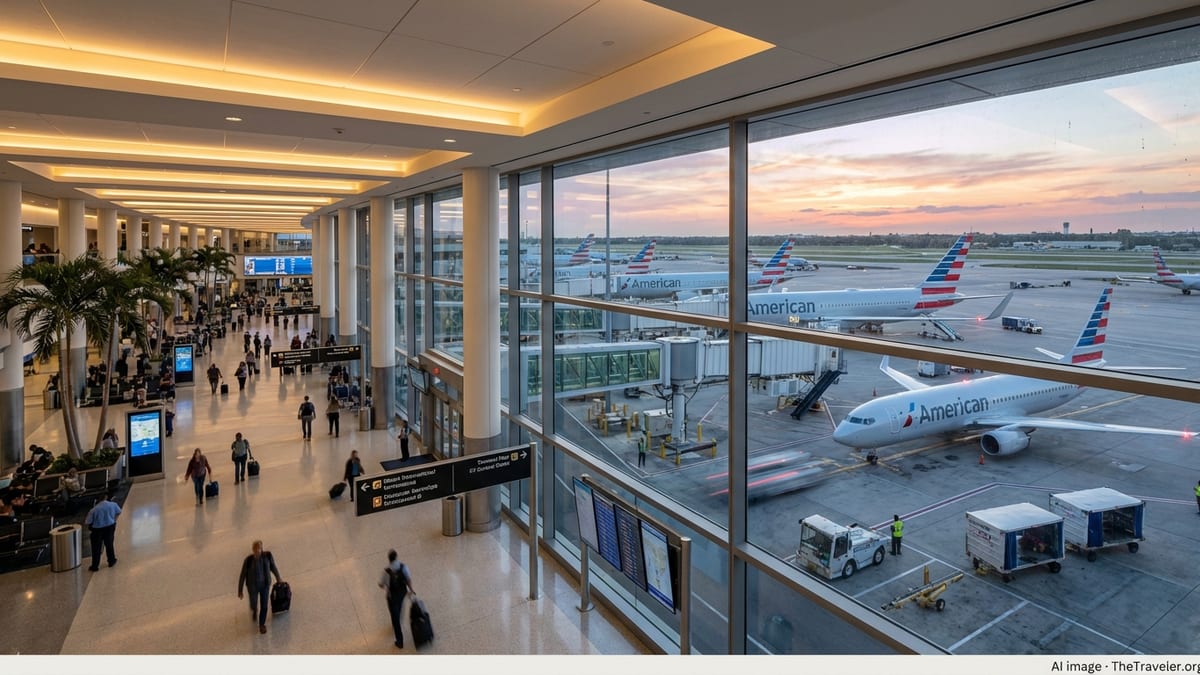
Miami Becomes the Power Center of American’s Latin Network
Publicly available information from American Airlines shows that the carrier will reach a milestone 100 destinations in Mexico, the Caribbean and Latin America from its Miami hub during its centennial year, cementing Miami International Airport as its primary bridge to the region.
The move builds on Miami’s role as American’s leading Latin American and Caribbean hub, with more than 400 peak daily departures spanning North America, Europe and the broader Americas. With the new buildout, a larger share of those flights will be pointed south toward island and coastal destinations that have struggled with volatile schedules since late 2025.
Industry analyses indicate that American already serves more Caribbean destinations than any other United States carrier, and the 100-destination milestone significantly widens that gap. For travelers, this translates into more city pairs that can be reached in a single hop from Miami rather than threading through multiple hubs across the eastern United States.
Route-mapping documents and airline schedule summaries describe Miami and Charlotte as the two main engines of the carrier’s Caribbean strategy, but the newest growth is heavily weighted toward Miami, which offers dense connectivity from the rest of the United States and from Europe.
New City Pairs Target Vulnerable Caribbean Markets
According to the airline’s latest network announcement, two new cities in the region, including Cap Haïtien in northern Haiti and Maracaibo in Venezuela, are being folded into the Miami system as part of the 100-destination push. Service to Cap Haïtien is scheduled to begin in November, while Miami to Maracaibo is set to launch in mid-July, making American the only United States carrier on that route.
For Haiti, the Cap Haïtien service represents the first United States airline announcement for the resumption of flights into the country in the current environment, based on recent coverage of the network plan. That gives Haitian diaspora travelers and aid-related traffic an alternative to more fragile routings through third countries or multi-stop itineraries across the region.
Earlier additions, such as the launch of nonstop Miami flights to Bimini in the Bahamas in February, have already shown how short hops from Miami can quickly open capacity into smaller Caribbean markets. Local government documents highlight the Bimini connection as Miami’s shortest international route, designed to feed both leisure visitors and cruise traffic through a sub-one-hour sector.
Public records on American’s wider route list show that these new spokes link into a lattice of established trunk flights from Miami to major Caribbean hubs such as San Juan, Nassau and Fort-de-France, creating multiple back-up options if a specific island airport faces weather, infrastructure, or regulatory strain.
Response to Months of Travel Chaos Across the Islands
The aggressive Miami buildout comes after a bruising period for Caribbean air travel. Winter operational disruptions, including severe weather in the United States and airspace constraints across parts of the Eastern Caribbean and northern South America, triggered waves of cancellations and diversions that rippled across the island network.
News coverage earlier this year detailed how more than 400 flights on several United States carriers, including American, were scrubbed in a matter of days, leaving travelers stranded at resort destinations and regional hubs. Separate analyses examining American’s January operational performance described mass groundings at key hubs such as Miami and Charlotte as airlines struggled to reposition aircraft and crew.
Safety-related restrictions in parts of Caribbean and adjacent airspace also squeezed capacity, temporarily reducing the number of available routings from the mainland. When those limits eased, American moved quickly to restore capacity and add extra widebody flying into high-demand routes such as San Juan to Miami, bringing thousands of additional seats into the market.
Seen against that backdrop, Miami’s newly expanded network is being framed in industry coverage as a form of insurance for travelers: more nonstop options, more alternative routings and a thicker web of connections that is less vulnerable when a single hub or corridor experiences disruption.
More Nonstops, Fewer Connections for U.S. and European Travelers
The Miami expansion is particularly significant for travelers starting their journeys in the United States interior or in Europe. Miami already offers nonstop American Airlines flights to major European cities such as London, Madrid and, beginning in 2026, Milan, and those flights feed directly into the Latin American and Caribbean bank of departures.
By adding more Caribbean and Latin American points from Miami, American is increasing the chances that a traveler from a medium or small United States city can make a single connection in Miami rather than connecting twice through different domestic hubs. This is especially relevant during peak storm seasons, when each extra connection increases the risk of missed flights and lost baggage.
For European visitors, Miami’s role as a dual transatlantic and Caribbean hub reduces the need to connect through congested northeastern airports before heading to the islands. Travel guides and network summaries emphasize that Miami now functions as a one-stop gateway from Europe into dozens of Caribbean beaches, cruise ports and dive destinations.
Network-planning documents suggest that Miami will continue to see schedule refinements, but the broader strategy points clearly toward concentration: more flying into the Caribbean and northern Latin America from a single, powerful Florida hub, underpinned by a mix of narrowbody and widebody aircraft tailored to each market.
What the Buildout Means for Caribbean Tourism and Competition
Tourism officials and travel industry observers are closely watching how the 100-destination Miami network will influence visitor flows across the Caribbean. With new nonstop routes to secondary and tertiary markets, American’s strategy is expected to redistribute some traffic away from traditional mega-hubs and toward smaller islands that now have better direct access.
Competing United States carriers already have strong Caribbean presences, but industry databases and route maps indicate that none currently match American’s breadth of destinations from a single hub. That gap could pressure rivals to beef up their own networks or deepen partnerships with regional airlines to maintain connectivity in the face of more concentrated American capacity.
For Caribbean governments focused on rebuilding tourism revenue after repeated disruptions, the promise of more reliable lift from a major United States hub is significant. However, analysts also note that heavy reliance on a single large carrier and gateway makes long-term planning sensitive to shifts in fuel prices, aircraft availability and broader geopolitical conditions that can reshape airline schedules with little notice.
For now, though, American’s milestone Miami network signals a clear intent: to lock in its position as the leading conduit between the United States and the Caribbean, and to convince wary travelers that a single connection through South Florida can shield their island trips from at least some of the chaos that has recently defined regional air travel.