

More news on this day
Travelers at San Diego International Airport faced mounting frustration as a fresh wave of operational disruptions led to five cancellations and 139 delays, tangling departure boards and affecting key Horizon, American, Alaska, Frontier and Southwest Airlines routes, including long-haul services to London, Tokyo Narita and Hawaii.
Get the latest news straight to your inbox!
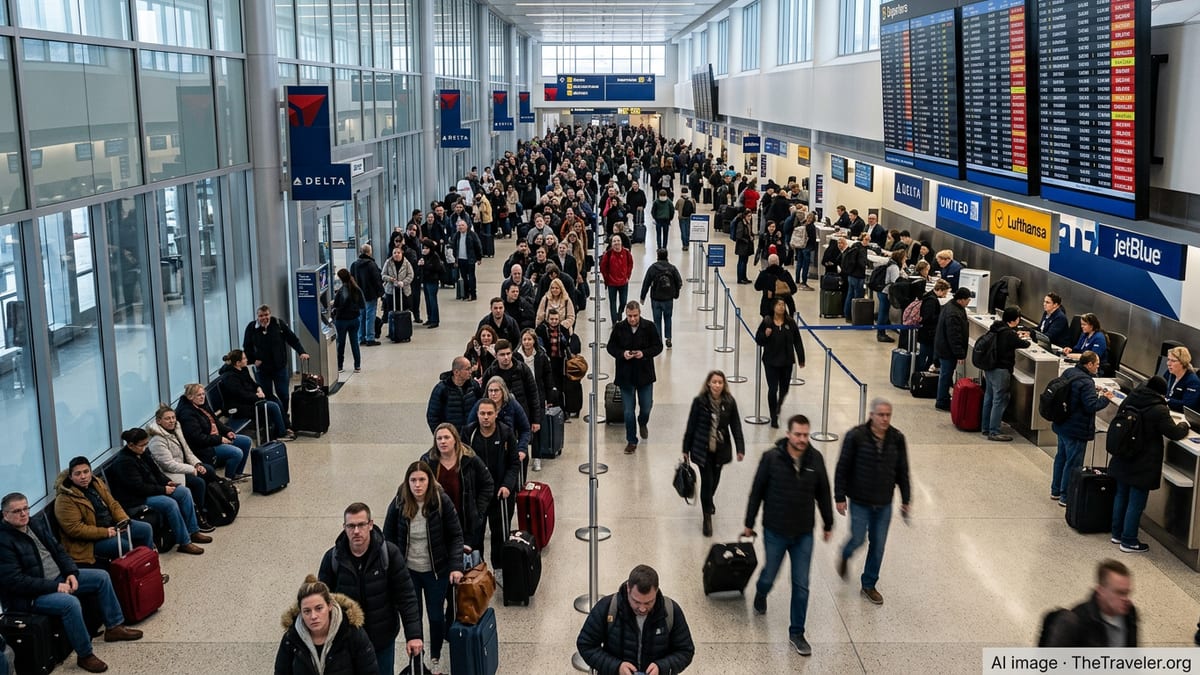
Wide-Ranging Disruptions Across Domestic and International Networks
Publicly available flight-tracking and airport operations data indicate that San Diego International Airport experienced a concentrated cluster of disruptions, with a total of five flight cancellations and 139 delays affecting departures and arrivals. While the airport is familiar with congestion due to its single-runway configuration, the latest figures stand out for their impact on several major carriers and long-distance routes.
The affected flights span a mix of domestic and international services, connecting San Diego with major hubs such as London and Tokyo Narita, as well as leisure-heavy routes to Hawaii. Industry data show that even modest numbers of cancellations can ripple across an airline’s schedule, generating rolling delays as aircraft and crews fall out of position.
San Diego International, which serves as an important West Coast gateway, relies heavily on connections through larger hubs for long-haul international travel. When delays compound at a spoke airport like San Diego, passengers bound for intercontinental flights frequently miss onward connections in cities such as Los Angeles, San Francisco, Dallas and Seattle, turning localized disruption into a wider network challenge.
Operational statistics from recent months suggest that adverse weather patterns across the United States, ongoing air-traffic constraints and tight airline staffing can converge to create days when even routine issues trigger outsized disruption. The latest pattern of delays at San Diego appears to fit within that broader national trend.
Major U.S. Carriers Bear the Brunt of the Schedule Strain
According to data compiled from carrier status pages and real-time aviation trackers, the disruptions at San Diego have been concentrated among key U.S. airlines with substantial market share at the airport. Horizon, American Airlines, Alaska Airlines, Frontier Airlines and Southwest Airlines collectively operate a significant share of San Diego’s domestic departures, feeding passengers into national and international networks.
These carriers have reported varying levels of on-time performance in federal air travel consumer reports, with cancellation and delay rates influenced by weather, airspace constraints, congestion at hub airports and late-arriving aircraft. The latest San Diego disruptions align with those recurring causes, rather than indicating a single, isolated technical failure or safety event.
American and Alaska in particular play a pivotal role in connecting San Diego to international gateways. Alaska and its regional partner Horizon operate services that feed into West Coast hubs for transpacific flights, while American connects through major centers for transatlantic and Asia-bound routes. Delays on these feeder legs can be especially disruptive for travelers heading to London or Tokyo Narita, where departure windows and airport curfews leave limited room for missed connections.
Frontier and Southwest, meanwhile, provide dense domestic coverage and high passenger volumes. When even a small fraction of their schedules runs late, gate space, baggage handling and ground operations at a single-runway airport can quickly become strained, amplifying the impact on other carriers sharing the same facilities.
Long-Haul Travelers to London, Tokyo Narita and Hawaii Hit Hard
Flight-tracking data and published coverage of recent operational patterns indicate that the latest San Diego disruptions are not confined to short-haul regional hops. Passengers aiming for long-haul journeys to London, Tokyo Narita and Hawaiian destinations have faced missed connections, extended layovers and, in some cases, overnight rebooking.
San Diego does not host a dense roster of nonstop long-haul flights, so most international passengers rely on carefully timed connections. A delay of even one or two hours on a San Diego departure can cause travelers to miss evening flights to Europe or late-afternoon departures to Asia from coastal and interior hubs. In practical terms, this can convert a single missed connection into an arrival pushed back by a full day or more.
Routes to Hawaii are similarly vulnerable to disruption, given that many flights operate in banked patterns designed for same-day, mid-Pacific crossings. If a San Diego departure to a West Coast hub runs late, passengers may find that the last island-bound services of the day have already departed, leaving only limited alternatives or next-day options.
For airlines, rebooking large numbers of disrupted long-haul passengers can be logistically challenging. Seat availability on later flights, crew duty limits and aircraft rotation schedules all constrain how quickly carriers can absorb unexpected backlogs, especially during peak travel periods.
Structural Constraints and National System Pressures
San Diego International’s physical layout is a persistent backdrop to its operational volatility. With a single primary runway serving all commercial traffic, the airport has less flexibility to recover from disruptions than multi-runway hubs. Taxiway bottlenecks and tight gate space can slow the process of turning aircraft, particularly when several flights arrive late in succession.
National airspace conditions also play a central role. Federal aviation data and industry analyses show that congestion in key corridors, temporary ground stops, and flow-control measures can hold departures on the ground in San Diego even when local weather is clear. When this happens, passengers often see departure boards filled with delayed flights attributed to broader traffic management rather than any one airline-specific issue.
In recent seasons, winter storms across large swaths of the country and episodic thunderstorms in major hub regions have produced a recurring pattern of cascading delays. While the current tally of five cancellations and 139 delays at San Diego is modest compared to systemwide disruption on extreme weather days, it reflects the same underlying vulnerabilities in the tightly interconnected U.S. aviation network.
Industry statistics from the U.S. Department of Transportation highlight how late-arriving aircraft, national aviation system constraints, and carrier-related factors together account for the majority of delays. The situation observed in San Diego appears broadly consistent with those national patterns, rather than standing out as a unique operational failure.
What Travelers Can Do When Delays Mount
Public guidance from airports, airlines and consumer advocates emphasizes preparation and flexibility for passengers transiting busy facilities such as San Diego International. Travelers are frequently advised to monitor flight status through multiple channels, including airline apps and departure boards, and to allow additional time for check-in and security during periods of elevated disruption.
For those relying on tight connections to London, Tokyo Narita or Hawaii, experts recommend booking itineraries with generous layovers where possible, particularly during seasons prone to storms or heavy traffic. Longer connection windows can provide a buffer against modest delays at San Diego and reduce the risk of missed international departures that operate less frequently.
When cancellations and extensive delays occur, rebooking options can vary considerably by airline, fare type and route. Some carriers offer same-day standby flexibility for affected customers, while others may rely on scheduled re-accommodation on the next available flight. Travelers on time-sensitive journeys may find that exploring alternative routings, including departures from nearby airports, can sometimes shorten overall disruption.
The latest wave of delays and cancellations at San Diego International underscores how quickly operational pressures at a single-airport bottleneck can reverberate through major carriers and long-haul networks. With no immediate structural changes on the horizon, passengers and airlines alike will continue to navigate a system where even a relatively small number of schedule changes can have outsized effects on global travel plans.