


More news on this day
Uzbekistan is tightening the triangle between Tashkent, Samarkand and Bukhara as Afrosiyob high speed rail services become the backbone of fast, predictable travel across the country’s main tourism corridor.
Get the latest news straight to your inbox!
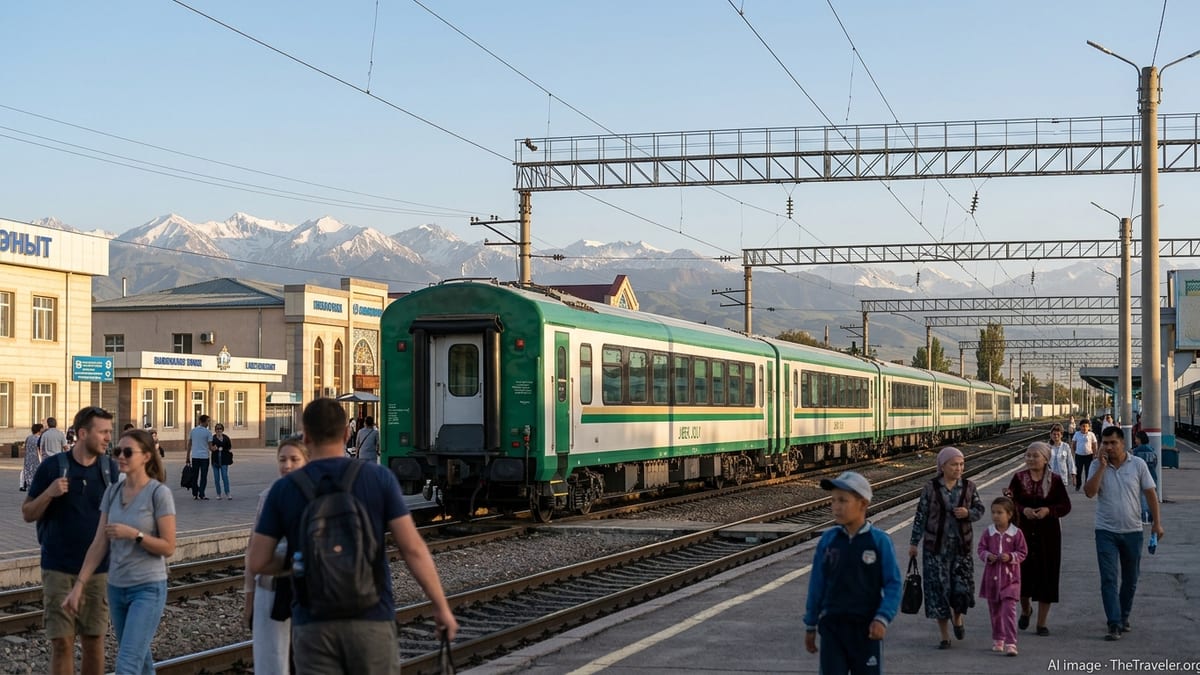
A High Speed Spine for the Silk Road Corridor
Afrosiyob, Uzbekistan’s flagship high speed train, now anchors the country’s most popular tourism route by linking the capital Tashkent with Samarkand and Bukhara in a matter of hours rather than a full day on the road. Publicly available information from the national rail operator describes Afrosiyob as the fastest passenger service in the country, operating at up to around 210 kilometers per hour and cutting journey times across the central corridor.
The Tashkent to Samarkand high speed segment, launched in the last decade and later extended to Bukhara, has consolidated into a single rail spine that serves most first time itineraries. Travel agencies and tour operators now routinely build Afrosiyob legs into four to seven day circuits that start and end in Tashkent, reflecting how central the service has become to packaged tourism.
Recent timetables and booking data show multiple daily Afrosiyob departures on the Tashkent–Samarkand–Bukhara axis, with travel times of roughly two hours to Samarkand and under four hours to Bukhara. For visitors following the classic Silk Road trail, this has turned what was once a slow overnight journey into a daytime transfer that preserves more time for city visits.
Online travel reports indicate that many visitors now perceive the high speed train as an integral part of the experience rather than just a transfer. The modern rolling stock, air conditioned carriages and comparatively smooth ride are frequently contrasted with slower legacy services on other routes that have yet to be upgraded.
Tourism Demand Spurs Extra Services and Dynamic Pricing
Afrosiyob’s role in tourism has grown rapidly enough that demand often exceeds capacity during peak seasons. International travelers posting recent trip accounts describe high levels of advance bookings, particularly between Tashkent and Samarkand, and advise securing tickets several weeks ahead to guarantee seats in preferred classes.
Published notices from Uzbekistan’s transport institutions show that additional Afrosiyob trains are periodically added on the Tashkent–Samarkand route around major cultural events, such as the Sharq Taronalari music festival in Samarkand and national holiday periods. These temporary boosts are framed as measures to improve convenience for visitors and residents as flagship events draw larger crowds.
At the same time, Afrosiyob ticket prices have moved to a more market based model. Public communications from the national railway and transport ministries in 2024 and 2025 outline a series of fare adjustments for high speed services, citing higher energy, maintenance and rolling stock costs as key drivers. A further increase, announced for early 2026, underscores the operator’s efforts to balance commercial viability with continued investment in the rail network.
Travel planners note that, even with these price rises, Afrosiyob remains competitive against regional air links when factoring in transfer times, airport procedures and the ability to arrive directly in city centers. For mid range and higher budget tourists, the service is increasingly positioned as a time efficient upgrade rather than a budget option.
Reshaping Itineraries Around a Three City Hub
The consolidation of high speed services has had a visible effect on how visitors move within Uzbekistan. Many recent itineraries shared by travelers describe a loop that begins in Tashkent, continues by Afrosiyob to Samarkand and Bukhara, and then either returns by train to the capital or continues by slower rail or air to Khiva and other destinations.
Tour packages published by regional operators frequently highlight Afrosiyob segments as selling points, with early morning departures from Tashkent allowing full sightseeing days in Bukhara or Samarkand. These programs often pair rail transfers with guided walks through historic ensembles such as Registan Square, Shah i Zinda, the Ark of Bukhara and surrounding madrasas, effectively knitting together heritage sites with modern infrastructure.
According to promotional material from Uzbekistan’s tourism and rail sectors, rail based circuits are also being marketed as a more sustainable way to visit the country’s historic cities compared with short haul flights. While the majority of individual travelers still combine modes, the availability of fast rail on the central corridor appears to be encouraging more visitors to rely primarily on trains.
This three city hub structure is reinforcing Tashkent’s position as the international gateway while ensuring that Samarkand and Bukhara remain accessible within tight travel schedules. For travelers with less than a week in the country, Afrosiyob enables two or three city combinations that would previously have required longer stays or overnight journeys.
Pressure on Capacity and the Visitor Experience
Afrosiyob’s success has brought new challenges. Travel forums and user reviews posted over the past two years frequently mention limited ticket availability on popular days, particularly for economy class, as tour groups and local agents secure large blocks of seats as soon as they are released in booking systems.
This pressure on capacity has practical implications for trip planning. Several recent accounts from independent travelers recommend monitoring release windows on the national rail ticketing platform, which typically opens sales a set number of days before departure, and purchasing as early as possible. Others report relying on agencies within Uzbekistan to secure tickets when online tools prove difficult to use from abroad.
On board, however, traveler feedback generally points to a consistently positive experience, with clean carriages, assigned seating and on time performance on the Tashkent–Samarkand–Bukhara runs. The contrast with longer, slower overnight services to Khiva and other destinations reinforces Afrosiyob’s role as a premium product in the national network.
Local tourism businesses appear to be adapting to the patterns set by high speed arrivals and departures. Many city tours, airport transfers and hotel check in policies in Samarkand and Bukhara are now timed to align with morning and late afternoon Afrosiyob schedules, smoothing handovers for group and independent travelers alike.
Next Steps for Uzbekistan’s Rail Driven Tourism Strategy
Government strategies and international financial institution reports on Uzbekistan’s transport sector outline broader plans to upgrade and electrify core railway lines, indicating that Afrosiyob is part of a longer term push to make rail the preferred mode for domestic intercity travel. These documents highlight the Tashkent–Samarkand–Bukhara corridor as a flagship example with direct benefits for tourism and regional development.
Future investments are expected to focus on rolling stock renewal, infrastructure maintenance and potential capacity increases, including longer consists or more frequent departures on the most popular segments. Analysts following Central Asian transport projects note that categories such as energy efficiency, digital ticketing and integrated tourism products are likely to feature in upcoming phases.
For travelers, the immediate impact is a more predictable, faster and often more comfortable way to traverse Uzbekistan’s historic heartland. As Afrosiyob services continue to shape how visitors connect Tashkent with Samarkand and Bukhara, the rail line is emerging as both a practical necessity and a symbol of the country’s effort to pair heritage tourism with modern mobility.
With growing international awareness and rising visitor numbers, the success of the Afrosiyob corridor may influence how quickly similar standards are extended to other routes, and how far Uzbekistan can lean on rail connectivity to sustain its broader tourism ambitions.