

More news on this day
Severe thunderstorms sweeping across the Mid Atlantic on June 12 have unleashed major disruptions at Washington Dulles International Airport, stranding passengers and plunging operations at United, Delta and numerous international carriers into extended chaos.
Get the latest news straight to your inbox!
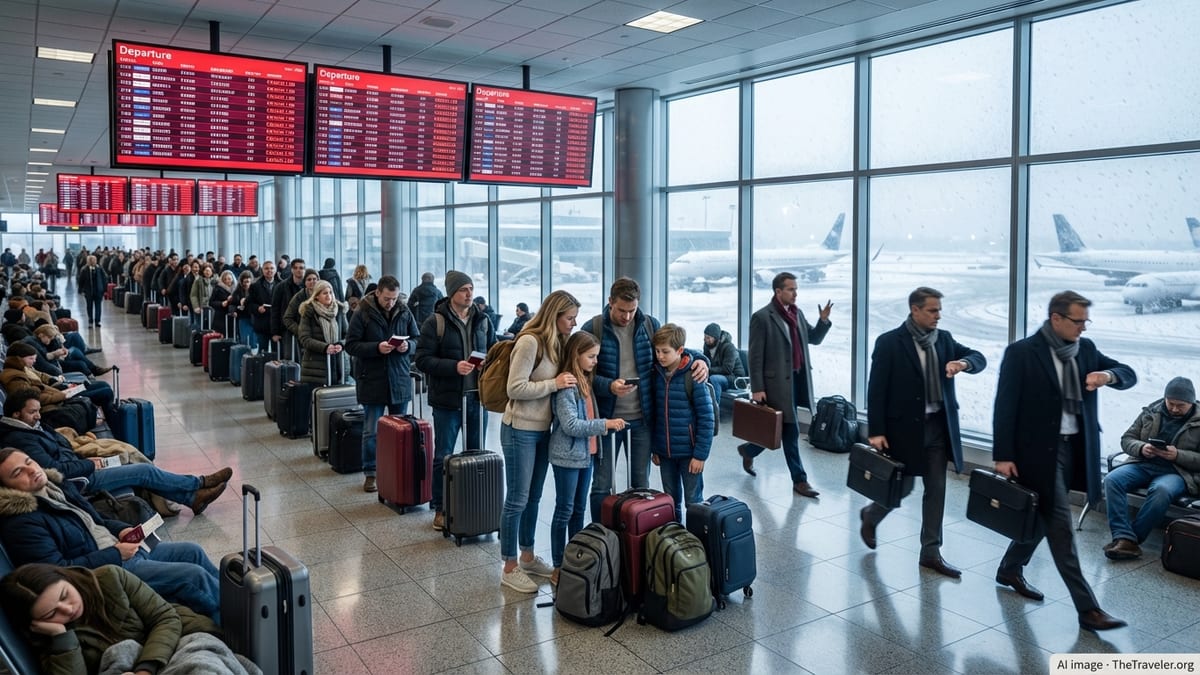
Storm System Turns Critical Aviation Hub Into Bottleneck
Publicly available forecasts indicate that an intense combination of extreme heat, humidity and fast moving storm cells is crossing the Washington region on Friday, creating a volatile environment for afternoon and evening air traffic. Meteorologists in local coverage describe the weather pattern as capable of producing damaging winds, torrential rain and frequent lightning, conditions that regularly force temporary halts in ramp and runway activity at major airports.
Washington Dulles International Airport, one of the primary long haul gateways on the East Coast, is particularly exposed when convective weather flares across the Mid Atlantic. Storm lines arriving from the Ohio Valley and central Appalachians tend to intersect departure and arrival corridors feeding Dulles, leaving controllers with limited routing options once lightning and wind shear thresholds are exceeded.
Because of that geography, even a few hours of severe storms can transform Dulles from a high capacity international hub into a choke point for domestic and overseas traffic. As the latest wave of storms builds, flight tracking boards show growing clusters of delays and rolling cancellations, signaling that the airport is again becoming a focal point for wider network disruption.
United, Delta And Partners Activate Weather Waivers
United Airlines, which relies on Dulles as a major hub for both transcontinental and transatlantic routes, is facing particularly acute operational strain as the storms move in. According to airline advisory summaries and customer reports, United has expanded an East Coast weather waiver that covers travel through key Washington area airports, allowing affected passengers to change itineraries without standard penalties on select dates.
Delta Air Lines has also formally triggered a Northeast inclement weather policy that specifically lists Washington Dulles and Washington National among impacted airports, alongside other major hubs such as New York, Newark, Boston, Chicago and Baltimore. The advisory, issued for travel from June 11 through June 14, allows customers booked to, from or through these airports to rebook within a defined window without change fees, subject to fare rules and seat availability.
These waivers reflect recognition that the current storm pattern is not a brief passing shower but part of a multi day system that has already battered portions of the Midwest. Published coverage notes that earlier in the week, similar storms triggered ground stops and substantial cancellations in Chicago, a reminder of how quickly severe weather can ripple through interconnected airline schedules.
Wave Of Cancellations And Diversions Spreads Across Networks
Operational data compiled from flight status boards and independent trackers on Friday points to a sharp rise in delays and cancellations for services into and out of Washington Dulles, particularly during peak afternoon and evening banks. Short haul regional flights and narrowbody departures are bearing the brunt, with aircraft held at gates, placed into extended ground delays or rerouted to alternate airports when storm cells sit over the field.
The impact is not limited to United and Delta. International flag carriers and alliance partners using Dulles as a gateway for Europe, the Middle East, Africa and Latin America are being forced to adjust departure times, swap aircraft and, in some cases, institute long departure holds while crews wait for safe weather windows along transatlantic and polar tracks. Once widebody flights miss their departure slots from Dulles, knock on effects can cascade across entire global rotations.
Travelers connecting through Dulles are particularly vulnerable, as missed inbound connections can wipe out carefully timed transatlantic links. Further complications arise when crews and aircraft scheduled to operate late night departures are themselves delayed arriving from other storm affected airports in the Northeast and Midwest, amplifying the disruption well beyond the Washington region.
Passengers Face Long Lines, Rebooking Challenges And Limited Options
For passengers on the ground at Dulles, the operational stress is translating into long lines at service counters, extended waits for updated departure information and growing competition for scarce seats on later flights. Publicly available guidance from consumer advocates suggests that while airlines are not required to provide compensation for weather related cancellations, passengers are generally entitled to a refund if a flight is canceled and they choose not to travel.
Rebooking remains challenging when multiple airlines are affected at the same time. As Delta, United and other carriers consolidate flights to preserve capacity on core routes, seats on remaining departures quickly sell out or are prioritized for those with the most disrupted itineraries. Travelers attempting to reroute through nearby hubs such as Newark, New York or Chicago are encountering similar weather bottlenecks, leaving few guaranteed alternatives.
Reports from recent severe weather episodes also highlight the risk of overnight strandings when crew duty time limits are reached late in the day. Once pilots or flight attendants time out after extended delays, flights that might otherwise depart in a short weather break can be canceled outright, forcing passengers to seek last minute hotel rooms in an already strained local market.
Outlook: More Turbulence For Summer Schedules
Published analysis of airline performance in recent years shows that severe convective weather is an increasingly frequent trigger for large scale operational disruptions across the United States, particularly during the peak summer travel season. With schedules running near pre pandemic capacity and little slack in aircraft and crew resources, even a single afternoon of violent storms in a hub like Washington Dulles can reverberate for days.
Industry observers note that both United and Delta have invested heavily in forecasting tools and operational control centers intended to anticipate and mitigate weather related disruption, including proactive use of waivers and preemptive cancellations to reduce last minute chaos. Nevertheless, the breadth of the current storm system, affecting multiple key hubs from the Midwest to the Northeast, is testing those playbooks in real time.
As the weekend approaches, airlines and airports face a difficult balancing act between safeguarding operations in unstable weather and accommodating strong summer demand. For travelers, the situation at Washington Dulles serves as a pointed reminder that during periods of severe storms, flexibility, early rebooking and monitoring of real time flight information are essential to keeping trips on track.