


More news on this day
A major operational ground stop at one of American Airlines’ largest hubs has triggered sweeping cancellations and delays across the carrier’s global network, disrupting travel plans for tens of thousands of passengers and highlighting how vulnerable modern hub-and-spoke systems remain to single-point failures.
Get the latest news straight to your inbox!
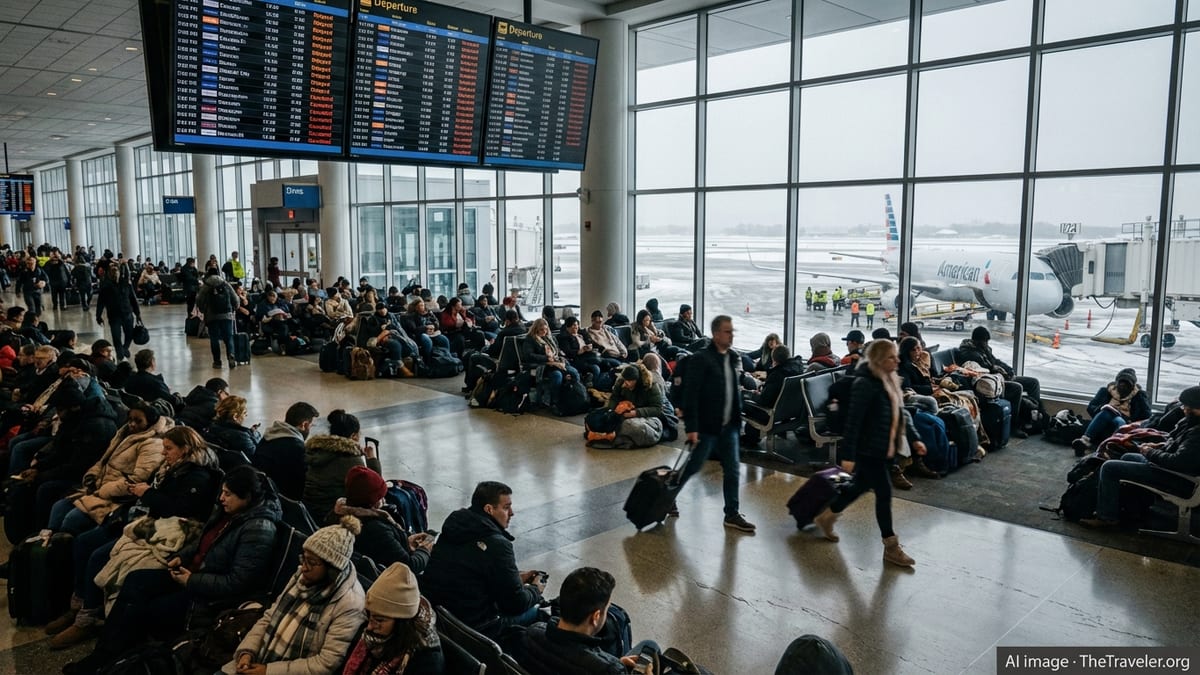
Ground Stop Freezes Departures at Key American Hub
Publicly available air traffic management advisories show that a comprehensive ground stop was issued at a major American Airlines hub, halting most departing flights for an extended period. The order affected departures on both domestic and international routes, effectively pausing one of the busiest banks of flights in the carrier’s schedule.
Ground stops are among the most severe tools used in United States airspace management, typically deployed when safety, weather or technical factors limit the ability of an airport or air traffic sector to safely handle arriving or departing aircraft. In practice, the measure means aircraft already on the ground are held, and flights scheduled to depart for the affected airport are not released from their origin until conditions improve.
In this case, flight tracking data and operational notices indicated that departures at the hub were sharply curtailed, with many flights removed from the schedule outright. Airport departure boards showed a rapid progression from routine delays to widespread cancellations as the ground stop continued and recovery windows narrowed.
Because American Airlines uses large hubs to concentrate connecting traffic, a disruption at one such airport can instantly affect passengers whose journeys neither begin nor end there. The latest incident followed that familiar pattern, cascading through regional spokes and long haul routes alike.
Cancellations and Delays Spread Across the Network
Once the ground stop took effect, cancellations at the hub accelerated as aircraft, crews and gates all reached operational limits. As more flights were scrubbed, the impact extended far beyond the immediate region, reaching travelers at secondary airports in the United States and on international routes that rely on timed connections through the hub.
Published flight status information showed multiple American Airlines departures labeled as canceled or significantly delayed, with some aircraft held at origin airports awaiting updated release times, and others removed from the day’s schedule. Inbound flights faced diversions or extended holding patterns, while jets that did arrive often found themselves waiting for available gates among long queues on the taxiways.
Because many of American’s itineraries route passengers through a small number of core hubs, disruption at one facility quickly leads to missed connections and stranded travelers across the system. Once a connecting bank is broken, passengers may lose access to later flights that are already heavily booked, reducing options for same day rebooking.
Observers noted that this pattern is consistent with how previous large scale ground stops have played out, particularly when they coincide with peak travel periods such as summer holiday weekends, major events or busy Monday and Friday business flows.
Weather, Technology and Congestion Behind Modern Ground Stops
Ground stops can be triggered by severe thunderstorms, low visibility, runway closures, and other weather related hazards, as well as by technical problems affecting air traffic control systems or airline operations. Recent summers have seen several large U.S. airports experience hour long ground stops tied to fast moving storm systems, with ripple effects that last well into subsequent days.
In addition to weather, modern airline operations have become more sensitive to technology failures and high traffic volumes. A notable example in recent years involved a widespread information technology outage that led multiple major U.S. carriers to order global ground stops, illustrating how interconnected software and scheduling platforms have become. When critical tools used for crew management, dispatch or flight planning fail, airlines may be forced to halt departures until they can regain full visibility into aircraft and staffing.
Industry analyses published over the past two years emphasize that hub airports function as dense nodes where even brief reductions in capacity can create bottlenecks. When airspace restrictions, runway throughput and gate availability all tighten at once, airlines face difficult tradeoffs between holding flights, canceling proactively or re-routing aircraft and crews in real time.
For passengers, the cause of a ground stop, whether weather or technology, often matters less than its duration. The longer departures are frozen, the more likely it becomes that crews will reach duty time limits, aircraft will be out of position for later flights, and overnight disruptions will extend into the following day’s schedule.
Stranded Passengers Confront Limited Rebooking Options
As cancellations climbed during the latest hub ground stop, passengers reported facing long lines at customer service counters, limited same day rebooking inventory and difficulty reaching call centers during peak periods. Online rebooking tools can help some travelers bypass lines in the terminal, but capacity constraints at the hub often mean that many disrupted passengers must accept overnight stays or rerouting through alternate cities.
Travel analysts note that when a hub experiences a near standstill, rebooking challenges compound quickly. Seats on later flights from the same airport are limited, and partner airlines may also be full or facing their own congestion issues. In addition, disruptions at one large hub can push more travelers toward other airports that were already operating near capacity, tightening availability across multiple cities.
Passengers on international itineraries are particularly exposed in such events, as missed long haul departures may not have same day alternatives. A missed overnight transatlantic or transpacific flight can leave travelers waiting 24 hours or more for the next departure, especially from secondary destinations that are served only once daily.
In the current incident, the combination of dense schedules, high summer load factors and an abrupt halt in hub operations created conditions where many travelers had few immediate options beyond waiting in the terminal or seeking hotel rooms near the airport.
Systemic Vulnerabilities in Hub and Spoke Networks
The latest American Airlines hub ground stop has renewed attention on the structural vulnerabilities of hub and spoke airline models. Academic research into airline network resilience highlights that while hubs maximize connectivity and revenue under normal conditions, they also represent concentrated points of failure when disruptions occur.
Recent studies of flight data indicate that large hubs handle disproportionately high volumes of connecting passengers, meaning that even modest reductions in capacity can strand thousands of travelers simultaneously. When disruptions escalate into full ground stops, missed connections, crew misalignment and aircraft out of position can take days to unwind fully.
Some researchers have explored potential mitigation measures such as diversifying traffic flows among more mid size airports, using dedicated ground transport links to move passengers between nearby airports during disruptions, and building more slack into peak hub schedules. However, such changes can conflict with cost efficiency goals and the competitive pressures that drive airlines to concentrate operations.
For travelers, the latest hub shutdown serves as a reminder that itineraries routed through major connecting airports carry both benefits and risks. While hubs provide access to a wide range of destinations on single tickets, they also expose passengers to the cascading effects when a single airport experiences a severe disruption, whether from storms, technical failures or airspace constraints.