


More news on this day
A Canadian Pacific Kansas City freight train derailed beside a large pond in southwest Calgary early Monday, sending several railcars into the water and triggering a federal safety investigation into what led to the incident.
Get the latest news straight to your inbox!
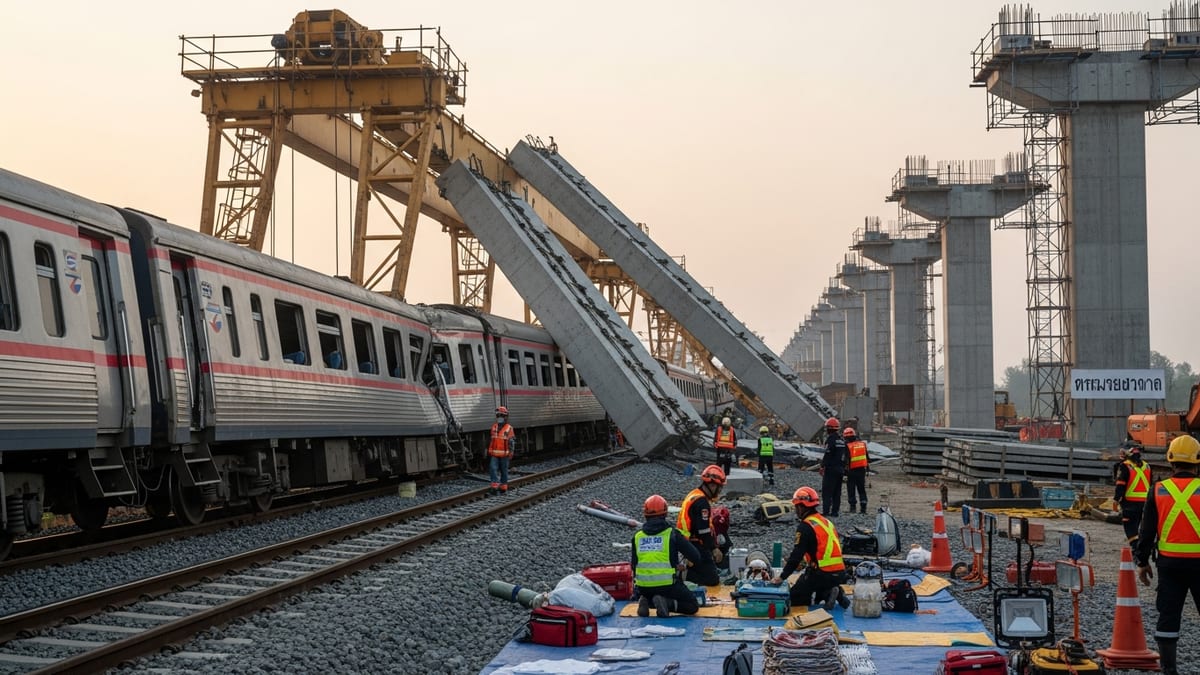
Cars leave tracks near Priddis Slough
Published coverage indicates the derailment occurred next to Priddis Slough, a wetland area in Calgary’s southwest, in the early hours of Monday morning. Photos and video from the scene show a line of derailed railcars, with some partially submerged in the pond and others leaning at sharp angles along the embankment.
Reports describe the train as a Canadian Pacific Kansas City freight consist operating on a line that runs through a mix of agricultural land, wetlands and growing suburban communities on the city’s edge. The incident forced rail traffic in the immediate area to halt while responders assessed track conditions and the stability of the affected cars.
Initial information from local news coverage suggests that no serious injuries have been reported. Emergency crews focused on securing the site, checking for leaks and monitoring the surrounding water and soil for any early signs of contamination.
The derailment location, beside a popular bird and wildlife habitat, quickly drew attention from nearby residents and commuters. Images shared publicly showed cranes, vacuum trucks and rail maintenance equipment converging on the area as the recovery operation began.
TSB deploys investigators to the scene
According to publicly available information from the Transportation Safety Board of Canada, a team of rail investigators has been deployed to Calgary to gather evidence and document the site. The TSB routinely dispatches such teams when derailments involve environmental concerns, significant infrastructure damage or potential safety lessons for the wider rail network.
Investigators are expected to examine track conditions, train handling, signal data and the mechanical state of the railcars and locomotives. They typically collect information from event recorders, inspect damaged equipment and review maintenance and inspection records associated with the train and the track in the area.
In the early stages of an investigation, the TSB generally focuses on securing perishable evidence such as rail markings, wheel damage patterns and track alignment before heavy recovery work alters the scene. Any future safety communications or recommendations would be based on these findings and further technical analysis completed in the weeks and months ahead.
While no preliminary cause has been publicly detailed, the deployment of investigators underscores the national interest in understanding how a freight consist could leave the rails so close to a sensitive body of water on the edge of a major Canadian city.
Environmental monitoring at pond and wetland
Coverage from Calgary-based news outlets indicates that several derailed cars came to rest directly in the pond, raising immediate questions about possible leaks into the water. Responders at the site appeared to be using booms and other containment measures that are commonly employed when there is a risk of product entering natural waterways.
Early reports suggest that at least some of the railcars were carrying non-hazardous materials, while others may have been loaded with industrial products that require careful handling. As of the latest publicly available information, there have been no widely reported large-scale releases into the pond, but ongoing monitoring is expected as rail crews right cars and remove them from the water.
Environmental assessments around wetlands typically include sampling of surface water and sediments, visual inspections for sheens or discoloration, and longer-term checks for any impacts on birds, amphibians and other wildlife that use the habitat. The proximity of the derailment to Priddis Slough, which functions as both a natural area and part of the city’s stormwater system, adds complexity to any cleanup and restoration planning.
For travelers and outdoor enthusiasts who use pathways and natural areas in Calgary’s southwest, the response and monitoring will be closely watched, particularly if access restrictions remain in place around the pond and adjacent lands.
Rail traffic, roads and nearby communities affected
The derailment has disrupted normal freight rail operations in southwest Calgary, with rail traffic in the affected corridor temporarily halted. According to regional news reports, crews have been working to stabilize derailed cars, repair track infrastructure and assess the integrity of rail beds before any resumption of service.
Local coverage indicates that some nearby roads and informal access points have been restricted to allow heavy equipment and emergency vehicles to reach the site. Travelers heading toward residential communities and recreational areas in the southwest may encounter detours or slower traffic while rail and municipal teams continue cleanup and repair activities.
For Calgary residents, the incident is a reminder that major freight routes run close to expanding neighborhoods and natural areas. While derailments of this scale remain relatively infrequent, their impact on local mobility, noise levels and perceived safety can be significant, particularly when scenes of derailed cars in water appear widely in news and social media.
Rail operators generally aim to restore service quickly, but the presence of a pond and sensitive habitat will likely mean a cautious approach, with engineering inspections and environmental checks influencing how soon full operations can resume through the corridor.
Broader questions over rail safety and urban growth
The Calgary derailment is contributing to broader public discussion about how freight rail networks intersect with growing cities and popular outdoor spaces. National statistics published by the Transportation Safety Board of Canada show that derailments involving only a few cars are not uncommon across the country, but incidents near water bodies and populated areas draw heightened scrutiny.
Urban expansion in Calgary’s southwest has brought new residential communities, roadways and recreational amenities closer to existing rail lines. Planning discussions increasingly weigh the economic importance of rail freight against potential risks to people, property and the environment when trains run close to homes, ponds and wetlands.
Observers note that previous rail investigations in Canada have led to recommendations on track inspection regimes, speed management, train handling and the routing and handling of dangerous goods. The outcome of the TSB’s work in Calgary may eventually feed into that evolving body of guidance, particularly if investigators identify any systemic issues related to infrastructure, operations or oversight.
For travelers moving through the region by road or rail, the derailment highlights the importance of transparent communication about risks, emergency response capabilities and mitigation measures. As the investigation continues, publicly available information from regulators, the rail operator and the city is likely to shape how residents and visitors perceive the safety of key transportation corridors around Calgary.