


More news on this day
Several freight cars landed in the water after a freight train derailed near Silverado, disrupting rail traffic through the area and prompting a focused response from rail crews and local emergency services, according to early regional coverage and rail incident reports.
Get the latest news straight to your inbox!
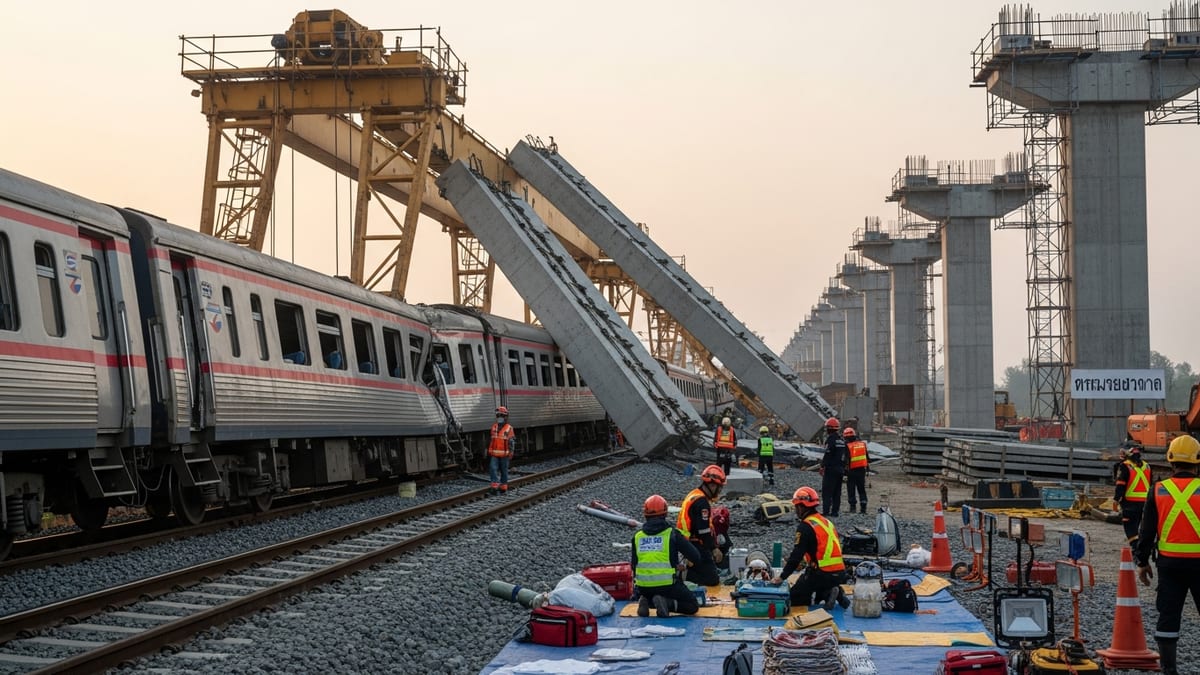
Derailment sends railcars into nearby waterway
Initial reports indicate that a freight consist traveling near the Silverado area left the tracks with multiple cars leaving the right of way and at least several ending up partially or fully in an adjacent body of water. Regional news coverage describes a line of derailed cars stretching along the embankment, with some resting at sharp angles at the water’s edge while others are submerged more deeply.
Early information from publicly available rail tracking and photography shared by witnesses shows mixed freight equipment involved in the incident, including standard boxcars and covered hoppers. No passenger services were reported to be directly involved in the derailment, although downstream delays and route changes for both freight and passenger traffic are expected while the site remains restricted.
There were no immediate widespread reports of serious injuries among the train crew, though full details were still being compiled as responders worked to secure the scene. Travel in the immediate vicinity of the line has been constrained by road closures and detours while heavy equipment is moved into position for the recovery effort.
With multiple cars in the water, access to the site is proving challenging. Recovery contractors typically require a combination of rail cranes, truck-mounted cranes, and specialized winching equipment, all of which must be carefully staged on stable ground away from the compromised embankment.
Impact on local travel and nearby recreation areas
For travelers in the Silverado region, the derailment is primarily affecting mobility near the rail corridor and any nearby recreational access points that rely on riverside or lakeside parking. Publicly available mapping and traffic data suggest that roads that parallel the tracks are experiencing intermittent closures to accommodate investigation teams and heavy equipment movements.
Visitors headed toward trailheads, campgrounds, or waterfront picnic areas in the vicinity may encounter detours, temporary closure signage, and reduced parking availability. Travel advisories recommend allowing additional time for reaching outdoor destinations and checking local traffic reports before setting out, particularly on weekends when recreational use is highest.
For now, the disruption appears localized, with no indication that large-scale regional travel patterns have been significantly altered. However, tour operators, shuttle services, and local hospitality businesses that depend on through‑traffic may see a short‑term dip as some visitors choose alternative routes or delay their trips until the line is cleared.
Noise, lighting, and heavy machinery associated with cleanup operations may also affect the visitor experience in nearby natural areas, especially in early morning and evening hours when crews often take advantage of cooler temperatures to work around the site.
Environmental assessment and concerns about freight in waterways
Any time railcars end up in a river, canal, or lake, questions quickly emerge about what those cars were carrying and how the local ecosystem might be affected. In this case, early coverage suggests that the train was made up of general freight rather than a unit train of hazardous materials, but cargo manifests and detailed commodity lists typically take time to review and cross‑check.
Environmental agencies generally prioritize determining whether any derailed cars contain fuels, chemicals, or other materials that could pose a risk to drinking water intakes, fisheries, or wildlife habitat. If hazardous products are present, containment booms, skimmers, and water‑quality testing equipment are often deployed as a precaution even before visible leaks are confirmed.
Incident summaries from previous derailments in other parts of the United States highlight how grain and other bulk agricultural products can also affect waterways by depleting oxygen as they break down in confined channels. For travel and tourism operators who rely on fishing, paddling, or waterfront activities, even temporary water‑quality advisories can have a noticeable impact on bookings.
In the Silverado case, publicly available information at this stage points more toward logistical disruption than confirmed environmental damage, though agencies are likely to continue sampling and monitoring in the coming days. Travelers planning water‑based recreation near the derailment zone may wish to look for the latest updates from regional environmental and parks agencies before entering the water.
Rail corridor closures and broader network disruptions
Photos and rail‑fan reports circulating on social media platforms show rail cranes and maintenance‑of‑way equipment being staged along the line, an indication that a multi‑day recovery and repair operation is underway. When cars enter a waterway, crews must work more slowly than they would on dry land in order to avoid further destabilizing the embankment or causing additional damage to the track structure.
Until the damaged cars are removed and the rail bed is rebuilt, trains that would normally pass through the Silverado segment are expected to be rerouted, held, or consolidated, which can create a ripple effect far beyond the immediate incident location. Long‑distance freight services may experience longer transit times, and any passenger operations sharing the corridor could face schedule adjustments, substituting buses for trains where alternate tracks are not available.
For travelers, the most visible effects are likely to be timetable changes, temporary bus bridges, and reduced frequency on affected routes. Trip planners and ticketing systems are often updated in stages as railroads refine their estimates for reopening the line, so schedules can shift more than once before normal service resumes.
In previous derailments where cars entered waterways, repair timelines have typically ranged from a few days to several weeks, depending on the extent of the track damage, the stability of the ground beneath the rails, and weather conditions that may slow construction work.
Safety scrutiny and what it means for future travelers
The derailment near Silverado is arriving in a period of heightened public attention on rail safety in North America. Recent high‑profile incidents elsewhere have already prompted renewed discussion of track inspection practices, train length, and the movement of hazardous materials through scenic corridors that are also heavily used by tourists and outdoor enthusiasts.
Transportation analysts note that routes serving gateway communities for national parks, ski resorts, and hiking destinations often run close to rivers, canyons, and lakes, where derailments are more likely to send equipment into water. While statistics continue to show rail as a comparatively efficient way to move freight, images of railcars in rivers or at the base of steep embankments add urgency to calls for more frequent inspections, better detection technology, and stricter maintenance standards.
For travelers, the most immediate takeaway is the importance of building flexibility into itineraries that depend on rail access to outdoor destinations. Allowing extra time for transfers, confirming schedules shortly before departure, and being prepared for last‑minute substitutions between rail and road transportation can help reduce the impact when incidents like the Silverado derailment occur.
Local tourism boards and destination marketing organizations in regions affected by rail disruptions are increasingly using social channels and visitor‑center updates to communicate real‑time information about access, closures, and alternative routes. As the situation near Silverado develops, those channels are likely to become a key resource for visitors looking to understand how the derailment may affect their plans.