


More news on this day
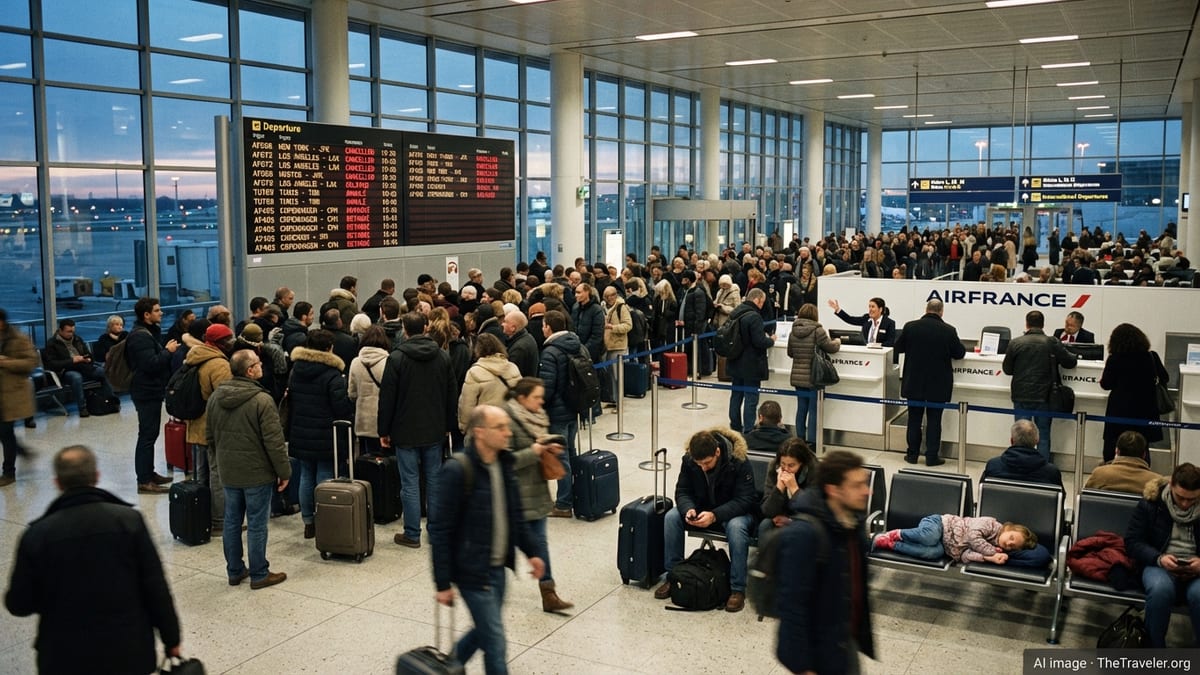
Hundreds of travelers were left in airport terminals across France as 508 delayed flights and 13 cancellations disrupted operations at Paris Charles de Gaulle and Nice Côte d’Azur, snarling peak‑season itineraries for major European and transatlantic airlines.
Get the latest news straight to your inbox!
Wave of Disruptions at Two of France’s Busiest Hubs
Publicly available flight-tracking data for Monday, 13 July 2026, show an exceptional concentration of delays and targeted cancellations at Roissy Charles de Gaulle outside Paris and at Nice Côte d’Azur on the Mediterranean coast. Across the two hubs, 508 services were reported delayed and 13 flights cancelled, affecting both domestic and international routes.
The disruptions hit at the height of the summer travel period, when traffic through French airports is already close to or above pre‑pandemic levels. Air France, easyJet, KLM and other major carriers feature prominently in schedules at both airports, meaning knock‑on effects extended far beyond France to connecting passengers across Europe, North America, the Middle East and Africa.
Operational data indicate that many of the delays at Charles de Gaulle ranged from 45 minutes to over three hours, with a smaller cluster exceeding that window. At Nice Côte d’Azur, shorter delays were more common, but even minor hold‑ups accumulated over the day, creating missed connections and extended waits for onward travel.
While the majority of affected flights eventually departed, the backlog created dense crowds in departure halls and transit areas, with passengers struggling to secure updated information, food, and seating in already busy terminals.
Heatwave, Strain on Air Traffic Control and a Fragile Network
The disruptions unfolded as France experienced a new phase of intense heat, with Météo‑France reporting very high temperatures and sustained nighttime warmth across large parts of the country. Aviation and weather data services show temperatures in the Paris region in the low 30s Celsius on Monday afternoon, conditions that can subtly reduce aircraft performance and complicate runway and ground‑handling operations.
The flight problems also come against a backdrop of repeated strains on French air traffic control in 2026. Earlier in the year, strike movements and staffing shortages triggered cascades of delays and cancellations at major hubs, including Paris and Nice, revealing how sensitive the European network has become to any capacity constraint over French airspace. Even without a formal nationwide strike on Monday, rolling actions and tighter staffing patterns in area control centers have left schedules with little margin for recovery.
Recent seasons of severe weather in Western Europe, including powerful windstorms and heavy rain systems, have further exposed how quickly bottlenecks can form when France’s busy air corridors are restricted. Combined with summer holiday peaks, the network has become vulnerable to relatively small operational shocks that translate into hundreds of delayed services on any given day.
Industry observers note that the present episode fits a wider pattern in which airports and airlines juggle strong demand with infrastructure and staffing calibrated for more moderate volumes, leaving passengers exposed whenever conditions deviate from plan.
Major Airlines and Key Routes Among the Worst Hit
Flight‑status boards at Charles de Gaulle on Monday afternoon highlighted disruption across a range of carriers serving flagship routes. Air France, the dominant operator at the Paris hub, recorded multiple delayed departures to European capitals and Mediterranean destinations, while partner airlines in alliances shared by Delta Air Lines and KLM faced their own hold‑ups as they attempted to maintain connection windows.
Low‑cost operators such as easyJet, which links Paris and Nice with numerous intra‑European destinations, also featured in the delay statistics. Published schedules show services on high‑frequency routes within France and to neighboring countries pushed back well beyond their original departure slots, complicating short‑break and business travel plans.
At Nice Côte d’Azur, a key gateway for the French Riviera, delays hit both point‑to‑point leisure flights and premium long‑haul connections that rely on tight turnarounds. Carriers serving London, northern Europe and the Middle East saw departure and arrival times slip, contributing to long queues at immigration and baggage reclaim as multiple late flights converged outside their planned waves.
Because Charles de Gaulle and Nice both play major roles in feeding long‑haul networks, the operational difficulties quickly spilled into transatlantic and intercontinental traffic. Missed connections in Paris affected travelers heading toward North America, Africa and Asia, while late‑running inbound flights arrived out of sequence, forcing aircraft and crew rotations to be re‑planned on the fly.
Passengers Face Overnight Stays and Scramble for Alternatives
With 13 outright cancellations recorded alongside hundreds of delays, many travelers were left isolated at the two airports overnight or diverted far from their intended destinations. In such cases, passengers often have to navigate a complex mix of airline procedures, European passenger‑rights rules and limited last‑minute inventory on alternative flights.
European regulation EC 261/2004 sets out compensation and assistance obligations for lengthy delays and cancellations at EU airports. Public guidance from the French civil aviation directorate explains that, depending on the cause of the disruption, travelers may be entitled to meal vouchers, hotel accommodation, rebooking on the next available service and, in some circumstances, financial compensation. The details vary according to flight distance, length of delay and whether the airline can point to extraordinary circumstances such as severe weather or airspace closures.
On Monday, the sheer scale of the disruption at Charles de Gaulle and Nice created intense competition for spare seats on remaining services. Travel forums and social media posts from affected passengers described long waits in service lines, difficulty getting through on call centers, and uncertainty over whether to accept rebooking options that involved circuitous routings through other European hubs.
For travelers attempting to connect from air to rail, the situation was complicated by separate disruption on major TGV axes over the same weekend, linked to trackside fires and heat‑related constraints. This limited the ability of some passengers to salvage their journeys by switching to high‑speed trains, particularly on routes between Paris, Lyon, Marseille and Nice.
What Travelers Should Watch for in the Coming Days
Although most of Monday’s delayed services were expected to depart by late evening, network specialists caution that the effects of such a large disturbance can persist for at least 24 hours. Aircraft and crews ending the day out of position can lead to knock‑on delays the following morning, even if weather and airspace conditions improve.
Travelers scheduled to pass through Charles de Gaulle or Nice Côte d’Azur in the coming days are advised by publicly available guidance to monitor their flight status closely via airline apps and airport displays, arrive early at the terminal, and be prepared for longer queues at check‑in and security. Those with tight onward connections may wish to consider earlier feeder flights or build additional buffer time into their itineraries.
For future trips, passenger‑rights organizations and consumer advocates often recommend booking longer minimum connection times at major hub airports and traveling with carry‑on luggage when practical, to reduce the risk of missed connections and baggage issues when delays cascade. They also suggest keeping digital copies of boarding passes and receipts for meals, hotels and ground transport to support later reimbursement claims if eligible.
With high summer still ahead and heatwave conditions forecast to persist in parts of France, both airlines and airports are likely to remain under pressure. Monday’s disruption at Charles de Gaulle and Nice Côte d’Azur underscores how quickly conditions can shift from normal operations to large‑scale travel chaos, and how critical real‑time information and flexible planning have become for anyone flying through Europe’s busiest hubs.