


More news on this day
American Airlines passengers across the United States experienced widespread disruption on June 12 and 13 as the carrier recorded the highest number of flight cancellations globally, following a series of Federal Aviation Administration ground stops at six of its major hub airports.
Get the latest news straight to your inbox!
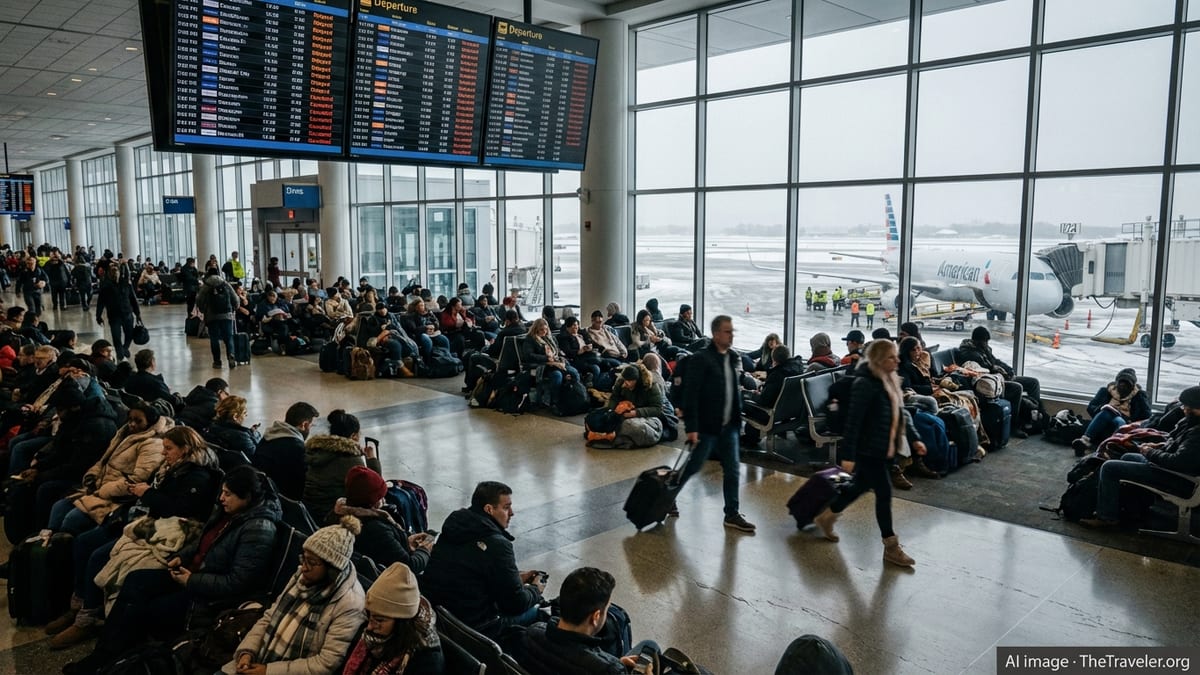
Ground Stops Hit a Network Built Around Six Major Hubs
Publicly available FAA operations advisories for June 12 and 13 show multiple ground stops and ground delay programs affecting several of the country’s busiest airports, including Dallas Fort Worth, Charlotte, Chicago O’Hare, Miami, Philadelphia, and Phoenix. These airports form the backbone of American Airlines’ hub and spoke network, meaning any disruption reverberates quickly across the system.
When a ground stop is in effect, flights destined for the affected airport are held at their departure points, often for weather, airspace constraints, or other operational reasons. That quickly creates a domino effect: aircraft and crews fail to arrive where they are needed, later departures lose their assigned planes, and routings throughout the day begin to unravel.
In this case, thunderstorms and airspace congestion around multiple East Coast and central U.S. hubs triggered overlapping restrictions. American, with a particularly high concentration of traffic funneled through these six airports, saw a larger share of its daily schedule halted or delayed than competitors operating more point to point networks.
Operational dashboards and flight tracking data for June 13 indicated that American led the world’s airlines in same day cancellations and significant delays, even as some rival U.S. carriers reported elevated but less severe disruption.
Why American’s Cancellations Spike Faster Than Rivals
Industry metrics suggest that American’s exposure to weather and traffic control interventions is amplified by the sheer scale of its operation. The U.S. Department of Transportation’s most recent Air Travel Consumer Reports show that American routinely schedules tens of thousands of flights per month, ranking near the top for total cancellations by raw number, even when its percentage of canceled flights is comparable to other large carriers.
Analysts note that a hub and spoke strategy can be efficient on good days, but makes airlines vulnerable when several hubs are hit at once. Dallas Fort Worth and Charlotte, for example, serve as heavy connection points for domestic and Latin American travel. When FAA restrictions affect these airports simultaneously with constraints at Chicago O’Hare or Miami, there are fewer alternative routings available to absorb stranded passengers.
Recent travel commentary also points to the knock on effects of earlier storms and staffing limitations. After a sustained period of irregular operations, aircraft and crew may be left out of position, so even moderate new disruptions can trigger a larger wave of cancellations than schedules alone might suggest.
Data dashboards that aggregate global flight status indicated that, on this latest day of turbulence, American accounted for the highest number of scrapped flights worldwide, surpassing both low cost carriers in Europe and other large U.S. airlines.
Passenger Impact: Missed Connections and Overnight Rebookings
For travelers, the numbers translated into missed connections, long customer service queues, and unexpected overnight stays. Passengers connecting through Dallas Fort Worth, Charlotte, and Chicago O’Hare reported chains of rolling delays that eventually turned into last minute cancellations as crews approached duty time limits or as aircraft were reassigned to other priority routes.
In some cases, travelers were rebooked through secondary hubs or routed on overnight red eye flights in order to reach their final destinations. Others were shifted onto flights departing from different airports within the same region when same day options from the original hub disappeared.
Travelers caught by ground stops often discover that even flights not directly bound for the affected airport can be disrupted. A plane scheduled to operate a later segment from Phoenix or Philadelphia might still be stuck on the ground in Texas or the Midwest. As a result, the impact of FAA restrictions extends far beyond the immediate metropolitan areas listed in ground stop advisories.
Publicly available travel alerts from American emphasized that customers should check their flight status frequently and use digital tools to self rebook where possible, reflecting the scale of calls and in person assistance required during such widespread disruptions.
How Ground Stops Work and Why They Lead to Cancellations
Ground stops are one of the FAA’s most powerful traffic management tools. Instead of allowing flights to depart and then circle or hold near a congested or weather affected airport, the agency temporarily halts departures from origin airports until conditions improve. While that approach improves safety and reduces airborne congestion, it can leave airlines with very little operational flexibility in the short term.
Once a ground stop is lifted, the surge of delayed flights heading toward the same hub competes for limited gate space, runways, and air traffic control capacity. To stabilize the system, airlines may proactively cancel select flights, particularly shorter segments or frequencies with multiple daily options, in order to protect longer haul and international operations.
American’s dense schedules at its six hub airports mean that even a relatively short ground stop can force a wave of schedule adjustments. When several hubs are affected during the same weather pattern, as occurred in this latest episode, the cumulative effect can translate into hundreds of cancellations, propagating across the network throughout the day and into subsequent days.
Aviation specialists highlight that while ground stops are typically short lived, the recovery phase can be lengthy, especially when crews have already accumulated long duty days or when storms move sequentially from one hub region to another.
What Travelers Can Do on High Disruption Days
For travelers, days dominated by FAA ground stops and widespread cancellations underscore the value of preparation and flexibility. Monitoring airport specific delay maps and airline apps before leaving for the airport can provide early signals when ground stops are issued at hub airports such as Dallas Fort Worth, Charlotte, Chicago O’Hare, Miami, Philadelphia, or Phoenix.
On days when storms or air traffic constraints are forecast along major corridors, travel experts often suggest booking the earliest feasible departure, as morning flights are more likely to operate before any cascading delays fully develop. Connecting itineraries that avoid multiple weather sensitive hubs can also reduce exposure to disruption.
When cancellations do occur, rebooking digitally can often be faster than waiting in line at the airport. Some passengers on the latest disrupted travel days reported securing workable alternatives through airline mobile apps while still taxiing back to the gate after a flight cancellation was announced.
For American Airlines customers, this latest episode of heavy cancellations serves as another reminder of how closely their travel plans are tied to the operational health of a small number of large hubs and to the real time decisions of air traffic managers responding to rapidly changing conditions.