


More news on this day
An American Airlines flight operating between Miami and Baltimore diverted to Washington, turning an otherwise routine domestic hop into an unexpected rerouting that left travelers adjusting plans on short notice.
Get the latest news straight to your inbox!
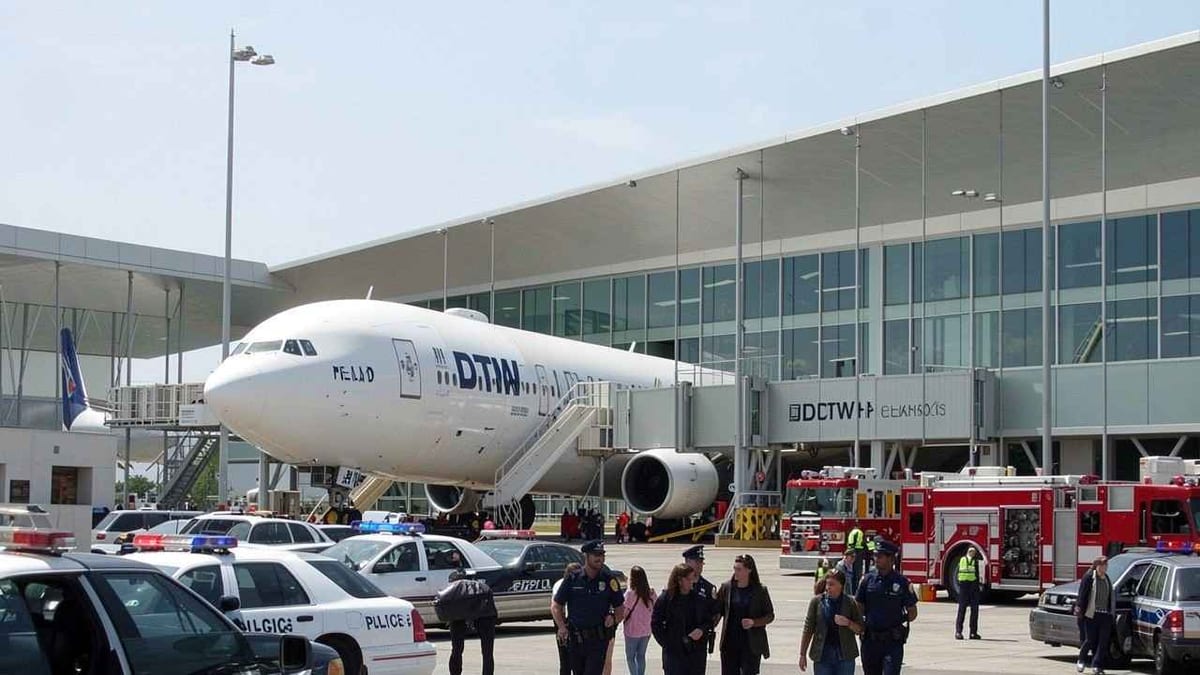
Routine Miami to Baltimore Service Experiences Midroute Change
Publicly available flight tracking data shows that American Airlines flight AAL3216, operated by a Boeing 737-823, departed Miami on a scheduled service bound for Baltimore before changing course toward the Washington area. The flight was listed as a standard domestic operation linking South Florida with the mid-Atlantic, a route that typically sees heavy leisure and business demand.
Data indicates that, partway through the journey, the aircraft deviated from its original track and headed to an airport in the Washington region instead of continuing to Baltimore. Such diversions are generally coordinated in real time by the flight crew and airline operations based on operational or safety considerations.
Passenger itineraries on this route often include onward connections along the East Coast and to the Midwest, meaning a diversion can quickly ripple through individual travel plans. Same-day connections and ground transport arrangements can be particularly affected when an aircraft lands at a different airport than scheduled.
While the precise, detailed timeline of events is still being pieced together from live tracking and schedule data, early indications suggest that the diversion was handled as an in-flight operational adjustment rather than part of a broader disruption affecting multiple Miami to Baltimore services.
Diverting to Washington: Possible Operational Factors
Commercial flights divert from their planned destination for a range of reasons, commonly including weather, traffic congestion, runway closures, medical situations on board, or aircraft maintenance concerns identified in flight. Aviation safety literature and historical diversion records highlight that crews are trained to alter course whenever conditions at the destination no longer meet operational requirements.
Airports in the Washington area often serve as alternates for flights originally scheduled to Baltimore because of their geographic proximity and extensive airline infrastructure. If conditions in Baltimore temporarily constrain arrivals, nearby Washington airports can offer more favorable landing windows, available gates, or maintenance support for large domestic jets such as the Boeing 737-800 series.
Reports related to similar events in recent years show that airlines commonly rely on their hub-and-spoke networks and operational centers to identify the best diversion point within minutes. Factors such as runway length, ground handling resources, and the availability of customs or security facilities, when needed, are weighed against flight time, fuel considerations, and the evolving situation at the original destination.
In this case, Washington’s role as a significant aviation node in the mid-Atlantic made it a logical candidate when AAL3216 could not proceed as planned to Baltimore. The diversion path reflected standard operating practice in U.S. domestic aviation, where closely spaced airports offer multiple options for flights needing to change course.
Impact on Travelers From Miami and Rebooking Options
For passengers, a diversion can translate into missed connections, altered ground transportation plans, and delays upon arrival. Travelers on the Miami to Baltimore route frequently rely on same-day onward flights or prearranged rail and road links from Baltimore’s airport to regional cities, all of which may require last-minute changes when an aircraft instead lands in Washington.
According to published coverage of similar irregular operations, airlines typically respond by rebooking travelers onto later flights, arranging alternate routings through their hubs, or in some cases supporting ground transport to the original destination city. Outcomes often vary based on seat availability, the timing of the diversion, and broader conditions in the airline’s network that day.
Experience from other recent diversions involving major U.S. carriers suggests that some passengers may be offered seats on later departures from the diversion airport, while others may be directed to buses, trains, or ride-hailing services to reach Baltimore. In heavily trafficked corridors, this mix of air and ground options is commonly used to restore disrupted itineraries as efficiently as possible.
For those with flexible schedules, diversions can amount to a delay of a few hours. For travelers with tight connections, special events, or early-morning commitments, the impact can be more significant, underscoring how a single in-flight decision can reshape a day’s plans.
Boeing 737-823: Workhorse of Domestic U.S. Networks
The aircraft involved, a Boeing 737-823, belongs to a widely used variant of the 737-800 series that has become a backbone of American’s domestic and short-haul international network. Public fleet records describe the type as a narrowbody jet configured to carry well over 100 passengers, optimized for high-frequency routes such as Miami to East Coast cities.
Industry data outlines the 737-800 family’s range and performance characteristics as suitable for dense, sub-3-hour segments where operational flexibility and rapid turnarounds are essential. This profile makes the aircraft a common sight on routes linking major hubs with regional centers, including the busy Miami–mid-Atlantic corridor.
In the context of diversions, aircraft like the 737-823 offer crews multiple viable alternate airports within their operating range, especially in the eastern United States where large commercial airports are situated relatively close together. This flexibility contributes to the high diversion completion rate, with most flights still reaching a suitable airport with ample reserves of fuel and operational margin.
Historical safety and incident compilations show that the Boeing 737-800 series has accumulated millions of flight hours under a variety of conditions, forming an extensive operational track record that informs training, procedures, and contingency planning across major U.S. airlines.
Flight Diversions as Part of the Modern Travel Landscape
Although diversions often attract attention from travelers and flight-tracking enthusiasts, aviation data shows that such events represent a small fraction of overall operations in the United States. With thousands of flights departing and arriving each day, the vast majority reach their planned destinations without significant deviation.
Recent academic work examining diversion patterns has noted that flights are more likely to alter course in regions where clusters of large airports provide multiple landing options within a short radius. The mid-Atlantic and Northeast corridor, with airports serving Miami-bound and Baltimore-bound traffic, exemplify a network where operational flexibility is built into route planning.
For passengers, the experience of an unplanned landing can feel disruptive, yet it reflects a system structured to prioritize safe, controlled outcomes when conditions change. From initial notifications in the cabin to rebooking at the gate, many of the steps that follow a diversion have been standardized over decades of commercial aviation.
The case of American Airlines flight AAL3216 illustrates how a routine Miami to Baltimore service can quickly evolve, sending a Boeing 737-823 to an alternate airport in Washington and reshaping a plane full of itineraries, even as the wider U.S. air traffic system continues to operate largely as scheduled.