


More news on this day
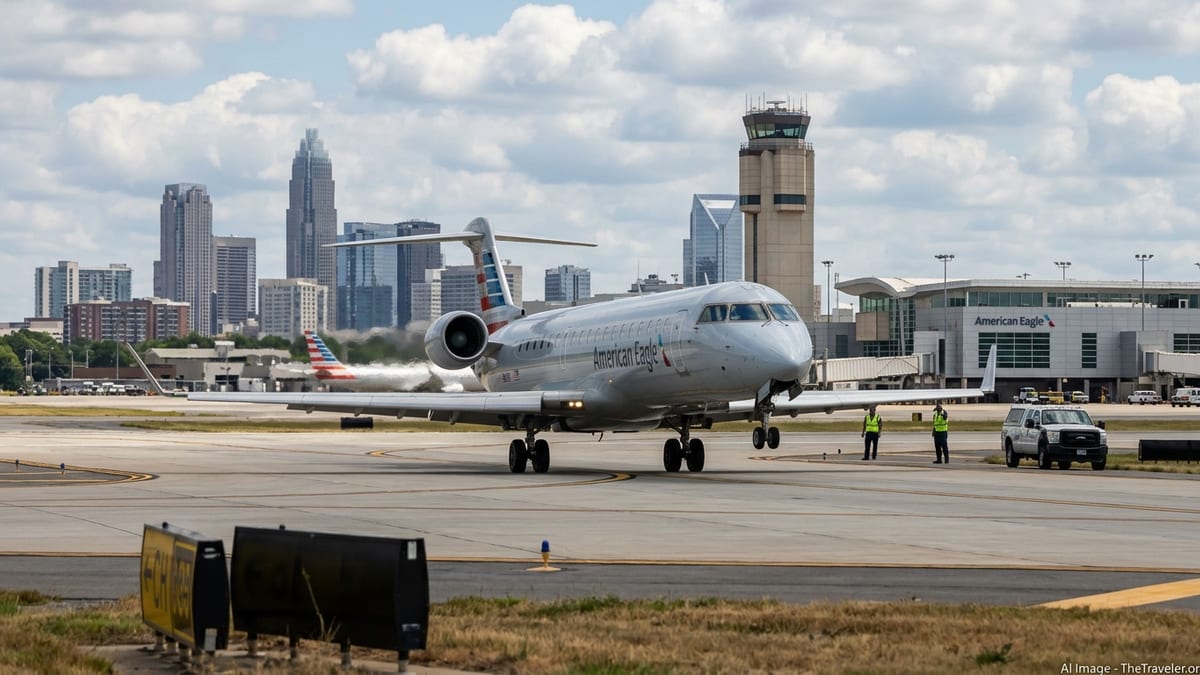
American Eagle flight AA5309 from Charlotte to Peoria turned back to Charlotte Douglas International Airport on November 19, 2026, after the crew reported a hydraulic warning and an abnormal nose‑gear indication shortly after departure, an event that briefly disrupted the afternoon departure bank but appears to have had only limited impact on American’s wider Charlotte schedule.
Get the latest news straight to your inbox!
What Happened To AA5309 Over Charlotte
Independent flight-tracking feeds show AA5309, operated for American Eagle by an Envoy Air Bombardier CRJ‑900, scheduled to depart Charlotte Douglas International Airport at 15:00 local time on Thursday, November 19, 2026, bound for Peoria. Tracking data for that rotation display the flight as “live” rather than completed, with an associated sector on November 18 showing a Charlotte-to-Charlotte return, consistent with an aircraft that departs, enters a hold and then comes back to its origin rather than continuing to destination.
An aviation alert feed associated with AirNav Radar reported that the aircraft stopped its climb and entered a hold shortly after takeoff while the crew worked checklists for a hydraulic system warning and an indication that the nose landing gear had not retracted as expected. According to that account, the crew prepared the aircraft for a return to Charlotte once the situation was stabilised. As of publication time, neither American Airlines nor Envoy Air had issued a public statement describing the event, the precise timing of the landing or the number of passengers on board, but available tracking data are consistent with a precautionary return rather than a continuation to Peoria.
Impact On Charlotte Operations And Passengers
Charlotte Douglas departure boards on November 19 list AA5309 on the CLT to Peoria route with an estimated 15:00 departure and 16:13 arrival into Illinois, matching the usual schedule pattern for this service. Downline schedules for November 20 show AA5309 still planned to operate on its normal mid-afternoon timing, which suggests that any hydraulic or landing‑gear indication issue on November 19 was isolated to a single aircraft rotation and did not trigger cancellations of subsequent days’ flights on the route.
Because AA5309 is a regional feeder service in the mid-afternoon departure bank, most affected travellers would likely have been connecting at Charlotte from other American or oneworld flights. In the absence of any indication of a prolonged ground stop or runway closure at CLT on November 19, and with other American regional departures showing routine status, the disruption appears to have been largely confined to the passengers booked on AA5309 and any immediate onward connections from Peoria. American’s standard practice in such situations is to rebook customers on later services on the same route, reroute them via alternate hubs or offer refunds if travel is no longer needed, and there is no evidence that the airline has deviated from that approach here.
How Regional Jets Handle Hydraulic And Gear Warnings
The Bombardier CRJ‑900, like other modern regional jets, uses multiple hydraulic systems to power critical functions including landing gear extension and retraction, flight controls and brakes. When cockpit sensors flag an inconsistency in hydraulic pressure or in the position of the landing gear, standard operating procedures call for the crew to stop the climb, run through the appropriate checklists and, if there is any doubt about system integrity, plan a return to the departure airport where full maintenance support is available.
On aircraft in this class, an indication that the nose gear has not retracted does not necessarily mean the gear is physically damaged or unsafe for landing. Crews are trained to assume the most conservative case until proven otherwise, configure the aircraft for a lower-speed return and communicate with air traffic control to secure vectors and holding patterns as needed. From a passenger perspective, this typically results in a longer time in the air near the origin airport and a precautionary landing, which may be described on board as a technical issue or system indication rather than a declared emergency if all aircraft systems remain controllable.
Envoy Air’s Record And What Travelers Should Watch
Envoy Air, which operates a large share of American Eagle’s regional network, is included in the U.S. Department of Transportation’s Air Travel Consumer Report alongside other regional affiliates that report performance under their mainline brands. The latest report available in October 2026 shows American-branded operations, including flights operated by Envoy and other regionals, delivering on-time arrival percentages broadly in line with the industry average among large U.S. carriers, without any highlighted pattern of hydraulic or landing‑gear incidents on regional jets.
Regulators typically record precautionary returns resulting from system indications in standard incident databases, but there is often a lag of weeks before such records are published and searchable. Until American, Envoy or the Federal Aviation Administration release a formal incident summary, details such as the confirmed cause of the hydraulic alert, the exact nature of the gear indication and any maintenance findings remain unverified. Travelers should therefore treat the AA5309 event as a single flight-level disruption rather than evidence of a wider mechanical issue across the CRJ‑900 fleet or Envoy’s operation.
Next Steps For Passengers On The CLT–Peoria Route
For travelers booked on American Eagle services between Charlotte and Peoria in the coming days, schedules published through independent timetable aggregators and American’s own booking channels still show AA5309 operating daily at 15:00 with CRJ‑900 equipment, with an additional evening frequency under a separate flight number on many dates. As of the latest published data, there is no sign of a long-term schedule reduction or aircraft substitution tied to the November 19 incident.
Passengers due to fly this route should continue to monitor their booking through the American Airlines app or website on the day of travel in case of short-notice aircraft changes while any technical investigation proceeds in the background. Those who were on the November 19 rotation and experienced a diversion back to Charlotte can typically request rebooking or, where applicable under American’s contract of carriage, refunds or travel credits. Anyone with critical same-day connections at either Charlotte or Peoria should build in additional buffer time until operational data over the next few days confirm that the CLT–PIA service is running to its usual pattern.